About Panteón Civil del Tepeyac
A cemetery on the hill above the Basilica
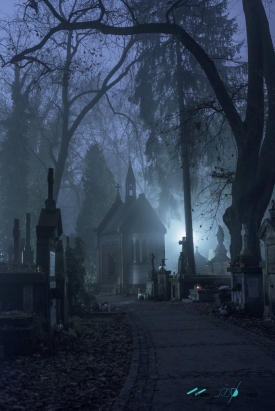
The Historic Cemetery of Tepeyac occupies a terraced site on the hill of Tepeyac in Gustavo A. Madero, northern Mexico City. The city’s 2024 heritage declaration places it inside the grounds of the Insigne and National Basilica of Santa María de Guadalupe. It is a civil cemetery, not a church interior or an ordinary public park, and its setting links funerary architecture with one of the capital’s most prominent religious landscapes.
The slope explains the cemetery’s unusual form. Mexico’s National Institute of Anthropology and History, or INAH, describes a layout shaped by the hill, with 27 platforms or terraces arranged across different levels. The city’s 2024 declaration gives the protected property an area of 16,192.69 square metres and also counts 27 terraces. INAH’s public catalogue lists 17,480 square metres for the ensemble. Because the official records use different area figures, this article preserves the discrepancy rather than choosing one as definitive.
There is also an unresolved question about the cemetery’s beginnings. The 2024 city declaration states that it was founded between the seventeenth and eighteenth centuries. The INAH catalogue says the exact formation of the current cemetery is not known and considers a mid-nineteenth-century date probable, noting that it existed by the secularization of cemeteries in 1859. A separate city tourism page repeats a tradition that it began in 1660, but presents that date as something that is said, not an established fact.
Layers of history and memorial art
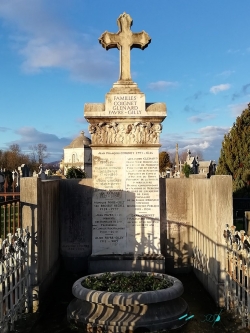
The safest historical account is therefore not a single founding year but a sequence of documented layers. The hill became a burial ground whose current layout developed over time; the 2024 declaration protects a landscape containing monuments from the nineteenth, twentieth and twenty-first centuries. Its terraces, paths, green areas, fountains or basins, benches, buildings, graves, mausoleums and funerary monuments are all named as parts of the cultural property.
The entrance portal is one visible clue to this evolution. Mexico City’s official tourism page dates the gate shown there to 1865, a period when the grounds were reorganized and improved. The same page identifies the cemetery as civil and says a permit is required for a visit. This makes the portal more than a picturesque frame: it marks the controlled threshold of a functioning cemetery whose heritage value must be balanced with the dignity of families and the privacy of mourners.
The cemetery is also a place of memory for people included in Mexico’s public history. The heritage declaration names painter José María Velasco Gómez Obregón among those whose remains are here. INAH’s catalogue lists other nationally known figures, including Antonio López de Santa Anna and Félix Zuloaga, while noting that the site contains many burials of historical interest. A thoughtful visit would treat these names as human lives and family graves, not as a checklist of celebrity stops.
What the visitor can—and cannot—assume
Tepeyac is often described online as a cemetery museum, but the label should not be confused with a museum that has routine, guaranteed public hours. The current official city tourism page says permission is required to visit. The sources checked for this article do not publish a confirmed general opening schedule, a ticket price or a daily tour program. Before traveling, contact the Gustavo A. Madero borough or the cemetery administration and ask whether entry is permitted on the date you have in mind.
INAH’s public catalogue identifies the address as Recinto del Tepeyac, without a street number, and notes access through the Basilica’s Zumárraga entrance; it lists the parking access from Quintana Street. These are useful location references, not a substitute for permission or confirmation that a gate is open. The cemetery sits within a larger sanctuary area that can be busy for religious observances, so allow time to navigate the district and follow on-site instructions.
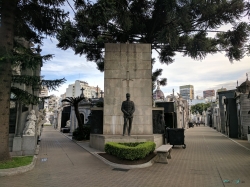
If permission is granted, the most revealing way to look around is slowly. The stepped plan follows the terrain; paths and monuments sit at different elevations, so a visit may involve slopes and uneven surfaces. Respect any closed sections, do not touch funerary structures, and ask before photographing graves or people. Because the site remains a cemetery, ceremonies, maintenance or family visits may take precedence over tourism. No visitor should assume that every terrace is accessible or that every tomb is open to inspection.
Why the site matters today
On 25 September 2024, Mexico City formally declared the Historic Tepeyac Cemetery cultural heritage of the city. The decree was intended to safeguard its layout and physical components through identification, documentation, research, protection, restoration, conservation, maintenance and public interpretation. The declaration matters because it recognizes the cemetery not only as a collection of old graves but as a cultural landscape whose terraces, vegetation, circulation routes and built features belong together.
That recognition also invites a more careful reading of the place. The hill setting, the history of civil cemetery administration, the funerary art and the uncertainty around the foundation date all resist a simple summary. Rather than repeat a confident but disputed origin story, a visitor can notice how successive periods left marks in the same confined landscape. The official records themselves are part of the story: they show how institutions continue to document and protect the site.
For travelers interested in Mexico City beyond its most familiar museums, Tepeyac offers a distinctive subject—but not an unconditional stop on a sightseeing route. Its location inside a major sanctuary, its active cemetery use and its permission requirement should guide any plan. Check access directly, arrive with a respectful purpose and be prepared to turn back if entry is not authorized. The most useful discovery is not a dramatic legend: it is the layered, documented history of a protected cemetery that still serves as a place of remembrance.