Presbítero Maestro Cemetery Museum: Lima’s open-air history and art
A cemetery that tells Lima’s story in stone
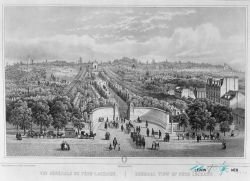
The Presbítero Matías Maestro Cemetery Museum is in Barrios Altos, in central Lima, at Jirón Áncash 1692. The Lima Beneficence Society, which administers the site, dates its opening to May 31, 1808. It was designed by the priest Matías Maestro Alegría as the General Cemetery of Lima, at a time when public-health concerns were prompting burials to move away from churches. The institution says the cemetery adopted Maestro’s name in 1923, was declared a Historic Monument in 1972 and became a museum on June 9, 1999. Its layered identity is central to the visit: it remains a burial ground as well as a place to encounter the city’s history and art.
The official tourism inventory describes a landscape of more than 700 mausoleums and records 22 hectares, while the Beneficence’s current visitor page describes more than 20 hectares. The difference reflects the way the two official descriptions round the area; both convey a large historic enclosure rather than a compact indoor museum. The inventory connects the growth of funerary monuments to an 1847 authorization to build mausoleums and to Peru’s economic prosperity during the guano and saltpetre era. Families used architecture and sculpture to express remembrance and social standing. Walking the avenues, visitors see how burial customs, artistic taste and public memory have changed over generations.
Marble, sculpture and the people remembered here
Architecture is one of the museum’s strongest draws. The tourism inventory notes more than 700 mausoleums from the nineteenth and twentieth centuries, with Neoclassical forms and French and Italian influences, using marble, bronze and stone. Peru’s Ministry of Culture has declared 320 funerary sculptures at the cemetery part of the nation’s cultural heritage. Its account identifies Neoclassical, Romantic, Realist and modern or Art Nouveau elements, as well as motifs drawn from Catholic belief and classical antiquity. Rather than treating every monument as decoration, look at how materials, symbols and styles record the tastes and aspirations of Lima’s society in different periods.
The cemetery’s official listings name figures from several fields, among them naval hero Miguel Grau, Francisco Bolognesi and Alfonso Ugarte; former presidents Manuel Pardo y Lavalle and Nicolás de Piérola; writers Ricardo Palma and Abraham Valdelomar; and engineer Eduardo de Habich. The Beneficence also identifies the popular devotional figure known as Niño Ricardito. A 2024 themed route, announced by the administrator, connected mausoleums and niches of public figures with a visit to the Cripta de los Héroes, the crypt associated with heroes of the War of the Pacific. Special routes are event-based, so do not assume that every themed itinerary or interior is available on an ordinary visit.
Visiting hours, tickets and guided experiences
The Beneficence’s current visitor page lists daytime visits from 9 a.m. to 6 p.m., Monday through Sunday. At the time checked, its posted daytime admission was S/10 for adults and S/2 for children up to age 12; the page also lists reduced rates for certain groups. A night visit is shown from 7 p.m. to 10 p.m., with a guide subject to availability; posted adult admission is S/22 and the child rate is S/11. A guided visit is separately listed at S/55, and a camera permit at S/15. These are the administrator’s published prices, not a guarantee that every service or special route runs on a particular date. Recheck the official page and ask about reservations before travelling.
The museum’s address is Jirón Áncash 1692, in Cercado de Lima, opposite the El Ángel cemetery according to Peru’s tourism inventory. Its location makes it possible to combine the visit with other parts of the historic centre, but allow time for transport and consult local conditions before walking between sites. The inventory lists a site museum, ticket office, parking, restrooms and food services in the area; availability may vary. Guided visits are recorded in Spanish and English, with reservations noted by the inventory. If a guided route or night experience matters to your plans, confirm directly with the administrator rather than relying on an old event announcement or an unverified third-party listing.
How to look closely and visit respectfully
Give yourself time to notice details: a sculpted figure, an inscription, a family mausoleum or the changing forms along an avenue can reveal more than a quick circuit. The site museum is described as displaying sculpture, paintings, photographs and written accounts of Lima’s customs and cultural life in the nineteenth and early twentieth centuries. The Beneficence says its visitor income helps maintain the museums and supports the society’s assistance programs. This relationship between heritage care and social services is part of the place’s present-day story, not only its past. A slower visit also makes it easier to understand why the cemetery is managed as both an active burial landscape and a cultural site.
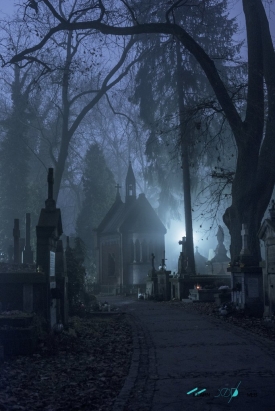
In 2025, the Beneficence reported approving a heritage-recovery plan that included security, maintenance, cleaning and other essential services. That announcement does not guarantee a particular restoration will be visible during a visit, but it shows that conservation remains ongoing work. Follow staff instructions, stay on permitted paths, avoid touching sculptures and tomb structures, and keep a respectful tone around mourners and funerals. Photography requires a permit according to the posted visitor information. Presbítero Maestro rewards curiosity, but the most thoughtful way to explore it is to balance the desire to discover Lima’s art and history with the fact that families continue to come here to remember their dead.