About Cemitério da Consolação
A cemetery built beyond the old city
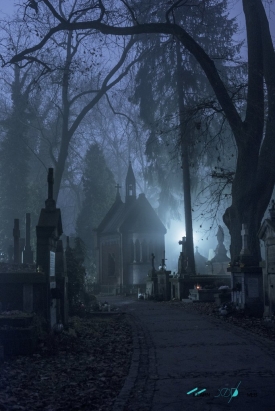
On a busy avenue in central São Paulo, the gates of Cemitério da Consolação open onto a quieter record of the city: shaded paths, family mausoleums and sculpture shaped by generations of changing customs. Founded in July 1858 and officially opened on August 15 that year, it was the municipality’s first public cemetery. Its original location lay beyond the compact center, where a dedicated burial ground could answer new concerns about public hygiene and the practice of burying the dead around churches.
That location did not remain peripheral for long. São Paulo expanded around the cemetery, turning a site once set outside the urban core into an unusually central landscape. The contrast is part of the visit: traffic and commerce continue along Rua da Consolação, while inside, trees and rows of graves make the city’s growth legible at a human scale. The cemetery is still an active place of burial and remembrance, not a museum staged for visitors, so its cultural interest comes with a responsibility to move quietly and respect mourners.
Its history also reflects the social changes of a city transformed by commerce, migration and the wealth of the coffee economy. Municipal accounts describe how the profile of those buried there shifted around the turn of the twentieth century, as prominent families commissioned elaborate tombs and memorials. Funerary architecture became a way to express status, family identity and public memory. The result is not a uniform collection: modest markers stand alongside sculpted monuments, and each tells a different story about who could claim permanence in a rapidly changing city.
Reading the sculpture, not just the names
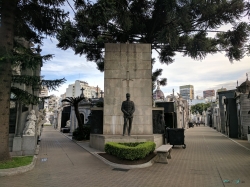
Consolação is often described as an open-air museum because of its funerary art, but the phrase should not obscure the purpose of the place. The sculptures are memorials first. Their materials, gestures and symbols invite close looking: a portrait can preserve a likeness, a carved figure can turn grief into a public image, and an architectural tomb can make a family name visible from the path. The cemetery’s art is valuable precisely because it remains attached to real acts of mourning and remembrance.
São Paulo’s municipal guide singles out sculptors and architects including Victor Brecheret, Galileu Emendabili and Ramos de Azevedo. The city’s accounts of the Arte Tumular project explain that guided visits interpret both the works and the lives of people buried nearby. Brecheret’s name is especially familiar to visitors who know modern Brazilian sculpture, while Emendabili’s work connects the cemetery to the Italian artistic presence in São Paulo. Rather than treating every monument as a masterpiece, a good visit compares styles and asks how families used art to shape memory.
The city’s published route groups graves of intellectuals, artists, public figures and politicians with works of artistic interest. It is a useful framework, not a checklist that must be completed. The cemetery contains many more markers than a short walk can cover, and some graves are difficult to locate without a map. A guide can supply context that is hard to infer from stone alone: who commissioned a tomb, what a symbol meant to its patrons, or why a particular figure mattered in São Paulo’s public life.
Writers, artists and public memory
Among the people commemorated here are writers Mário de Andrade, Monteiro Lobato and Oswald de Andrade, the modernist painter Tarsila do Amaral, and former president Washington Luís. Their presence offers more than a list of famous names. It links the cemetery to the political and cultural history of Brazil: literary modernism, the making of São Paulo’s civic institutions and the lives of people whose work shaped the country’s public imagination. The names also show how a municipal burial ground became a memorial landscape for figures whose influence reached well beyond their neighborhood.
Other graves connect the site to earlier stages of Brazilian statehood and the city’s development, including that of José Bonifácio de Andrada e Silva, associated with the country’s independence. The juxtaposition matters. Visitors move between national history and local memory without crossing a formal boundary; a statesman, an author, an artist and an ordinary family may be separated by only a few paths. That proximity resists the idea that a cemetery’s story belongs only to the celebrated. The broader lesson is how a city chooses to remember, and whose names remain visible.
The cemetery’s changing memorial styles also preserve a record of taste. Municipal histories connect the older elite’s funerary customs with the European influences fashionable in São Paulo during the Belle Époque, including French models in architecture and ornament. These influences were adapted locally rather than copied in a simple line. The monuments can be read as evidence of exchange between Brazil and Europe, but also as statements made by families trying to define themselves within a city whose population, economy and political role were all expanding.
How to plan a respectful visit
The cemetery is at Rua da Consolação, 1660, in the Consolação district. Its current operator lists public opening hours every day from 8 a.m. to 6 p.m. and a guided-visit window from Monday through Friday, 2 p.m. to 6 p.m. These are the operator’s published hours at the time of research, not a guarantee that every tour runs without booking or that every area is accessible on every day. Check the operator’s notice before setting out, especially around holidays or funerals.
Allow time to walk slowly and use the official visitation guide rather than trying to find every celebrated grave from memory. The cemetery is large enough that a focused route around the sculpture, writers’ graves and civic figures makes for a more rewarding visit than rushing between names. If you want a guided tour, confirm the reservation process, language, availability and any charge directly with the current operator. The municipal history pages describe past guided programs, but older telephone numbers and schedules should not be treated as current booking details.
Consolação rewards attention to small details: worn inscriptions, the way a sculpted figure catches light, or the transition from a family plot to a monumental tomb. Yet this is not a venue for unrestricted photography, loud conversation or touching fragile stone. Follow posted rules, avoid interrupting services, and ask permission before photographing people. For an ordinary visit, the operator’s current hours and the city’s guide are the practical starting points.