Neuville-Saint-Vaast German Cemetery: memory near Arras
A quiet landscape shaped by the First World War
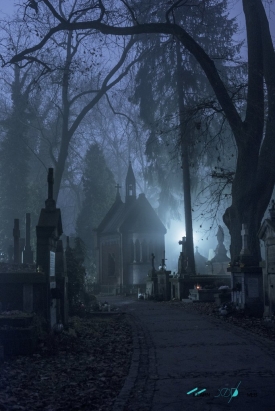
South of Neuville-Saint-Vaast, beside the Route de Béthune in France’s Pas-de-Calais, the German military cemetery known as Maison Blanche occupies an open, tree-lined landscape. It is not a conventional monument built to celebrate a victory. Its rows of graves and restrained design ask visitors to confront the scale of loss on the Western Front, where armies fought across the Artois plain and around Arras for years.
The site is also part of a wider memorial geography. The Volksbund, Germany’s war-graves commission, places the cemetery about 1.5 kilometres south of the village centre and identifies other national cemeteries in the surrounding area. A carved relief at the entrance maps the front line between 1914 and 1918 and names nearby burial grounds. It helps visitors read the cemetery not in isolation, but as one part of a densely remembered battlefield region.
Why the cemetery was established here
French military authorities established the cemetery between 1919 and 1923 as a collective burial place for German dead from the territory north and east of Arras. Soldiers whose first graves lay in small cemeteries or field burials across more than 110 Pas-de-Calais communities were later gathered here. Their deaths span the fighting in Artois and near Lorette Hill in 1914–15, the battles around Vimy Ridge in 1917 and 1918, and the trench warfare between major offensives.
The number of burials should be read carefully because current institutional listings do not agree exactly. The Volksbund reports 44,888 First World War dead: 36,848 in individual graves and 8,040 in a common grave. Pas-de-Calais Tourism, whose entry was updated in September 2026, gives a total of 44,833 while also listing 8,040 in the common grave. Both identify Maison Blanche as France’s largest German First World War cemetery; the discrepancy is a reason to attribute the figure to its source rather than present one total as uncontested.
Names, symbols and the grounds
The memorial landscape makes room for individual identity within an immense count. Metal crosses carry names and dates; 588 of the 36,848 individual graves are recorded by the Volksbund as unknown. Thirty-two slate crosses mark the long common-grave mound, where the names of identified dead are also recorded on metal plaques. The cemetery includes 131 graves of Jewish soldiers, marked with natural-stone headstones rather than crosses. These details show how the site’s symbols reflect different forms of remembrance.
A wooden cross donated by the municipality bears the French inscription “Paix aux Hommes de Bonne Volonté,” or “Peace to people of good will.” The French tourism account describes an eight-hectare grounds, with trees and the natural contours retained as part of its design. This quieter, less monumental treatment differs from some nearby memorials. It does not soften the history; instead, it gives the visitor space to notice the repetition of names, the shared grave and the landscape around them.
From post-war burial ground to UNESCO recognition
The cemetery’s history continued long after the armistice. The Volksbund began work to improve the grounds in 1928. Following the Franco-German war-graves agreement of 19 July 1966, it was able to complete the final landscaping of German First World War cemeteries in France. Maison Blanche was formally dedicated on 13 November 1983. The commission still records discoveries of human remains in the region, sometimes during construction, a reminder that the material aftermath of war has not entirely disappeared.
In September 2023, UNESCO inscribed the serial property “Funerary and memory sites of the First World War (Western Front),” shared by Belgium and France. Maison Blanche is one component in that international group, not a stand-alone site unrelated to the surrounding memorials. UNESCO describes these places as evidence of changing ways of recognising soldiers as individuals and as places of reflection on death, memory and peace. The designation gives visitors a wider context for what may at first look like a single cemetery.
Planning a respectful visit near Arras
Pas-de-Calais Tourism lists the cemetery at RD937, 62580 Neuville-Saint-Vaast, and its 2026 opening period as the full calendar year. The listing does not specify daily gate hours or an admission price. Treat the cemetery as a place of remembrance rather than assume visitor facilities or staffed services; check locally before making a long detour, especially on public holidays or in poor weather. The Volksbund page provides the site’s coordinates and background, while the regional listing is useful for the local address.
Arras is the practical urban base for exploring this part of the former front. A car makes it easier to combine scattered cemeteries and memorials, but confirm the route and parking before setting out; public transport options and rural connections can vary. On site, allow time to read the entrance relief and walk slowly among the rows. Keep voices low, do not disturb graves or memorial objects, and remember that people may be visiting to mourn a relative.
A place within a landscape of remembrance
Maison Blanche becomes more legible when considered alongside the many other national burial grounds around Neuville-Saint-Vaast and Arras. French, British, Canadian, Czech and Polish memorial sites in the wider area speak to the international character of the fighting. The nearby Vimy Ridge landscape and other cemeteries are separate places with their own histories and visiting arrangements, so plan them as distinct stops rather than assume one ticket or opening schedule covers the region.
The cemetery’s lasting force lies in the contrast between precise names and an overwhelming total, and between a carefully tended site and the battles that produced it. Its grave markers do not turn war into an abstraction: they restore individual traces while acknowledging how many lives were gathered into one place. For travellers interested in the history of Arras and the Western Front, Maison Blanche offers a sobering, accessible point of encounter—one best approached with time, care and respect.