Rakowicki Cemetery in Kraków: history, notable graves and visiting hours
Kraków’s historic cemetery and first burial
Rakowicki Cemetery is one of Kraków’s most important historic burial grounds, but its story begins with a practical change in public health and city planning. The municipal cemetery operator says it was established in 1801–02 on the former Bosacki farm, then outside the built-up city. Austrian authorities bought the land from the Discalced Carmelites, while Kraków and nearby communities paid for the cemetery. The first burial took place in January 1803: Apolonia Bursikowa, an eighteen-year-old woman who had died earlier that month.
The original grave did not survive. In 1865, however, its epitaph was transcribed, and a commemorative plaque based on that inscription was recreated for the cemetery’s bicentenary in 2003. The episode gives the site an unusually tangible beginning: rather than a grand opening legend, the first documented burial was a young resident whose inscription was later recovered and made part of public memory.
The name comes from the road leading from Kraków toward the village of Rakowice, about two kilometres away, according to the municipal operator. That small detail connects the cemetery to a city that has grown around it. The grounds now cover about 42.18 hectares and contain approximately 75,000 graves, figures published by Zarząd Cmentarzy Komunalnych, Kraków’s municipal cemetery authority. The site remains a working cemetery as well as a protected historic ensemble.
Architecture, expansion and memorial landscape
The earliest section was laid out in 1839 by architect Karol Kremer. The municipal history describes a distinctive gate-shaped plan, interpreted as a passage from earthly life to eternity. At its center, a chapel dedicated to the Resurrection of Christ was built in 1861–62, replacing an earlier wooden chapel. Kraków bankers Ludwik and Anna Helcl funded it and later gave it to the city. This core helps visitors understand how design, religious symbolism and civic patronage shaped the burial ground.
Rakowicki expanded several times as Kraków grew: the operator lists major additions in 1863, 1885 and 1933. A nearby military cemetery established in 1920 was later incorporated into the grounds. The cemetery’s current scale is therefore not the product of one master plan alone; it records successive changes in the city’s boundaries, population and needs. The historic register includes the cemetery as a protected monument, recognizing its funerary art alongside its role as a place of burial.
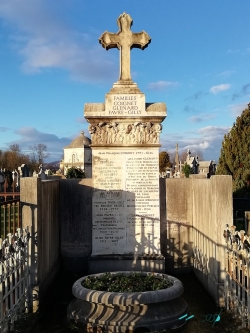
Stonework is a central part of the experience. The municipal authority names architects and sculptors whose work appears among the tombs, including Teofil Żebrawski, Feliks Księżarski, Tadeusz Błotnicki and Wacław Szymanowski. The official city tourism guide recommends the avenue to the left of the main entrance for the oldest epitaph plates, dated 1803–1830, and monuments from the first half of the nineteenth century. This is a useful route for readers interested in the cemetery as an open-air record of changing styles.
People remembered across the grounds
The cemetery’s significance also comes from the variety of lives commemorated there. Kraków’s official guide identifies the grave of painter Jan Matejko along the main avenue and the tomb of actress Helena Modrzejewska farther along. It also points visitors toward Tadeusz Kantor’s striking self-designed monument, associated by the city with his theatre work, and the Avenue of the Meritorious, where figures such as cabaret founder Piotr Skrzynecki and poet-singer Marek Grechuta are buried.
Another frequently visited grave is that of Emilia and Karol Wojtyła and their son Edmund—the parents and brother of Pope John Paul II—on the section near Prandoty Street. The cemetery authority says a monument marking John Paul II’s visits and prayer at his family’s grave was unveiled in 2005. These places draw visitors for different reasons: artistic history, national memory, family devotion or personal connection. No single route can capture every story among tens of thousands of graves.
The military section adds another layer. The city authority says it was laid out in 1920 on a former military training ground and includes graves of Polish soldiers and family members, as well as separate sections for German, Soviet and British air-service personnel. A monument to soldiers of the Kraków Army was unveiled in 1990, with urns of soil from battlefields and wartime burial sites placed there in 1993. These memorials require quiet attention; they are not merely scenic additions to a walking tour.
Hours, access and respectful planning
The municipal cemetery operator currently publishes seasonal opening hours: April through September, 07:00–20:00; October through March, 07:00–18:00. The operator notes that hours may be extended during periods of heavy attendance, such as major commemorations. Check the official page before setting out, particularly around All Saints’ Day, when cemeteries in Poland receive exceptionally large numbers of visitors. The published hours are access hours, not a schedule for guided tours.
Rakowicki is an active cemetery, so plan a quiet visit rather than treating it as an ordinary park. Follow posted rules, keep to paths, avoid disturbing funerals or people visiting family graves, and ask before photographing mourners or close-up details of private tombs. The area is extensive; a short stop may cover only the oldest avenue or one memorial section. If mobility is a concern, contact the municipal operator in advance about accessible entrances and paths rather than assuming that every terrace or lane is step-free.
There is no single ticket or visitor itinerary confirmed on the sources consulted for this article, so do not assume a guided tour or paid museum service is available. The official municipal history, cemetery authority and city guide offer a reliable framework for a self-directed walk, but the purpose of the site remains remembrance. Rakowicki is most compelling when architecture and biography are read together: an 1803 burial, nineteenth-century chapels and sculpture, military memorials and the graves of modern cultural figures form a living record of Kraków.