Raqchi, Peru: the Inca temple, storehouses and a living highland landscape
Raqchi is more than a single temple
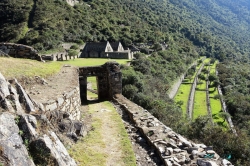
Raqchi lies in the district of San Pedro, in Cusco’s Canchis Province, on the high plateau south of the city of Cusco. The regional Culture Directorate places the archaeological park at an average elevation of about 3,480 metres, beside the Vilcanota River and below the extinct Kinsach’ata volcano. Visitors often arrive expecting one monumental ruin; the site is better understood as a planned landscape of ceremonial, residential and storage areas spread across a broad area.
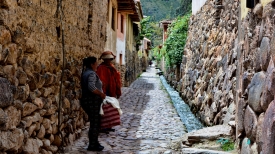
The settlement is also a living place. The community of Raqchi occupies part of the archaeological park’s wider landscape, so the visitor is not looking at an abandoned monument in an empty countryside. Cusco’s cultural authorities describe the community as a pottery-making settlement and situate it alongside the archaeological remains. That relationship calls for respectful travel: follow marked routes, ask before photographing people or workshops, and remember that homes and farmland are not extensions of the ticketed monument.
The regional authority identifies the ancient settlement as Cacha, a name associated with the place in Inca accounts. Its most prominent structure is commonly called the Temple of Wiracocha, after the deity to whom local tradition and historical interpretation connect it. The name should not make the complex seem simple or entirely understood. Raqchi’s scale, its storehouses and its position along a major Andean corridor point to a site with several functions, whose details continue to be studied.
The great wall and the complex around it
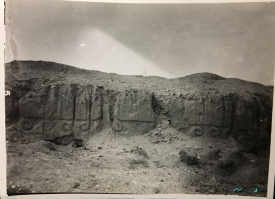
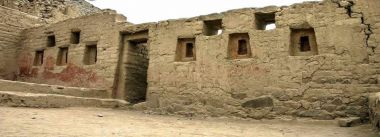
The central temple wall is the landmark most visitors notice first. The Culture Directorate describes a 14-metre-high wall, with carefully worked polygonal stone at the base and large rectangular adobe blocks above. It formed the central partition and roof support of a rectangular building about 92 metres long. Rather than inventing a complete reconstruction of its roof, focus on what remains visible: a tall spine of masonry that reveals both the building’s scale and the combination of materials used by its builders.
The temple does not stand alone. Official site information describes a small artificial lake, a raised platform and regular buildings laid out around courtyards. This ordered plan suggests that movement through Raqchi was organized, but it does not allow every room’s former use to be assigned with certainty. Walk slowly between the open spaces and the surviving walls; the changing relationships among the central structure, courtyards and surrounding buildings are as informative as the best-known façade.
East of the temple area, visitors encounter rows of circular structures generally called collcas. The regional authority counts 152, each with a narrow entrance, and interprets them as storage buildings used for agricultural goods and other supplies. Their number and arrangement make Raqchi a compelling place to think about how the Inca state gathered, stored and moved resources across varied ecological zones. The evidence supports a storage function, but individual contents and distribution systems should not be presented as if each had been documented for every building.
Reading the site through its highland setting
Raqchi’s location beside the Vilcanota and close to a major southbound road helps explain why the complex is larger than a solitary sanctuary. The river valley links settlements and agricultural landscapes, while the surrounding plateau brings cold nights, strong sun and changing weather. At 3,480 metres, visitors may feel the altitude even on an easy walk. Rest, drink water and avoid rushing from the vehicle straight into a long tour, especially if arriving from lower elevations.
The official description connects the place with the extinct Kinsach’ata volcano. Its presence is part of the landscape, but the visitor route is an archaeological park visit, not a volcano excursion. Look for how the monumental architecture sits against the open highland horizon and how courtyards shape the view across the site. The contrast between precisely worked stone, broad adobe surfaces and the natural setting gives Raqchi a different character from the tighter urban fabric of Cusco.
Raqchi is sometimes reduced to a stop on the way to somewhere else. That short visit can miss the scale of the park and the community whose name the site shares. A more attentive itinerary includes time to understand the central wall, the storehouse sector and the pattern of courtyards, while recognizing that daily life continues nearby. Any community-led cultural activity or workshop should be arranged respectfully and confirmed locally; it should not be treated as automatically included in the archaeological admission.
Access, hours and respectful preparation
The Culture Directorate of Cusco currently lists visiting hours from 7 a.m. to 5 p.m. The park lies about 117 kilometres south of Cusco by the paved Cusco–Sicuani highway, followed by roughly 150 metres on an unpaved access track to the entrance. These figures describe the official route, not a guaranteed travel time. Roadwork, weather and transport schedules can affect the journey, so confirm conditions with current transport providers and leave a margin rather than planning a rushed return.
The same official page describes the entrance as level and suitable for visitors with disabilities, an important practical detail for a highland archaeological site. Surfaces beyond the entrance can still be uneven, so ask staff about the route available on the day and choose footwear with a secure grip. The published visitor rules prohibit climbing or marking archaeological walls, bringing food or animals into the site, camping, and flying drones without authorization. Alcohol and drugs are also prohibited.
Carry drinking water, sun protection and a warm layer, and take rubbish away with you. The site’s altitude and open exposure make a brief, well-paced visit more comfortable than a hurried loop. Opening information and conservation restrictions can change, so recheck the regional authority’s page before travelling. Raqchi rewards visitors who look beyond a single iconic wall: its story lies in the combination of ceremonial architecture, planned storage, a river-valley setting and a community that still inhabits the surrounding landscape.