Lord of Sipán at Huaca Rajada: the Moche tomb and site museum
Where the Lord of Sipán was discovered
Huaca Rajada–Sipán is an archaeological complex in the Lambayeque region of northern Peru, associated with the discovery of an intact elite Moche burial in 1987. The place name often leads travelers to combine several distinct stops, so a clear distinction is useful: the archaeological complex and its nearby site museum are at Huaca Rajada, while the celebrated original objects and reconstructed royal burial chamber are displayed at the Royal Tombs of Sipán Museum in the city of Lambayeque. They are related, but they are not the same museum.
The discovery became a landmark in Peruvian archaeology because the tomb had escaped the looting that had damaged many ancient burial sites. The Ministry of Culture identifies 20 July 1987 as the date the tomb of the Lord of Sipán was found. Archaeologist Walter Alva, researcher Susana Meneses and local archaeologist Luis Chero were part of the team that investigated the discovery. Their work brought evidence of Moche power, ritual and skilled production into public view through a documented archaeological context.
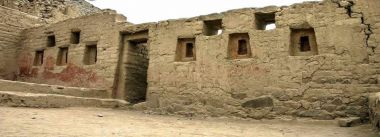
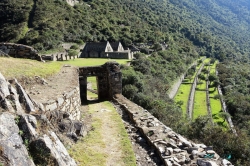
The burial belonged to the Moche, a society that flourished on Peru’s north coast centuries before the Inca state. The tourism inventory maintained by Peru’s Ministry of Foreign Trade and Tourism describes Huaca Rajada as a complex of adobe pyramidal structures with a sequence of occupation extending from Moche into later Lambayeque cultural contexts. The monumental setting matters: the Lord was not found in an isolated display case but within a carefully arranged funerary landscape built from earth and architecture.
Understanding the site and the museum
The site museum helps visitors connect excavated evidence to the ceremonial setting. Peru’s official visitor service says its displays recreate the funerary contexts of three elite individuals associated with tombs 14, 15 and 16: the Warrior Priest, the Noble Warrior and the Lord Warrior. The Ministry’s descriptions explain that the museum interprets discoveries at the site, rather than serving as the principal home of the famous Lord of Sipán assemblage. That distinction prevents a common disappointment and helps organize a fuller visit.
The original tomb of the Lord of Sipán was one of the richest Moche burials documented in the region, and the discovery reshaped the study of pre-Columbian north-coast societies. Yet the site museum should not be described as containing every original object recovered there. The Royal Tombs of Sipán Museum, in Lambayeque city, was created to display the principal finds and their archaeological context. Visitors interested in the objects themselves should plan for that separate institution as well as the landscape where the tomb was excavated.
Huaca Rajada rewards close attention to context. Earth-built platforms, the relationship between the structures and the surrounding agricultural landscape, and the museum’s account of successive burials all help explain why the find mattered. Archaeology here is not a story of treasure alone: it is a record of social rank, ritual practice, craft, political authority and the careful work of excavation. The site offers the physical setting; the museum helps explain the evidence without pretending that every question about Moche life has been settled.
From excavation to a public archaeological landmark
The 1987 discovery gained international attention, but its importance rests on more than the richness of the burial goods. An intact tomb preserves relationships among the deceased, offerings, chambers and objects that are lost when a burial is disturbed. The Ministry of Culture’s anniversary account describes the find as an intact Moche royal mausoleum and credits the archaeological team with bringing the discovery into research and conservation. That context is why the story belongs to scientific history as much as to museum display.
The nearby site museum opened in 2009, according to Peru’s official museum directory, and presents objects and interpretations from excavations at Huaca Rajada. Its focus includes tombs 14, 15 and 16 and evidence connected with Lambayeque cultural continuity. The visit can therefore broaden the usual image of Sipán beyond one ruler. It introduces other people buried in the complex and places their funerary settings within a longer history of occupation and cultural change in the region.
The division between the site and the Royal Tombs museum is also practical. Huaca Rajada lies in the countryside on the Sipán–Pampa Grande road, while the Royal Tombs museum is in Lambayeque city. Allow time for transport between them and check each institution separately. The site visit makes the landscape and excavated setting legible; the city museum offers a much more extensive encounter with the objects. Together they form a stronger itinerary than treating either one as a substitute for the other.
Hours, admission and planning the visit
At the time checked for this article, Peru’s government visitor service listed the Huaca Rajada–Sipán Site Museum at Campiña Huaca Rajada, on the Sipán–Pampa Grande road, and gave public hours as Tuesday through Sunday, 9 a.m. to 5 p.m. A Naylamp announcement for 2026 likewise said Lambayeque museums would open Tuesday to Sunday from 9 a.m. These are useful current references, not a guarantee against temporary closures, special events or operational changes; confirm with the museum or Naylamp before traveling.
The same government service listed admission at S/8 for general visitors, S/3 for university or technical students, and S/1.50 for minors, with a 50 percent discount for specified groups including adults over 60, teachers, people with disabilities and voluntary military service members. Residents of Huaca Rajada–Sipán were listed for free entry with identification. These amounts were published by the state service last updated in January 2026 and can change; verify the current tariff and accepted documents before departure.
The official address is in the Campiña Huaca Rajada, along the road toward Pampa Grande, in the Chiclayo area of Lambayeque. This is not a city-center museum stop, so arrange transport in advance and allow for the return journey. The official page describes an in-person visit and ticket purchase at the museum box office. It does not promise a particular guided-tour language, transport service or daily archaeological demonstration; ask directly if those details matter to your plans.
A worthwhile itinerary treats Huaca Rajada as both a landscape and a research story. Read the site museum’s interpretation, look carefully at how the structures sit within the valley, and then visit the Royal Tombs of Sipán Museum in Lambayeque to see the principal objects in their separate exhibition setting. Check both institutions’ current hours and access notices, keep the two locations distinct, and leave room for changes on the day. The Lord of Sipán’s significance comes into focus when the burial, the people who excavated it and the place that held it are understood together.