About El Tazumal
A monumental site within a much larger archaeological zone
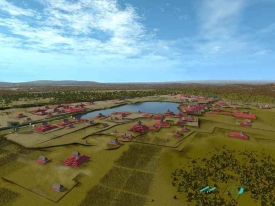
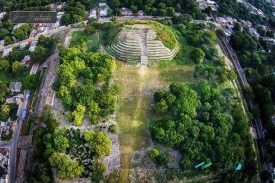
Tazumal stands in the city of Chalchuapa, in El Salvador’s Santa Ana department, about 80 kilometres west of the capital, San Salvador. The Ministry of Culture places it within an archaeological zone of roughly ten square kilometres that also includes places such as Pampe, El Trapiche, Las Victorias, San Francisco, Nuevo Tazumal and Casa Blanca. This landscape matters because Tazumal was part of a dense history of settlement, not an isolated pyramid surrounded by empty countryside.
The ministry describes Chalchuapa as a long-lived community with its own cultural character and influences associated with Maya, Teotihuacan and Toltec groups. It says occupation in the wider area reaches back to the Early Preclassic, around 1200 BCE, and continued through later periods. UNESCO’s Tentative List entry likewise describes at least 3,200 years of human occupation in present-day Chalchuapa. These broad timelines refer to the region and successive communities; they should not be turned into a claim that one unchanged population or political system lasted continuously.
Tazumal is one of several archaeological groups within Chalchuapa and is not itself a UNESCO World Heritage property. The city’s cultural landscape was submitted to UNESCO’s Tentative List in 1992, a preliminary national inventory rather than an inscription on the World Heritage List. UNESCO identifies the Tazumal group as spanning the Classic to Early Postclassic periods, broadly 200–1200 CE. El Salvador’s Ministry of Culture uses a different summary for Tazumal’s principal role, describing a Classic-period peak from about 200 BCE to 900 CE. The source labels differ, so it is more accurate to preserve that nuance than force a single date range.
Structure 1 and the record of excavation
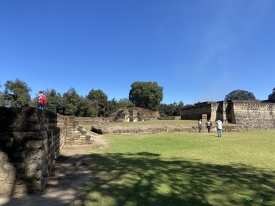
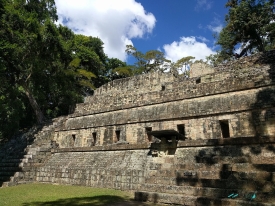
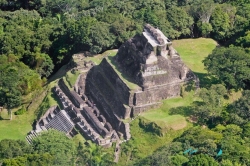
The most prominent monument is Structure 1, a pyramidal mound about 24 metres high. The Ministry of Culture says archaeologist Stanley Boggs formally recorded Tazumal in 1940 and identified 13 structures, ranging from low platforms to the principal mound. Subsequent surveys indicated that the archaeological area covered at least 20 hectares. Those figures describe the wider site and its recorded features; the visitor sees only the portion preserved and made accessible within the park boundary.
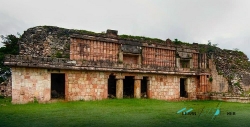
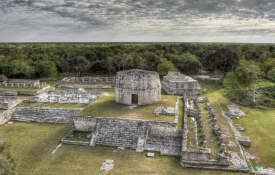
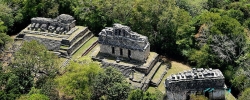
National tourism information describes Structure 1 as a large rectangular construction crowned by a temple and built through multiple phases. It reports 13 construction phases, with the main sequence dated broadly from about 100 to 800 CE. Nearby structures included a ball court, according to the tourism portal, while the Ministry’s account identifies other platforms and a circular-plan temple. These descriptions show a planned civic and ceremonial complex, but they should not be used to suggest that every feature is currently visible from the visitor route.
Research at Tazumal continued after the first formal recording. The ministry says the site became El Salvador’s first archaeological park in the 1950s and was declared a National Historic Monument by legislative decree in 1947. A portion of Structure 2 collapsed in 2004, prompting archaeological investigation and restoration work that generated new information about the building and the methods used to repair it. The episode underlines that monuments are vulnerable structures, not timeless scenery, and that conservation itself becomes part of the site’s modern history.
Chalchuapa’s cultural connections and the limits of a single story
Chalchuapa’s archaeological record includes monumental architecture and domestic areas that are not necessarily visible on the surface. UNESCO’s Tentative List describes three protected groups: the Late Preclassic complexes of El Trapiche and Casa Blanca, and the Tazumal group extending into the Early Postclassic. It also notes two monumental Olmec sculptures from Chalchuapa as the southernmost known examples in Mesoamerica. These details place the town within wide regional networks while leaving room for local development and distinctive traditions.
The site’s chronology is not a simple sequence in which one culture replaced another overnight. The Ministry of Culture points to Maya, Teotihuacan and Toltec influences across Chalchuapa’s long occupation, while UNESCO discusses a local group that became important in central and western El Salvador toward the end of the Classic period. Those formulations describe contact and cultural change, not a complete account of every resident’s identity. Archaeology works through objects, buildings and context; interpretations can be refined as research continues.
For visitors, this broader frame changes the way the pyramid appears. Structure 1 is visually dominant, but the story also involves adjacent groups, changing architectural phases, residential life and the modern town around the park. The museum and interpretive material can help connect the visible mound to that wider record. Avoid removing stones or treating the monument as a climbable viewpoint. Looking carefully from the designated areas protects the structure and leaves space for future research to answer questions the current display cannot resolve.
Visitor information and a responsible itinerary
At the time of this review, the Ministry of Culture’s official Tazumal page lists opening hours Tuesday through Sunday, 9 a.m. to 4 p.m. It gives the address as Diagonal 5.ª Calle Oriente, Calle al Cuje, Chalchuapa, Santa Ana. The ministry describes a guided visit lasting about 35 to 45 minutes and limits groups to 15 people. These are useful current planning details, but schedules can change; confirm with the ministry before travelling, particularly around holidays or maintenance periods.
The same official page lists admission at US$1 for Salvadoran nationals, US$3 for Central Americans and foreign residents, and US$5 for non-resident foreign visitors. It says residents of the municipality, students with a valid card, people with disabilities, older adults and children under 12 enter free. Check eligibility and accepted payment methods before arrival, since posted prices and operating rules may be revised. The site is about 80 kilometres west of San Salvador, so plan transport and allow more than the guided tour’s 35–45 minutes for the park and surrounding town.
Tazumal rewards a visit that looks beyond the largest mound. Notice how the main structure anchors the enclosure, consider the other architectural remains and ask how archaeological work has changed the interpretation. Chalchuapa’s long occupation and the different period labels in official sources are part of the story, not complications to hide. The strongest impression comes from seeing a monumental centre in relation to a living town and a regional archaeological landscape. That perspective makes the visit more than a photograph of a pyramid: it becomes an encounter with evidence, change and careful preservation.