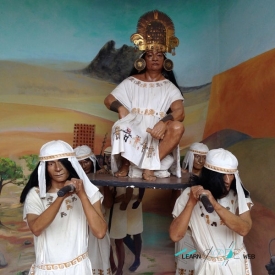
Kuélap, also spelled Cuélap, is one of Peru’s most significant pre-Inca archaeological monuments. Built by the Chachapoya culture in the northeastern Andes, the site rises above the Utcubamba Valley at around 3000 meters above sea level. Its commanding location atop Cerro Barreta, combined with its massive stone architecture, reflects both engineering mastery and deep sociopolitical importance. Kuélap is dominated by a vast artificial platform nearly 600 meters long, enclosed by towering perimeter walls that reach up to 19 meters in height. Archaeological evidence places its construction around the 11th century, during the flourishing of the Chachapoyas, with occupation continuing until the mid-16th century.
Despite its monumental scale, Kuélap remained largely unknown to outsiders until 1843. The region’s persistent cloud forest, steep slopes, and difficult access kept the complex hidden until Judge Juan Crisóstomo Nieto documented it after being guided by local residents—an episode often identified as its “discovery.” Later researchers, from Adolf Bandelier to Louis Langlois, examined its structures, but the most extensive investigations were carried out by Peruvian archaeologist Federico Kauffmann Doig, whose work helped define Kuélap’s place within Chachapoya cultural development.