Hammam Essalihine: Roman baths in Algeria’s Aurès mountains
Where an ancient bath is still part of local life
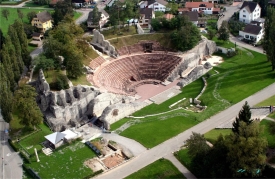
Seven kilometres from Khenchela, the road reaches El Hamma and a spring whose history stretches back to Roman North Africa. Hammam Essalihine is a rare kind of archaeological encounter: water remains central to the place rather than surviving only as a channel on an excavator’s plan. The visitor meets a working thermal station beside protected remains. That distinction matters. The old basins tell one story; the contemporary bathing facilities tell another, connected story.
The Algerian tourism ministry locates the station in a wooded landscape at the edge of the Aurès. Its description places Roman use at the beginning of the site’s documented history and identifies a restored circular Roman pool. The Khenchela Directorate of Culture records the protected archaeological bath as two basins and associated rooms under its Latin name, Aquae Flavianae. The ministry describes five pools in the wider station, alongside bathing cabins. Two historic basins and five station pools are therefore different counts, not competing measurements of the same enclosure.
It is easy to turn long use into a legend of an unchanged two-thousand-year-old spa. The evidence supports a more interesting view: a Roman complex whose fabric has needed repair, with later facilities built around the same resource. Nothing about the survival of the spring proves that every wall, pool edge or bathing practice remained identical. Looking for the boundary between ancient masonry, conservation work and modern service buildings makes the visit richer than the familiar claim that time stopped here.
Aquae Flavianae and the evidence in stone
The Roman name ties the baths to the history of Mascula, the settlement at present-day Khenchela, but a name alone cannot date every surviving stone to a single emperor’s reign. Archaeological writing offers a firmer anchor. André Balland’s study discusses an inscription found in a thermal pool near Khenchela and first published in 1928. It shows why the site is more than an appealing Roman-looking backdrop: epigraphy supplies evidence for ancient use and patronage, even while the exact construction sequence of individual parts needs careful study.
The layout of basins and rooms gives another kind of testimony. A spring requires collection, movement and control of water; a public bath requires places where people can enter and remain safely. Those general functions help explain the surviving architecture without pretending that a visible channel proves a particular ritual or that the circular and rectangular forms had fixed social categories. Ancient baths combined infrastructure with sociability, and Hammam Essalihine’s continued thermal use makes that relationship unusually legible.
Protection is a modern chapter of this history. The Algerian cultural heritage map lists the Roman site as nationally classified in Official Gazette number 27 of 25 April 2010. Classification recognises cultural value; it does not turn every part of an operating bath into an unrestricted archaeological exhibit. Respecting marked areas and distinguishing public bathing spaces from protected fabric are both part of reading the place correctly.
Restoration, water and the limits of old descriptions
The architectural practice engaged by the Khenchela Directorate of Culture describes work studied and carried out in 2003. Its account says weather, time and inappropriate interventions had damaged the ancient structure. Restoration addressed deteriorated pillars and basins using traditional techniques and materials, while reception improvements and private bathing cabins served the living station. These are dated records of conservation, not proof that the fabric needs no further work in 2026.
The tourism ministry describes water emerging around 70 degrees Celsius and lists forty bathing cabins and five station pools. Those figures belong to the ministry’s published description; they should not be mistaken for a live count of available cabins or pools on a particular day. More importantly, source temperature is not the temperature in a bathing basin. Ask staff about conditions before entering water, especially where facilities for different uses sit close to archaeological remains.
Mineral water is often advertised in medical language. The ministry lists rheumatic, respiratory and dermatological uses, and a 2011 university water study measured mineral content and microbiological conditions at several local sampling points. Neither statement establishes that a visit will treat a reader’s illness or that historic measurements describe today’s water quality. The place can be appreciated for architecture, landscape and bathing culture without promising a medical result.
Planning the journey to El Hamma
Start with Khenchela as the regional reference point and verify the route to El Hamma and the specific bath entrance before departure. A description of “seven kilometres” identifies the site’s proximity; it is not a guarantee about travel time or road conditions. The Directorate of Culture’s heritage record gives local contact details, while the tourism ministry provides the institutional description. These are better starting points than an old review for checking whether the protected pools, modern baths and ancillary spaces are open.
No reliable current opening timetable, admission tariff or list of accessible pools was confirmed for this article. Ask the operator about hours, bathing arrangements and any conservation closures rather than relying on a price or timetable from an undated travel page. The ruins deserve time even if a swim is not possible. Observe the different shapes of the ancient basins, then place them in the wider station and wooded setting: the contrast explains why the spring remained a local destination through more than one historical period.
Security also belongs to practical planning. The UK Foreign Office advice, updated 25 September 2026 and still current on 29 October, restricts travel in named Algerian border areas and notes risks in northern mountain districts; it does not issue a blanket prohibition on Khenchela. Check the exact route and current local guidance for your circumstances. Hammam Essalihine is best understood as a protected monument within a living place, where reliable history begins by asking which parts are Roman, which were restored and which serve bathers today.