About Tōdai-ji
Tōdai-ji: the great temple of Nara and its bronze Buddha
In the old capital of Nara, among lawns where tame deer wander freely, stands one of the most important temples in Japan. Tōdai-ji — the "Great Eastern Temple" — is home to the Daibutsu, a colossal bronze figure of the Buddha that has drawn pilgrims for nearly thirteen centuries, sheltered inside one of the largest wooden buildings on earth.
Tōdai-ji is not only a masterpiece of Buddhist art and engineering; it was, at its founding, an instrument of the state, meant to unify a young nation under the protection of the Buddha.
An emperor's great vow
The temple was founded in the 8th century by Emperor Shōmu, who made Tōdai-ji the head of a national network of provincial temples. Its centrepiece, the Great Buddha — a seated image of Vairocana (Birushana) — was cast in bronze at enormous cost and dedicated in a spectacular "eye-opening" ceremony in 752, attended by dignitaries from across Asia. The project consumed much of the country's bronze and is said to have nearly bankrupted it.
The Great Buddha and its hall
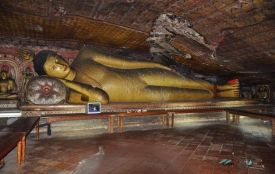
The seated bronze Buddha rises about 15 metres high and remains one of the largest bronze statues of the Buddha in the world. It sits within the Daibutsuden (Great Buddha Hall), long celebrated as one of the largest wooden structures in the world. The building visitors see today was reconstructed in 1709 after earlier halls were destroyed by fire, and even this version — smaller than the original — is vast. A well-loved feature is a wooden pillar with a hole at its base, said to be the size of the Great Buddha's nostril; squeezing through it is believed to bring good fortune.
Guardians, gates and deer
The approach passes through the mighty Nandaimon gate, guarded by two fierce wooden Niō guardian statues, among the greatest works of Japanese sculpture. The temple grounds form part of Nara Park, where hundreds of sacred deer, regarded as messengers of the gods, roam and beg politely for crackers — an experience as memorable for many visitors as the temple itself.
Visiting Tōdai-ji
Tōdai-ji is part of the UNESCO World Heritage listing of the Historic Monuments of Ancient Nara, inscribed in 1998. The Daibutsuden charges an admission fee and is open daily, with hours that shift slightly by season; combined tickets with the temple museum are available. Nara is an easy day trip from Kyoto or Osaka, and arriving early rewards visitors with quieter halls and the soft morning light on the bronze. Visitors should dress and behave respectfully, as it remains an active place of worship.
Location: Nara, Nara Prefecture, JapanFounded: 8th century by Emperor Shōmu; Great Buddha dedicated in 752Great Buddha: ~15 m bronze image of Vairocana BuddhaDaibutsuden: among the largest wooden buildings on earth (rebuilt 1709)Status: UNESCO World Heritage (Historic Monuments of Ancient Nara, 1998)Visiting: admission charged; open daily; sacred deer roam Nara Park