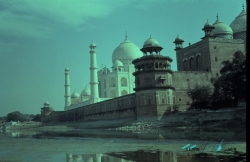
From the crowded lanes of Old Delhi, the Red Fort announces itself with a long wall of red sandstone, but the best way to understand it is not as a single monument. The complex was conceived as the palace-fort of Shahjahanabad, the Mughal capital planned by Emperor Shah Jahan, and it later absorbed military, colonial and national histories. Its pavilions, courtyards and water channel once organized court life; today the site is both a protected heritage property and the setting for India’s Independence Day address. Visitors who look beyond the familiar façade find a carefully planned royal city whose meaning has changed with the country around it.
UNESCO identifies the Red Fort as the palace-fort of Shahjahanabad, Shah Jahan’s new capital. The government tourism account dates the decision to move the Mughal court from Agra to Delhi to 1639 and says construction of the fort took place from 1638 to 1648. Its scale and location gave the emperor a residence, a ceremonial centre and a fortified edge to the new city. The name Red Fort comes from the massive enclosing walls of red sandstone. The neighboring Salimgarh Fort, built in 1546 by Islam Shah Suri, is part of the larger heritage complex, so the visitor is entering a layered defensive landscape rather than a palace isolated from its surroundings.