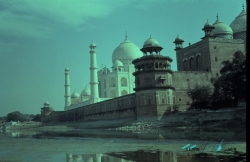
Jama Masjid stands on a rise in Old Delhi, west of the Red Fort and close to the lanes of the historic market district. Its full name, Masjid-i Jahan-Numa, is associated with the Mughal capital Shahjahanabad, the walled city commissioned by Emperor Shah Jahan. The mosque was completed in 1656 and remains an active place of congregational prayer. That living role matters: this is not a monument emptied of worship, and visitor access must fit around the rhythms of a functioning religious institution.
The mosque’s setting helps explain its scale. The Red Fort, Chandni Chowk and Jama Masjid were part of a larger urban composition in which palace, market street and congregational mosque served different but connected purposes. The Shahjahanabad Redevelopment Corporation identifies Jama Masjid as the principal mosque of Old Delhi. Today the crowded streets still press close to the gates, while the elevated courtyard creates a striking change of pace once a visitor passes through the entrance.