Vincennes Castle: Paris’s Royal Fortress, Gothic Chapel and Prison History
At the eastern edge of Paris, the Château de Vincennes rises above the surrounding streets with a profile unlike the capital’s familiar palace façades. Its tall keep, fortified enclosure and Gothic chapel preserve the scale of a royal stronghold. This is not a medieval set piece: it is a layered site shaped by royal power, military adaptation and centuries of changing use. A visit connects those histories to today’s town of Vincennes and the wider metropolitan landscape.
From royal manor to fortified residence
The site began as a royal hunting residence in the forest east of Paris. The monument’s official history traces a manor associated with Louis VII in the 12th century. In the 14th century, Charles V developed Vincennes as a major fortified residence, beginning the great keep in 1361 and expanding the enclosure and chapel. It was both a defensible refuge and a statement of kingship: close to Paris but distinct from an ordinary urban palace.
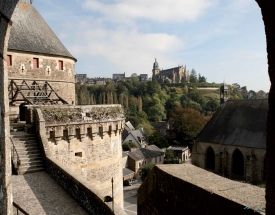
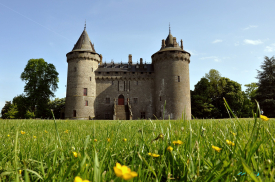
The keep remains the architectural landmark. About 50 metres high, it is one of France’s most imposing surviving medieval residential keeps. Its vertical form, corner turrets and defensive details can be read from outside; inside, rooms and circulation reveal how a fortified residence accommodated a court and household. The surrounding wall and towers form a substantial enclosure, not just a backdrop. They separate the keep, chapel and service spaces while controlling entry.
A chapel within the royal precinct
The Sainte-Chapelle of Vincennes belongs to the same ambition to create a royal complex combining defense with ceremony. Its Gothic design offers a striking contrast to the rugged walls: slender proportions and stained glass made the chapel a place of worship and royal representation. Together, keep and chapel show how medieval authority joined practical security to sacred and ceremonial life.
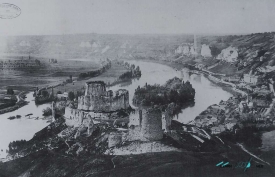
Construction continued across generations, and the fortress changed as political needs shifted. The monarchy eventually moved its principal residence elsewhere. Louis XIV’s departure for Versailles in 1682 marked a decisive transition, although Vincennes retained strategic importance. Its later history includes military administration and a prison. Visitors therefore encounter a monument repeatedly adapted, not a site frozen in one century.
Prison, state and memory
Vincennes became one of France’s consequential state prisons. The official interpretation recalls prisoners whose names connect the fortress to political and cultural history. Confinement is part of the site’s identity, but it belongs in context: the castle was an instrument of state power, and its defenses served both protection and control. Reading the prison history alongside the royal residence provides a fuller account of how authority operated.
The fortress also entered modern history as a military site. The present interpretation brings these periods together rather than presenting the medieval fabric as an isolated relic. Notice the contrasts: a royal chamber inside a defensive tower, the chapel’s refined interior beside the enclosure walls, and the contemporary town beyond the gates.
Visiting today
As of October 21, 2026, official visitor information lists winter-season hours from September 22 through May 20, 10 a.m. to 5 p.m. The monument is closed January 1, May 1 and December 25. Last admission is 45 minutes before closing for the Sainte-Chapelle and 30 minutes before closing for the keep. Chapel access can pause at lunchtime, with exact arrangements varying by date. The published individual ticket is €13; the reduced rate is €11.50, and admission is free for visitors under 18. Confirm the official page before travel for current hours, tickets and event restrictions.
Public transport is convenient: Metro line 1 terminates at Château de Vincennes, while RER A serves Vincennes station; several bus routes stop nearby. The monument says parking is unavailable except for vehicles displaying a disability parking card. Luggage is limited to 30 × 40 × 15 cm, and strollers are not allowed inside the precinct. These details matter because the keep’s narrow circulation and security screening shape the visit.
Why the fortress still matters
Vincennes offers a compact way to understand the changing geography of French power. It began as a royal residence beyond the medieval city, became an ambitious fortified center, then adapted to military and carceral roles as Paris expanded around it. The surrounding town is now part of metropolitan Paris, but the height of the keep, the enclosure and its controlled thresholds still communicate the site’s original purpose. Approach it as architecture and as a record of institutions: its stones tell stories of kingship, worship, imprisonment and preservation.
Allow time for both the keep and chapel, and remember that their interiors may have separate access schedules. The official practical-information page is the best source for same-day arrangements; the monument’s history pages provide context for the royal fortress and prison. Combining what is open now with what the place meant across different periods makes Vincennes more than a quick photo stop.
Sources: official royal fortress history; prison history; visitor information; official history in French.