About Castle of Fougères-sur-Bièvre
A fortified residence, not a royal showpiece
In Le Controis-en-Sologne, between Blois and the wider Loire Valley, Fougères-sur-Bièvre Castle stands apart from the region’s grand Renaissance châteaux. Its sturdy curtain wall, entrance towers and keep suggest a compact fortress, but its story is also one of comfortable seigneurial life, changing owners and practical reuse. The contrast makes this monument more revealing than a simple picture of medieval warfare.
The estate passed to Jean de Refuge through marriage in 1438. His son Pierre served the crown and became Louis XI’s general of finance in 1469. In 1470, the king authorized him to build a fortified residence on his land. The official history notes that the site was not a major strategic position; the imposing defenses also communicated rank and authority in a relatively flat landscape.
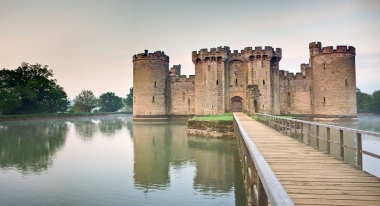
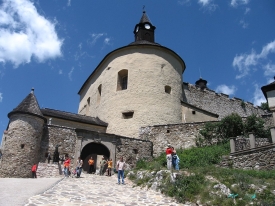
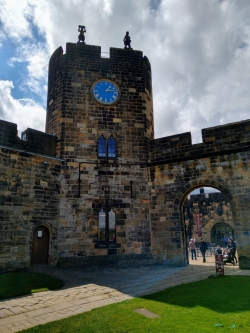
Pierre’s project drew on the late-medieval language of a stronghold: a moat, drawbridge, towers, arrow loops, machicolations and a keep. Those features now make the north entrance a striking introduction to the castle. Yet the defensive silhouette should not obscure its residential purpose. The rooms were designed for a noble household, and the official interpretation points to fireplaces, window seats and latrines as evidence of fifteenth-century comfort.
The castle is best understood as a house that adopted the appearance of a fortress. Its setting did not demand the same strategic defenses as a border stronghold, and some artillery openings were already becoming outdated when they were built. That tension between practical living and theatrical military design is part of the site’s character: architecture could protect, but it could also make social status visible.
From Pierre de Refuge to a Renaissance courtyard
After Pierre’s death, the estate passed in 1510 to his nephew Jean de Villebresme, who completed the building and introduced Renaissance elements. A chapel was added in 1520, followed by an arcaded gallery connecting it to the main tower. The courtyard therefore records a transition: pointed Gothic forms remain, while the gallery’s open arches and decorative details look toward newer architectural tastes.
Walk through the courtyard slowly. It is not merely a picturesque center enclosed by walls; it shows how the castle’s functions were joined. The tower, residential rooms, chapel and gallery shaped a domestic route through the property. The official history compares the gallery’s design with the château at Blois, another reminder that Fougères belongs to a regional conversation about architecture, even while it resists the grand scale of nearby royal residences.
The residence gradually lost importance between the sixteenth and eighteenth centuries. In 1789 René Lambot acquired the property. His heir converted the castle in 1812 into a wool-spinning workshop, adapting part of the religious and domestic complex to industrial work. A hydraulic wheel and turbine powered the operation; the Bièvre was diverted through a channel in the former moat to supply it.
The mill closed in 1901 as textile production shifted elsewhere, and a sawmill followed in 1903 before failing in 1911. Families of workers then occupied the buildings. This industrial chapter is essential to the visitor’s reading of the castle: the stone walls did not freeze in time but were altered to serve the local economy. The remains tell a story of medieval ambition, later manufacturing and subsequent public restoration.
Restoration, wartime refuge and public heritage
Fougères-sur-Bièvre was classified as a French historic monument in 1912 and acquired by the state in 1932. Restoration work followed, including repairs to the entrance, chapel and fireplaces. The roof presented a major challenge: official interpretation records that six workers spent two and a half years, from 1933 to 1935, covering about 4,500 square metres with local materials and traditional skills.
During the Second World War the castle served as a refuge for works of art. The monument’s official history names the Lady and the Unicorn tapestries, sculptures by Auguste Rodin and stained glass from Chartres Cathedral among the treasures sheltered there. This episode gives the building another role beyond its own architecture: a former seigneurial residence became part of a national effort to protect cultural property during wartime.
Today the Centre des monuments nationaux manages the castle. The visit takes in the courtyard, the keep, the entrance curtain wall and the walk along the ramparts, as well as rooms that illustrate the shift from medieval to Renaissance design. The monument’s official guide estimates about an hour for a self-guided visit, though the time will depend on how closely you study the architecture and interpretation.
Some visitor amenities are practical rather than elaborate: the official site lists a bookshop, toilets, parking, bicycle parking and a picnic area outside the monument. Pets are not permitted, except assistance dogs. Strollers are discouraged in favor of a baby carrier. The experience is most rewarding when you look beyond the castle’s silhouette and follow its successive uses—from a noble home to mill, wartime shelter and protected historic site.
Opening times, tickets and getting there
The official schedule is seasonal. From September 5 through April 30, the castle is open 10 a.m.–12:30 p.m. and 2–5 p.m., and closed Tuesdays. From May 2 through September 4, hours are 9:30 a.m.–12:30 p.m. and 2–6 p.m. Last admission is one hour before closing. It also closes January 1, May 1 and December 25; on December 24 and 31 it closes at 4 p.m.
During an extreme red-level heat alert, the official site says the castle opens only from 8:30 a.m. to 1 p.m., with last entry at noon. Weather-related adjustments and special closures can affect a planned visit, so check the monument’s practical-information page before setting out. The site’s published hours are more reliable than older travel pages that give a single year-round schedule.
The individual ticket is currently listed at €7. The castle also publishes free admission for visitors under 18 and for eligible 18-to-25-year-olds, among other groups; some conditions depend on citizenship or residency documentation. A special €5.50 rate is listed for visitors presenting a ticket from Château de Talcy. Check the official ticket page for the current terms, online booking and group arrangements.
The castle is in Le Controis-en-Sologne, in the Loir-et-Cher department. The official directions give a road approach via the A10, exit 17 toward Blois, then the D956 and D52; the nearest named rail station is Blois. Allow time to plan the final connection rather than assuming a direct train stop at the monument. Fougères rewards travelers who appreciate how one building can embody defense, domestic comfort, industry and preservation.