About Îles du Salut
Îles du Salut: difficult history in a remarkable Atlantic archipelago
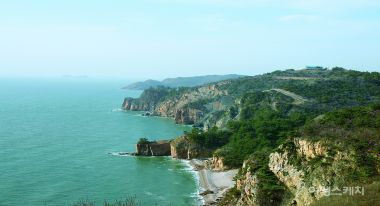
The Îles du Salut lie about 14 kilometres off Kourou, where forest, volcanic rock and powerful currents surround the remains of French Guiana’s penal colony. The group comprises Île Royale, Île Saint-Joseph and Île du Diable, or Devil’s Island. Their beauty is immediate, but it should not soften the history preserved in cells, hospital ruins, warders’ buildings and cemeteries. For nearly a century, the islands formed part of a coercive transportation system marked by isolation, disease, punishment and death.
France established penal transportation to Guiana in 1852, and the wider system endured until the mid-twentieth century. Île Royale served as the administrative centre, with a hospital, chapel, officers’ quarters and prisoners’ buildings. Saint-Joseph became particularly associated with solitary confinement. Devil’s Island held political prisoners, most famously Captain Alfred Dreyfus from 1895 to 1899, after his wrongful conviction in an antisemitic miscarriage of justice that divided France. The islands’ protected buildings now form a nationally recognised heritage ensemble.
History beyond the legend of Papillon
Popular imagination often approaches the islands through Papillon, Henri Charrière’s bestselling account and its film adaptations. Researchers have disputed how much of that narrative came from Charrière’s own experience, and it should not be used as a documentary guide. The surviving architecture, archives and Dreyfus case provide a firmer historical foundation. A responsible visit recognises both prisoners’ suffering and the colonial system that created the settlements.
The islands also have histories beyond the prison. Their present name is connected with survivors of the disastrous Kourou colonisation expedition of 1763–64 who sought refuge there. Today they are owned by France’s space agency, CNES, because of their position beneath launch trajectories from the Guiana Space Centre. CNES supports conservation and visitor infrastructure while managing an environmentally fragile, logistically difficult territory.
Which islands can visitors reach?
Île Royale has the most dependable landing facilities and receives the great majority of visitors. A circular trail connects penal ruins, the chapel, museum area and coastal views. Saint-Joseph is open in principle, but landing depends on the pontoon, sea state and operator arrangements; access should never be assumed. Devil’s Island remains closed to landing because it is unsafe and exposed to strong currents. Dreyfus’s detention house can be viewed from Royale when vegetation and conditions allow.
CNES reports that the archipelago received about 50,000 visitors in 2024, returning to its previous record level. That popularity has not removed practical limits. Fresh water, waste removal and power are difficult, and facilities can close. Boat services from Kourou are commercial and weather-dependent. One current regular operator publishes an 8:30 a.m. departure and 4:30 p.m. return, but travellers must verify their own booking, check-in time, price and island stops because schedules can change.
- Reserve an authorised boat in advance and reconfirm weather and launch-related restrictions.
- Carry sufficient drinking water, food, sun protection and rain cover.
- Do not feed or touch wildlife, collect plants, light fires or leave waste.
- Stay out of closed ruins and never attempt to swim or cross toward Devil’s Island.
Planning a respectful day
Wear footwear with grip: roots, broken masonry and wet coastal paths can be slippery. Begin with the museum or interpretive displays on Royale if open, then walk the ruins slowly enough to distinguish hospital, administrative, religious and detention spaces. Conditions are tropical and exposed, so a full-day excursion is physically more demanding than the short sea distance suggests. Mobility access is limited by the boat transfer and historic terrain.
The Îles du Salut leave a strong visual memory, but their greatest value is ethical and historical. Palms and blue water frame structures created for exile and control; the contrast should prompt inquiry, not romanticisation. With verified transport, realistic supplies and respect for closures, travellers can encounter one of French Guiana’s most significant heritage places while helping protect an archipelago whose history and ecology are both exceptionally vulnerable.