Isla del Rey, Panama: the Pearl Islands’ largest island and San Miguel
Isla del Rey is the largest island in Panama’s Pearl Islands, a group scattered through the Gulf of Panama. It is not a single resort or one compact village: several communities occupy the island, while San Miguel serves as the district seat and administrative-commercial center. That distinction matters to visitors. The place is best understood as a lived-in island with local services, maritime traditions and a layered past, rather than as a beach attraction built around a single hotel or viewpoint.
A large island with a deep historical record
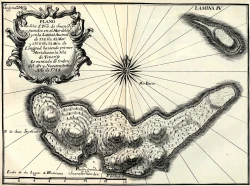
A Smithsonian archaeological report estimates Isla del Rey at about 250 square kilometres, making it much larger than the small islets that give the Pearl Islands their familiar island-hopping image. The same report notes that written accounts from 1515 to 1525 described the island as well populated when Spaniards arrived in the region. Those records are historical sources interpreted by researchers, not a modern census or a complete account of every community that lived there.
The report also discusses canoe fleets and powerful leaders in the Pearl Islands. Archaeologists have suggested that authority may have been connected to control of the pearl fisheries and the valuable goods moving through the Gulf. That is an interpretation of documentary evidence, not a settled biography of a named ruler. It nevertheless points to a region that was connected, organized and economically important before colonial rule, rather than an empty landscape waiting to be discovered.
For generations, the sea supplied food and materials as well as routes between islands and the mainland. The Smithsonian Tropical Research Institute describes Indigenous use of pearl oysters before Spanish colonization, including food and the use of nacre and pearls for ornament and exchange. In the sixteenth century, colonial demand redirected that resource toward commercial extraction. Researchers document rapid exploitation and declining oyster beds across Panama; these regional findings should not be assigned to one village or beach without specific evidence.
The pearl story also carries a human cost. STRI’s account describes Indigenous divers being forced into dangerous labor and explains how commercial pressure altered local livelihoods and knowledge. A later scientific review of pearl-oyster harvests in Panama records repeated collapses and recoveries over centuries, with the commercial fishery ending in the 1940s and populations not recovering to earlier levels. Read together, these sources make the archipelago’s name more than a picturesque label: it recalls a resource that shaped exchange, colonial power and ecological change.
San Miguel and the island’s communities today
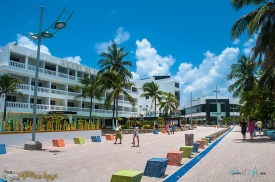
San Miguel, on Isla del Rey, is the head town of Balboa District and its administrative and commercial center, according to the municipal government. Public institutions, shops and basic services are concentrated there. For a visitor, San Miguel is therefore the clearest place to ask about local transport or arrangements, but it should not be mistaken for a fully serviced tourist resort. Confirm what is available on the dates you plan to visit, especially if you need a particular service or intend to stay overnight.
The municipality identifies several other communities on Isla del Rey, each with its own character. La Esmeralda is associated with artisanal fishing; La Ensenada is described in connection with ecotourism and small-scale fishing; and La Guinea is a small community where fishing and agriculture are part of local life. These are not interchangeable names for one attraction, and municipal descriptions do not establish that every settlement has visitor facilities. Ask locally before planning a walk, boat landing or visit to a community.
That advice is especially important on a large island where settlements and shorelines are separated by water, terrain and local transport arrangements. A map may make two points appear close even when reaching them requires a boat or a locally arranged journey. The sources reviewed for this guide do not establish a general public road network, regular taxi service or a visitor center at every settlement. Treat any online itinerary as a starting point, verify the route with a resident or operator, and avoid arriving late without a confirmed plan.
The landscape is also part of a wider marine region whose history connects people, reefs, fish and pearl oysters. Smithsonian research on Panama’s Pacific coast describes long-standing human use of marine resources and the consequences of intensive extraction. On Isla del Rey, the municipal profile emphasizes fishing and the natural surroundings of its settlements. Travelers can learn more by approaching these places as working communities: ask before photographing people, follow local guidance near boats and fishing areas, and do not remove shells, wildlife or archaeological material.
How to visit and what to confirm
Sea Las Perlas lists trips from Flamenco Marina in Panama City to San Miguel and Viveros on Fridays, Saturdays, Sundays, Mondays and Wednesdays, departing at 7:30 a.m. The operator’s information page is the source for that schedule, but routes and operating days can change. Before buying a ticket, confirm that the specific sailing goes to San Miguel, ask about the return departure and expected arrival, and check whether the island stop is suitable for the length of visit you have in mind.
The ferry company publishes reservation contacts and advises passengers to check current requirements and timetables. Its general schedule page says identification is required and recommends purchasing tickets in advance; ask the operator which documents apply to the San Miguel route, what baggage is permitted and where to check in at Flamenco. Do not assume the Contadora timetable also applies to Isla del Rey: the islands are different destinations, and a service advertised for one may not provide a same-day return from the other.
Plan conservatively. Bring the supplies you need for the confirmed itinerary, keep your return details accessible and leave enough time for changes caused by weather or sea conditions. If you hope to see a particular settlement, arrange the final leg with someone who knows the island rather than improvising from a map. Isla del Rey’s appeal lies partly in its scale and its everyday life: San Miguel’s civic role, the coastal communities and the layered pearl history all reward a visitor who travels with patience and treats the island as home to its residents first.