Harlech Castle: a medieval fortress above the coast of Eryri
A fortress built into the edge of the landscape
Harlech Castle, known in Welsh as Castell Harlech, rises from a steep rocky outcrop above the town in north-west Wales. The view takes in the broad coastal plain, dunes and the mountains of Eryri, formerly called Snowdonia in English. The shoreline that once gave the fortress direct access to the sea has shifted, leaving the castle visibly separated from the water. That change makes the setting more than a dramatic backdrop: it helps explain why the site was chosen and how its strategic geography is read today.
King Edward I ordered the castle during his conquest of Wales. Work began in 1282 and the fortress was completed in 1289, under the direction of Master James of St George, the king’s leading military architect. Cadw describes the result as a compact design of “walls within walls,” protected by the steep slopes and a strong inner ward. Harlech was one element in a wider programme of royal strongholds, not an isolated medieval palace. Its stonework makes the political purpose legible: a powerful crown placed a permanent military presence in a region resisting English rule.
The relationship between building and terrain is especially clear at the gatehouse and the route up the rock. During the Welsh revolt associated with Madog ap Llywelyn in 1294–95, the castle withstood a siege. Its steep approach from the coast, remembered as the “Way from the Sea,” had 108 steps and allowed supplies to reach the defenders by ship. The shoreline is now farther away, but the route’s story reveals how water once functioned as a supply line as well as a defensive barrier. Looking down from the walls, visitors can trace the distance between the medieval strategy and the present landscape.
Sieges, resistance and a World Heritage landscape
Harlech’s history is inseparable from Welsh resistance and the expansion of Edward I’s power. Eryri National Park’s account records that Owain Glyndŵr captured the castle in 1404, before English forces retook it the following year. During the Wars of the Roses, Lancastrian supporters held Harlech through a siege lasting about seven years, until it surrendered in 1468. The episode later became associated with the song “Men of Harlech,” although the familiar tune should not be treated as a contemporary soundtrack to the siege. The documented sequence is compelling without turning uncertain tradition into fact.
Harlech belongs to the UNESCO property called the Castles and Town Walls of King Edward in Gwynedd, inscribed in 1986. The group includes Beaumaris, Caernarfon and Conwy as well as Harlech. UNESCO identifies the four as exceptionally complete examples of late-13th- and early-14th-century military architecture, and highlights the work of James of St George. The designation is about more than a list of impressive ruins: the coastal and mountain settings form part of the heritage value, connecting military engineering to the landscapes it was meant to control.
That wider context is useful when walking through the castle. The gatehouse, inner ward, towers and wall walks show how movement could be controlled and defended. Rather than imagining a battle at every turn, look for the relationship between entrances, elevation and sightlines. The fortress is smaller than some visitors expect from its reputation, but its compact plan makes the design easy to follow. Allow time to pause at the walls and compare the open seaward view with the town below; the terrain explains as much as the surviving masonry.
What to notice on a visit
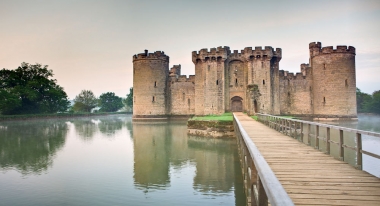
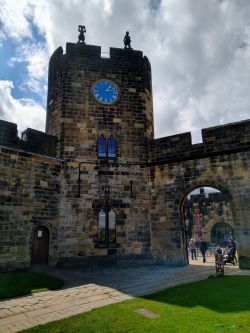
Begin at the entrance and notice the bridge leading into the gatehouse. Cadw’s modern “floating” footbridge reconnects visitors with the castle’s intended approach across the steep rock, while making the entry route clearer than it was for generations. Once inside, the inner ward provides a useful orientation point. From there, the towers and wall walks reveal how the castle organized surveillance, shelter and movement. Some surfaces are uneven, and the site has steep steps, exposed edges and high winds; the views reward care, not rushing.
The setting changes with weather and light. On clear days the mountains of Eryri frame the inland horizon, while the coastal plain opens toward the Irish Sea. Clouds, rain and wind can arrive quickly on this exposed headland, so clothing and footwear matter even in warmer months. Cadw warns visitors about falls from height, slippery ground, loose masonry and strong winds. Keep children close near walls, do not climb on historic fabric, and follow temporary closures. These precautions protect both visitors and a monument whose masonry has endured centuries of exposure.
Harlech also works well as part of a broader day in the town and national park. The castle sits above the settlement, with local streets, the railway and coastal scenery close at hand. A visit focused on the fortress can be relatively short, but combining the walls, museum-style interpretation, town and nearby dunes gives the landscape more meaning. The castle is not a furnished royal residence, and visitors should not expect a sequence of intact rooms. Its interest lies in the architecture, the history of occupation and the way the site commands a view across land and sea.
Hours, tickets and practical access
Cadw’s published seasonal calendar lists opening from 9:30 a.m. to 5 p.m. between 1 March and 30 June, 9:30 a.m. to 6 p.m. from 1 July through 31 August, and 9:30 a.m. to 5 p.m. from 1 September through 31 October. The winter schedule, 1 November to 28 February, is 10 a.m. to 4 p.m. The site closes on 24, 25 and 26 December and on 1 January; last admission is 30 minutes before closing. Check the official calendar before setting out, because seasonal details can change.
When checked on 8 October 2026, Cadw’s price table for 1 September 2026–31 March 2027 listed adult admission at £10.40, ages 5–17 and students at £7.20, seniors aged 65 or over at £9.30, and a family ticket for two adults and up to three children at £33.30. Children under five enter free, and online tickets carry a 5% discount but are non-refundable. These are dated rates, not a guarantee for later seasons. Confirm the amount and any concessions at booking, particularly for a visit after March 2027.
The address is Harlech, LL46 2YH. Cadw lists a small pay-and-display car park beside the entrance, with a three-hour maximum; the published charge is £2 for one hour, £3 for two and £4 for three, while parking for disabled visitors is free. Harlech railway station is about 200 metres away, and bus stops are listed roughly 150 metres from the castle. The historic site has steep, uneven steps and challenging surfaces for some mobility scooters. Review Cadw’s access guide and transport notices before travelling, and allow extra time for the climb from lower parts of town.