Neuschwanstein Castle: how to plan a visit to Bavaria’s famous palace
Neuschwanstein Castle rises above the village of Hohenschwangau in Bavaria, its pale towers set against forested slopes and the Alps. It is often presented as a fairy-tale palace, but the real visit is more structured than that image suggests: entry is by timed guided tour, advance tickets are strongly advisable, and reaching the entrance requires an uphill walk or a limited shuttle connection. The castle is also an unfinished nineteenth-century royal project, conceived by King Ludwig II around his admiration for medieval legends and the music dramas of Richard Wagner. Understanding those practical limits and historical ambitions makes a visit more rewarding than simply arriving for a photograph.
A royal residence that remained unfinished
Ludwig II began planning the castle in the 1860s. The official history says groundwork started in 1868 and the foundation stone was laid on September 5, 1869. The initial name was Neue Burg Hohenschwangau, or New Hohenschwangau Castle; the name Neuschwanstein came after the king’s death. The building was intended as a private retreat and an imaginative setting inspired by medieval stories, not as a fortress designed for modern warfare. Its architecture combined historic references with contemporary construction techniques and the king’s personal theatrical vision.
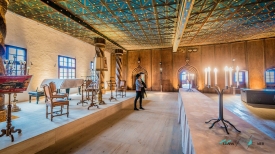
The palace’s rooms draw on themes from the legends and operas associated with Wagner, including stories of Lohengrin and Parsifal. Ludwig supported Wagner and imagined the castle as a setting in which art, landscape and royal identity could meet. The result was not a simple reconstruction of a medieval castle. It was a nineteenth-century interpretation of the Middle Ages, assembled with modern engineering and decorative programmes that visitors encounter room by room on the tour.
Construction moved in stages. The gatehouse became habitable in 1873, and Ludwig moved into the palace building in 1884, although major work remained incomplete. The king died in 1886 before the project was finished; later work was simplified, and some of his plans were never built. That unfinished character is essential to the site’s story. What visitors see is a striking but partial realization of an ambitious design, not a completed medieval residence preserved unchanged across centuries.
Neuschwanstein’s heritage context has also expanded. In 2025, UNESCO inscribed the Palaces of King Ludwig II of Bavaria as a World Heritage property. The serial listing includes Neuschwanstein, Linderhof, the Royal House on Schachen and Herrenchiemsee. UNESCO recognizes them as an exceptional group of nineteenth-century royal residences and works of historicist architecture. The designation adds international conservation context, but it does not replace the castle’s own visitor rules or mean that every interior and surrounding trail is included in a single ticket.
Tickets, tours and opening times
Visitors enter the castle only on a guided tour at the time printed on the ticket. The official site recommends booking online well in advance, especially for busy dates; same-day tickets may be available at the Ticket Center in Hohenschwangau, but only while places remain. Tours can sell out, and arriving in the village does not guarantee entry. Plan the ticket time first, then allow for the journey from the Ticket Center to the castle and the required arrival buffer. Late arrivals risk missing the assigned tour.
As listed on the official admissions page for 2026, a regular ticket costs €21 and a reduced ticket €20, with a €2.50 booking surcharge for online reservations. Children and young people under 18 have free admission but still need a timed ticket; the booking fee can apply. Prices and ticket conditions may change, so check the official page before purchase. A reservation is tied to a specific visit time, and the ticket should not be treated as a flexible all-day pass.
The official opening schedule is seasonal. From March 28 through October 15, the castle is listed as open from 9 a.m. to 6 p.m.; from October 16 through March 27, the listed hours are 10 a.m. to 4 p.m. It is closed on January 1 and December 24, 25 and 31. These are operating hours, not a promise that a tour will be available at every moment. Confirm the current calendar, language and time of your tour when booking, and check for exceptional closures or operational changes shortly before travel.
The visit inside is a short guided experience—about 30 minutes according to the official visitor information. Tours are conducted in German or English, with audio-guide options in other languages, subject to the current arrangements. Photography and filming inside are restricted; follow staff instructions rather than relying on older travel blogs. If language accessibility matters to your group, confirm the available tour or audio-guide language before selecting a time.
The uphill approach is part of the plan
The ticket center and main parking are in Hohenschwangau, below the castle. From there, the official route is about 1.5 kilometres uphill and normally takes 30 to 40 minutes on foot. The path is steep, so comfortable shoes, water and a realistic time allowance matter. The walk may take longer in crowds, rain, snow or icy conditions. Visitors with mobility limitations should assess the route carefully and check directly with the ticket center about current accessibility; do not assume that a vehicle can take you to the entrance.
Horse-drawn carriages and shuttle buses offer alternatives for part of the climb, but neither takes visitors directly to the castle door. The carriage stops below the entrance, leaving an uphill walk. The shuttle goes to the Marienbrücke area when operating, followed by a walk of roughly 500 metres downhill to the castle. The official information warns that the shuttle does not operate in snow or icy conditions. These services are run separately from the castle tour, may have queues and can be suspended by weather or road conditions; verify their status on the day.
Marienbrücke, the bridge known for its view of the palace and gorge, is a separate viewpoint and may close for safety or maintenance. Do not build a tight schedule around assuming it will be open. Check current notices and leave time to reach the tour entrance even if you also want the bridge viewpoint. The castle’s dramatic exterior can be appreciated from several public paths, but access to trails and viewpoints is subject to local signs and conditions.
Hohenschwangau is a busy visitor village, especially in peak season. Parking, transport and ticket collection all take time, and the route between them is not instantaneous. Arrive early enough to collect or validate tickets, use restrooms and begin the uphill journey without rushing. If you travel by public transport, check the current connection to Füssen and onward service to Hohenschwangau. Timetables and local shuttle arrangements can change by season.
A more thoughtful castle visit
Neuschwanstein is worth seeing not only for its silhouette, but also for the tension between a romantic medieval image and a modern royal project that never reached completion. The guided interior, mountain setting and UNESCO designation tell different parts of that story. Book through the official ticket channel, verify the 2026 schedule and current access conditions, and leave enough time for the steep approach. The palace rewards preparation: once the timed entry and uphill route are understood, visitors can focus on the art, architecture and landscape rather than racing against the clock.