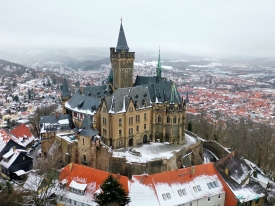
Perched dramatically 410 meters (1,350 ft) above the town of Eisenach, in the German state of Thuringia, Wartburg Castle stands as one of the most historically significant fortresses in Central Europe. Built in the Middle Ages, around 1067, it dominates the surrounding landscape and offers panoramic views of the Thuringian Forest.
Wartburg’s stone walls and towers evoke the romance of medieval Germany, making it a major attraction for visitors interested in history, architecture, and spirituality. Recognized by UNESCO in 1999 as a World Heritage Site, the castle symbolizes over 1,000 years of cultural continuity.
The Castle of Saints and ScholarsWartburg Castle became the home of St. Elisabeth of Hungary, who lived there in the early 13th century. Renowned for her piety and compassion for the poor, St. Elisabeth turned Wartburg into a place of charity and faith. Her story later inspired countless works of art and literature, contributing to the castle’s sacred aura.
Perhaps even more famously, the castle hosted Martin Luther in 1521–1522. Under the protection of Frederick the Wise, Luther lived at Wartburg in hiding after his excommunication. During this period, he translated the New Testament of the Bible from Greek into German, an act that transformed the German language and profoundly influenced European culture and religion.
A Symbol of German IdentityWartburg Castle also played a political and cultural role in later centuries. In 1817, it was the site of the Wartburg Festival, where hundreds of students gathered to promote unity and freedom in a divided Germany. The event became a landmark moment in the early movement toward German unification.
According to legend, Wartburg was also the setting of the Sängerkrieg, or “Minstrels’ Contest,” a poetic and musical tournament among medieval troubadours. Although possibly mythical, this story was immortalized by composer Richard Wagner in his opera Tannhäuser, which brought the Wartburg’s romantic image to audiences across Europe.
Architecture and RestorationAlthough much of the castle’s outer structure dates from the 12th to 15th centuries, extensive renovations in the 19th century gave Wartburg its current appearance. King Ludwig II of Bavaria, who later built Neuschwanstein Castle, was deeply inspired by Wartburg’s romantic revival.
Visitors today can explore the Romanesque Palas, richly decorated banquet halls, and the Luther Room, preserved to resemble the chamber where Luther worked on his translation. The interiors showcase medieval murals, tapestries, and Gothic furniture that evoke centuries of artistic craftsmanship.
Visiting Wartburg Castle TodayWartburg remains Thuringia’s most visited attraction, second only to Weimar in popularity. The castle is open year-round and easily accessible from Eisenach by bus or a scenic uphill walk. Guided tours, exhibitions, and special events allow visitors to discover the layers of history that shaped this remarkable site.
Surrounded by forests and legends, Wartburg Castle is more than a fortress — it is a living monument to faith, art, and national identity. Its enduring presence continues to inspire pilgrims, scholars, and travelers from around the world.