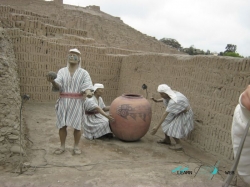
South of Lima, the road toward Lurín passes a landscape that looks spare from a distance: desert earth, low walls, and the open sky of Peru's central coast. Pachacamac asks for a slower look. Its importance lay less in a single monument than in the authority of an oracle that drew pilgrims for centuries. The site's museum describes it as the coast's principal sanctuary for more than a thousand years. A visitor now walks through the remains of several political worlds, each of which made room for a sacred place it could not simply erase.
The name is commonly rendered as the force that animates the world. Museum interpretation explains that ancient worshippers associated the deity with earthquakes and treated access to the oracle with profound ritual care. Those beliefs are historical accounts of a religious landscape, not a promise that every surviving wall can still be assigned one precise ceremony. The scale of the site, the routes through it, and the successive buildings convey a more reliable story: Pachacamac was a place where distant communities came to ask questions and where rulers sought legitimacy.