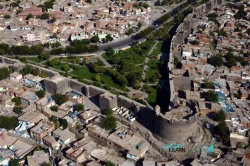
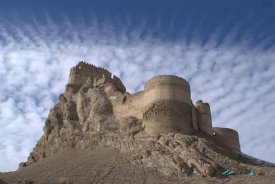
For more than twelve thousand years, a settlement perched above the upper Tigris River in southeastern Anatolia has stood as a witness to the entire span of human civilization. Hasankeyf, in the modern Turkish province of Batman, is one of the oldest continuously inhabited places on earth, and the castle that crowns its limestone cliff has anchored the town's identity through the rule of empires whose names span the long centuries between the Roman frontier and the Ottoman heartland. Today, in one of the most poignant chapters of recent heritage history, much of historic Hasankeyf lies submerged beneath the reservoir of the Ilısu Dam, but the castle itself, set high above the rising waters, endures as a magnificent reminder of all that this place once held.
Hasankeyf Castle, known in Arabic as Hisn Kayfa or "Rock Fortress," sits roughly a hundred metres above the Tigris on a sheer limestone outcrop riddled with thousands of cave dwellings cut by human hands across the millennia. Its strategic position commanded both the river crossing and the long trade roads between Diyarbakır and Mosul, making it one of the most coveted defensive sites in upper Mesopotamia.