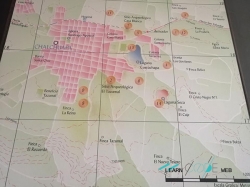
Copán is often introduced through its carved stone, but the archaeological park is more than a gallery of monuments. In the Copán Valley of western Honduras, a political, civic and religious centre grew into one of the major cities of the Classic Maya world. Its plazas, temples, ball court and Acropolis preserve evidence of changing rulers and public life; its sculpture records how the city represented authority. The setting rewards a slower visit: instead of treating each stela as an isolated photo stop, follow the arrangement of spaces and ask how a community made a capital visible in stone.
UNESCO places the earliest evidence of settlement in the Copán Valley around 1500 BCE. Maya-Cholan migration into the area is dated to about 100 CE, while the arrival of the ruler K’inich Yax K’uk’ Mo’ in 427 CE marks the beginning of a dynasty that UNESCO counts as sixteen rulers. During the Classic period, roughly 300–900 CE, Copán became a political centre and cultural focus for a wider territory in the southeastern Maya region. Its history was not a single uninterrupted rise: each generation built into an existing landscape, leaving monuments that linked current rule with remembered predecessors.