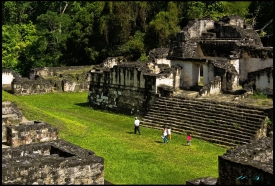
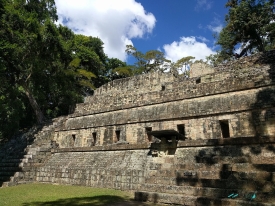
Lubaantun lies near the Maya village of San Pedro Columbia in southern Belize’s Toledo District, about 13 miles from Punta Gorda, according to the Belize Tourism Board. The archaeological reserve occupies a ridge above a tributary of the Columbia River. Its position links the remains to a wider landscape of river valleys, foothills and settlements rather than to a modern town centre. The National Institute of Culture and History (NICH), Belize’s archaeology authority, gives the site name as a modern Maya phrase meaning “Place of Fallen Stones.”
The ancient community’s own name is not established by the public information available from the site’s managing authority. Lubaantun is usually discussed as a Late Classic Maya centre, and Travel Belize dates its principal period of flourishing to roughly AD 700–850. Its profile describes 14 major structures arranged around five main plazas and calls it the largest ceremonial centre in southern Belize. Those numbers give a sense of scale, but the surviving complex should be read as an archaeological landscape, not as a complete reconstruction of a once-bustling city.