Acho Bullring in Lima: a 1766 landmark, its museum and how to visit
In Lima’s Rímac district, a few streets north of the historic centre, the Plaza de Acho stands as a landmark of the city’s colonial-era expansion. It opened on 30 January 1766 and is still used for bullfighting, while its interior also houses the Museo Taurino. The arena’s age makes it easy to reduce it to a record or a single tradition. A closer visit reveals a layered place: an eighteenth-century public venue, a repository of bullfighting objects and a working site whose access depends on the current event calendar. For travelers, that distinction is practical as well as historical.
A permanent arena in Lima’s Rímac district
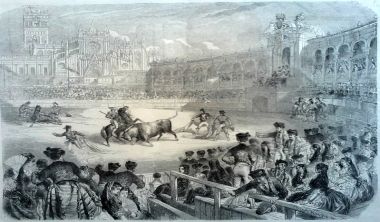
The Plaza de Acho was established when Lima’s bullfights moved from temporary enclosures toward a permanent arena. Its opening in 1766 came during the viceroyalty of Manuel de Amat y Juniet and helped make the Rímac a setting for public gatherings beyond the city’s central square. Today the Sociedad de Beneficencia de Lima Metropolitana, the institution responsible for the property, describes Acho as a historic monument and dates its inauguration to 30 January 1766. The current venue website presents it as the oldest bullring in the Americas; the Beneficencia describes it as the world’s third oldest, a ranking that depends on which kinds of historic arenas are counted.
The arena is built of traditional materials including adobe and wood, according to the venue’s historical account. Its circular form sits close to the Rímac River and at the foot of Cerro San Cristóbal, a setting that places it within a much wider urban landscape than the ring itself. It is also near the historic centre of Lima, so Acho can be understood alongside the city’s older streets and public spaces rather than as an isolated attraction. The Beneficencia gives a maximum capacity of 13,000 spectators, correcting older online descriptions that cite higher figures. Actual access and seating depend on the event and its safety arrangements.
A museum that keeps the arena’s memory
The Museo Taurino opened on 18 October 1962. Its collection documents bullfighting in Peru through paintings, historic posters, engravings, photographs, sculptures, clothing and equipment. The Beneficencia highlights oil paintings depicting historic contests, early Acho posters and “trajes de luces,” the ornate suits worn by bullfighters. A Ministry of Culture guide published in 2023 describes three exhibition rooms and objects donated or assembled through the museum’s patronage network. The collection offers a way to read the building as an archive of visual culture, not only as a venue where events take place.
The museum is an active part of the site’s present, too. In June 2026, the Beneficencia reported improvements to its infrastructure and exhibition design. That update makes a visit potentially more rewarding than older descriptions suggest, but it does not guarantee that every room is open on every day. Museum access may be affected by maintenance, arena preparations or special activities. The institution’s current Plaza de Acho page lists visitor prices but does not publish a dependable daily opening schedule, so travelers should confirm availability before making a dedicated trip.
The Señor de los Milagros season and the 2026 calendar
Acho is closely associated with the Feria Taurina del Señor de los Milagros, traditionally held in October. The Beneficencia identifies the fair as a recurring event at the arena, while the current season website advertises six afternoons between 17 October and 1 November 2026 and links to ticket sales. These are dates published for this season, not a promise that the same schedule applies every year. Check the event’s own announcements for the exact program, start times, available sections and ticket conditions before planning around a performance.
Event days change the experience of the surrounding streets and determine which parts of the property can be visited. The arena is not a museum that can be assumed to admit walk-in visitors throughout the day, and a ticket to a performance is not automatically a ticket for a separate museum visit. For anyone interested in Lima’s built heritage but not in attending a bullfight, the museum is the most direct visitor offering documented by the managing institution. The history can be approached without endorsing the practice: bullfighting remains the subject of contemporary debate over culture, ethics and animal welfare.
Visitor fees, hours and what to check first
The Beneficencia’s current tourism page lists an adult museum admission of S/8, S/2 for children up to age 12, and S/3 for older visitors, people registered with CONADIS and residents of Rímac. It also lists S/7 for university and institute students, S/11 for permission to use a photographic camera and S/55 for a guided visit. These are the amounts displayed on the institution’s page when checked for this article; confirm them directly in case the policy has changed or a special event affects access. The page does not state a current daily timetable.
For hours, the Ministry of Culture’s 2023 museum guide records Monday-to-Saturday visits from 9:00 a.m. to 4:30 p.m. That is a dated reference, not confirmation that the same hours remain in force in 2026. The safest approach is to contact the Beneficencia or consult its latest museum notice before setting out, and to ask whether the museum can be entered independently on a bullfight day. Allow time for the Rímac journey, and do not assume that the arena interior is open simply because the surrounding district is accessible.
Acho rewards visitors who look beyond the headline of “oldest bullring.” Its 1766 opening, the museum founded nearly two centuries later, the adobe-and-wood construction and its place beside Lima’s older urban fabric all tell different parts of the story. The site continues to serve a living calendar, so dates, hours and access are not fixed museum facts. Check current notices, then approach the visit with an understanding of both the heritage being preserved and the contested tradition that still shapes the arena’s public life.