La Monumental Barcelona: architecture, bullfighting history and visiting today
A landmark, not just an arena
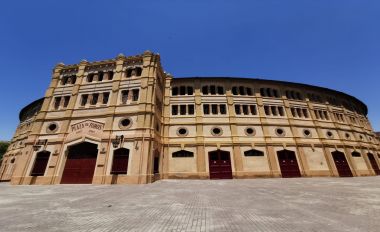
La Monumental occupies a busy junction in Barcelona’s Eixample, yet its decorative brickwork and tiled domes make it feel set apart from the surrounding avenues. Opened in 1914 as El Sport, the building became one of the city’s most recognizable bullrings and gave its name to the nearby Monumental Metro station. Today, the venue’s identity is more layered: it is an architectural landmark, a record of Barcelona’s changing relationship with bullfighting, and an event space whose doors and program depend on the day.
That combination is what makes a visit interesting even for travelers who do not follow bullfighting. The exterior brings together a horseshoe-shaped arena and a richly ornamented façade, with references often described as Neo-Mudéjar and Byzantine alongside the city’s wider Modernisme tradition. The building is best read from street level, where its scale becomes clear against the blocks around it. It is not an open public square: access to the interior depends on the museum schedule or a separately announced event.
From El Sport to Monumental
The arena opened on April 12, 1914, under the name El Sport. As bullfighting drew larger audiences, it was enlarged in 1916 and renamed La Monumental. Architectural work associated with the expansion is credited to Ignasi Mas i Morell and Domènec Sugrañes, following an earlier design by Manuel Joaquim Raspall. The result was not simply a larger venue. The new exterior gave the building the vivid profile visitors recognize today, combining patterned brick, ceramic details and a monumental crown above the entrance.
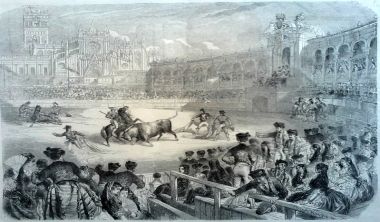
Bullfights were held there for nearly a century. The last corrida at La Monumental took place on September 25, 2011, according to Barcelona’s official tourist-bus guide. Catalonia’s 2010 legislation had scheduled a regional ban to take effect in 2012; the Constitutional Court later annulled that provision in 2016. The legal story is therefore more complicated than saying that the building closed because a permanent ban remains in force. What can be stated plainly is that bullfighting stopped at this arena in 2011, and its present use is not a regular bullfighting program.
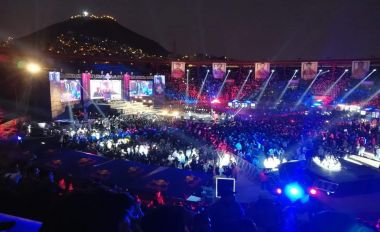
The twentieth century also left traces beyond the ring. During the Spanish Civil War, the building was repurposed as a garage and a scrap warehouse, according to the city’s tourism guide. Over the decades it hosted public entertainment and other spectacles; after bullfighting ended, concerts, festivals and private events helped keep the structure in use. That sequence—arena, wartime utility, cultural venue—makes La Monumental a useful lens on how cities adapt buildings whose original purpose has become contested.
What visitors can see now
The owner’s visitor information says that the plaza and its bullfighting museum can be visited Tuesday through Saturday from 10 a.m. to 7 p.m., with visitors asked to leave by 6:30 p.m. The same page warns that hours may change when events are scheduled. Treat this as the currently published schedule, not a guarantee for every date: check the official site before traveling, particularly around festival weekends or private bookings. A museum visit is the clearest way to see the interior when no event is taking place.
The small museum provides context for the arena’s former function, while the building itself remains the principal exhibit. Look for the relationship between the exterior galleries, the entrances and the oval ring rather than expecting a large museum complex. The visit is relatively focused and can fit between nearby city sights; it is not a substitute for a full architectural tour of Barcelona. Some parts of the venue may be unavailable during set-up, maintenance or event operations, so access can differ from what photographs suggest.
La Monumental is at Gran Via de les Corts Catalanes, 749, in the Eixample district. The closest Metro stop is Monumental on Line 2; the operator also lists bus routes 7, H12 and V21 in the area. The Barcelona Bus Turístic describes the arena from its Sagrada Família stop, followed by a walk along Carrer de la Marina toward the sea. Street conditions and transit service can change, so confirm a route on the day. If you are combining it with the Sagrada Família, allow time for the walk and for the museum’s closing time.
A thoughtful stop in the city
Because the arena is an active event venue, La Monumental does not operate like a monument with an identical visitor experience every day. A concert or festival can change access, opening arrangements and the view of the interior. Check the official calendar and visitor page before setting out; do not assume that a ticket for one event includes the museum, or that the museum is open on a Sunday or Monday. The official schedule currently lists regular museum visits Tuesday to Saturday and notes possible event-related changes.
For a more rewarding stop, approach the site as both architecture and social history. The ornamented façade rewards a slow look, while the record of the last bullfight and subsequent reuse adds context that a quick photograph misses. Visitors do not need to endorse the former spectacle to understand why the arena became part of Barcelona’s public memory. La Monumental’s continuing life is less a frozen portrait of the past than a story about a city negotiating heritage, changing values and the practical reuse of a conspicuous landmark.