Munich Residence: a city palace shaped by six centuries of power and art
A royal complex at the centre of Munich
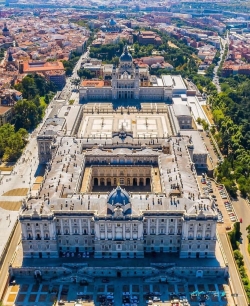
In central Munich, a short walk from Odeonsplatz and Marienplatz, the Munich Residence spreads across courtyards, galleries and state rooms. It is not a palace built in one campaign: generations of Wittelsbach rulers expanded and reshaped it, leaving a sequence of architectural styles and political ambitions within a single complex. The visitor encounters a city residence whose history grew alongside Munich itself.
The Bavarian Palace Administration traces the site to 1385, when a fortified structure known as the Neuveste was built. From this defensive beginning, the residence developed into the seat of Bavarian dukes, electors and kings. It served as a centre of rule until the monarchy ended in 1918. That timeline helps explain why rooms from different centuries sit beside one another rather than forming a single, uniform palace.
Renaissance, Baroque, Rococo, Neoclassical and later historicist interiors all appear in the complex. Some rooms were designed for ceremony and representation; others reflect courtly living, collecting or worship. The Residence Museum opened to the public in 1920, and the present route is a museum visit through restored rooms and collections, not a furnished royal household frozen exactly as it was on one date.
It is worth allowing the building to unfold gradually. Courtyards help orient visitors in a large complex, while the changes in decoration show how each period reinterpreted the authority of the Bavarian court. The museum’s variety is the point: the Residence is less a single masterpiece than a record of changing tastes, uses and political circumstances in the heart of the city.
From the Neuveste to the Antiquarium
The Neuveste, constructed in 1385, formed the medieval core of the later palace. Over the following centuries, rulers extended the complex toward the city and added new wings, ceremonial spaces and private apartments. The building history maintained by the Palace Administration charts this gradual expansion; it cautions against reading the present footprint as the plan of a single architect or ruler.
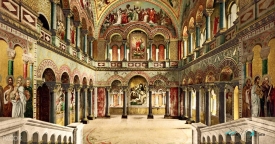
One of the defining Renaissance spaces is the Antiquarium. Built between 1568 and 1571 under Duke Albrecht V, the hall was originally conceived to display antique sculpture. At about 66 metres long, it is one of the most striking rooms in the Residence and a rare example of a collection space becoming a major work of architecture in its own right.
Its use changed as the court’s needs changed. Between 1581 and 1600, the Antiquarium was converted into a feasting and banquet hall. The room’s decoration includes a series of paintings and views of Bavarian towns, markets and castles, bringing territorial identity into the ceremonial centre of the palace. Looking down the length of the hall, visitors can see how art, architecture and political display were made to work together.
Later wings and suites introduced Baroque and Rococo settings, then nineteenth-century classicizing and historicist rooms. The range is not simply a catalogue of styles: it shows how a ruling house used architecture to present continuity while adapting to new cultural fashions. Some spaces were altered, rebuilt or restored over time, so interpretive labels are useful companions to the visual experience.
Collections, courtyards and a manageable route
The Residence Museum includes richly decorated apartments, galleries and ceremonial rooms, while the Treasury is a separate collection of precious objects. Visitors often focus on the Antiquarium, the Ancestral Gallery, the state rooms and the court chapels, but the precise rooms open can vary with conservation work or operational arrangements. Check the official visitor information close to the date of travel.
Free audio guides are available for the Residence Museum and Treasury in German, English, French, Italian, Spanish, Russian, Chinese, Japanese and Arabic, according to the Palace Administration. That range can make the complex more accessible to international visitors. A self-guided visit is possible; guided tours and special group programmes are separate options and may require advance booking.
The official visitor guidance suggests allowing about two to three hours for the Residence Museum. Adding the Treasury, a special tour or a slower look at the courtyards will lengthen the visit. Rather than trying to see every room quickly, choose a few themes—Renaissance collecting, royal representation or the changing residential spaces—and pause to compare them.
Accessibility is not uniform throughout a historic complex of this scale. The administration provides mobility information, but not every room or route is step-free, and some sections may be affected by work. Visitors who need an accessible route, seating or a particular facility should check the current mobility page or contact the museum before purchasing tickets. This is more reliable than assuming that a modern museum route reaches every historic space.
Opening hours, tickets and getting there
The Residence Museum and Treasury have seasonal hours. From 28 March to 25 October, they are listed daily from 9:00 to 18:00, with last entry at 17:00. From 26 October to 27 March, the listed hours are 10:00 to 17:00, with last entry at 16:00. The complex closes on 1 January, Shrove Tuesday, and 24, 25 and 31 December. Check the official page before travel in case of exceptional changes.
The Cuvilliés Theatre and the Court Garden fountain machinery follow different seasonal schedules, so the museum hours should not be assumed to apply to every part of the complex. Ticket combinations also differ depending on whether visitors choose the Residence Museum, Treasury or theatre. The official administration publishes the applicable rate list and online booking; verify the price and what is included for the intended visit date rather than relying on older guidebooks.
The palace is centrally located at Residenzstraße 1. Odeonsplatz and Marienplatz are nearby public-transport stops, and the historic centre makes the final approach straightforward on foot. Because Munich’s transport schedules, construction work and ticket rules can change, check the local transit planner and museum notices on the day. Arriving with enough time before last entry is especially important for a large interior route.
The Munich Residence is most rewarding when treated as a layered urban archive rather than a quick list of lavish rooms. The medieval Neuveste, the Renaissance Antiquarium and later court apartments reveal how power and taste changed across centuries. Plan a few hours, use the audio guide, confirm seasonal details and leave time for the courtyards. In doing so, the palace becomes not only a major Munich attraction but a readable account of Bavaria’s political and artistic history.