About Meteora
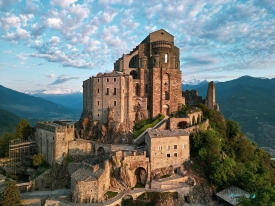
In central Greece, the stone towers of Meteora rise above the towns of Kalambaka and Kastraki like a landscape shaped for both geology and contemplation. Monasteries sit on a number of the tall sandstone pillars, while roads, paths and viewpoints trace the foot of the cliffs and the surrounding plain. The setting is striking from a distance, but its meaning is not only scenic: Meteora is a living Orthodox monastic landscape, a protected natural area and a UNESCO World Heritage property inscribed in 1988.
Rock, time and a monastic landscape
UNESCO describes the site as a group of sandstone peaks in mainland Greece where hermits began settling from the 11th century onward. Twenty-four monasteries were built in the area during the long development of the community. The surviving complex illustrates the revival of hermitic ideals in the 14th and 15th centuries, while its 16th-century frescoes mark an important chapter in post-Byzantine painting. The monasteries were constructed in places that were difficult to reach, and their position among the cliffs remains central to how visitors experience the site.
Meteora’s value is not limited to architecture. Its rocks, vegetation and wildlife form part of a protected landscape, and the area is included in the Natura 2000 network. The UNESCO property and its buffer zone have defined boundaries and protections; the World Heritage Centre notes that tourism and infrastructure can place pressure on the site. That context helps explain why roads, visitor routes and access to individual monasteries are managed rather than treated as an unrestricted viewpoint circuit.
Six monasteries open to visitors
Six monasteries remain active and receive visitors, each with its own character and schedule. Great Meteoron, the oldest and largest, occupies one of the highest pillars. Varlaam stands across from it; Rousanou is set on a narrower rock; St Nicholas Anapafsas is near the entrance to the complex; Holy Trinity is reached by a steep approach; and St Stephen is accessible by a bridge. These descriptions are practical distinctions, not rankings: choose according to time, mobility and which communities are open on the day.
There is no single timetable that applies to all six. The official Great Meteoron page currently lists summer hours from April 1 to October 31, 9:30 a.m. to 3 p.m., with Tuesday closure. In winter, November through March, it lists 9:30 a.m. to 2 p.m. and closure on Tuesday, Wednesday and Thursday. The monastery says schedules may change by its decision. Other houses keep their own visiting hours and weekly closure days, so check each official page before setting out and avoid building a tight itinerary around an outdated list.
Visiting respectfully and comfortably
These are functioning religious communities, not simply monuments. Great Meteoron asks visitors to dress respectfully: men may not enter in shorts or sleeveless shirts, while women may not enter in trousers or sleeveless tops. Rules can be monastery-specific, so modest clothing that covers shoulders and legs is the safer choice. Follow signs about photography, silence and access to worship spaces. A quiet, patient visit allows the setting to register more fully than a rushed stop for a photograph.
Access involves roads, steps and uneven stone paths. Some monasteries require a substantial climb from the parking area; St Stephen is reached by a bridge and is generally an easier approach. Wear secure walking shoes, carry water in warm weather and allow time between stops. Visitors arriving by car, taxi, organized tour or on foot should still verify which monasteries are open that day. The local museum’s visitor guidance likewise recommends checking seasonal monastery schedules before organizing an excursion.
How to plan a day in Meteora
Kalambaka and nearby Kastraki are the natural bases for a visit, with the monasteries spread across the rocks above them. A first-time visitor can combine a selected monastery or two with public viewpoints and a walk, rather than trying to enter every house in one day. Distances on a map can be misleading because winding roads, stairs and opening hours shape the actual route. Guided excursions can simplify transport and interpretation, while independent visitors benefit from checking a map and the day’s closures in advance.
Admission and practical arrangements are set by the monasteries, not by one central visitor ticket. Confirm whether each site is open, what payment method it accepts and whether a service or holiday affects the schedule. If you are visiting during a religious holiday, allow for additional changes. The UNESCO World Heritage Centre notes that the monasteries regulate the number of pilgrims through visiting hours; respect for those limits is part of the visit, not an inconvenience to work around.
Meteora rewards attention to both scale and detail. From below, the pillars dominate the plain; from a monastery terrace, the same landscape becomes a network of rocks, paths, chapels and villages. The history is not a single dramatic legend but centuries of people adapting religious life to a demanding environment. Knowing that the site remains active, protected and carefully managed helps a traveler see more than a famous skyline—and leave room for the community that still gives Meteora its meaning.