About Sacra di San Michele
The Sacra di San Michele: Italy’s "Stairway to Heaven" and the Real-Life Inspiration for The Name of the Rose.
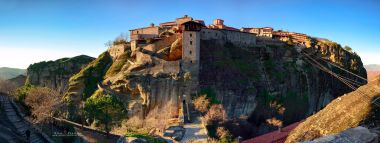
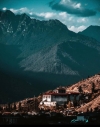
Perched precariously atop the jagged peak of Mount Pirchiriano, the Sacra di San Michele stands as a defiant sentinel at the mouth of the Susa Valley. Rising to an altitude of 960 meters above sea level, this architectural marvel is not merely a religious site; it is the official symbol of the Piedmont region and one of the most significant examples of Romanesque architecture in Europe. For over a millennium, its gray stone walls have witnessed the rise and fall of empires, the devotion of thousands of pilgrims, and the creative spark of world-renowned literature.
A Gateway Between Earth and Sky
The Sacra di San Michele (or the Abbey of San Michele della Chiusa) occupies a strategic location on the border between the Cozie Alps and the Po Valley. Its positioning was no accident. In Roman times, the site served as a military lookout, a history still evidenced by a first-century funerary plaque dedicated to the family of Surio Clemente. Later, the Lombards utilized the mountain to guard against Frankish invasions.
The spiritual foundation of the complex began between 983 and 987 AD. Legend tells of Saint Giovanni Vincenzo, a former Archbishop of Ravenna turned hermit, who received a vision from the Archangel Michael commanding him to build a sanctuary. It is said that angels themselves consecrated the chapel, which local villagers saw "engulfed" in celestial fire at night.
Architectural Evolution: From Romanesque to Gothic
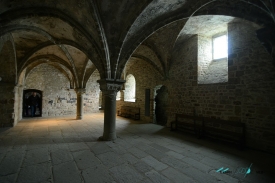
The abbey we see today is a masterpiece of "vertical" engineering, forced to adapt to the narrow, rocky summit of the mountain. This unique geography led to an inversion of traditional church layouts: the facade is located beneath the floor of the church, and the main altar sits directly above the massive foundations.
The Scalone dei Morti (Stairway of the Dead): Visitors must ascend this steep, grim staircase carved from green stone. Historically, it was flanked by the tombs of monks, giving it its haunting name.
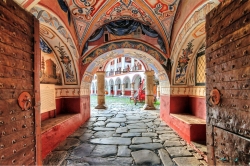
The Zodiac Door: At the top of the staircase lies this 12th-century masterpiece by the sculptor Niccolò. Its pillars are decorated with reliefs of zodiac signs, serving as a medieval memento mori to remind pilgrims of the fleeting nature of time.
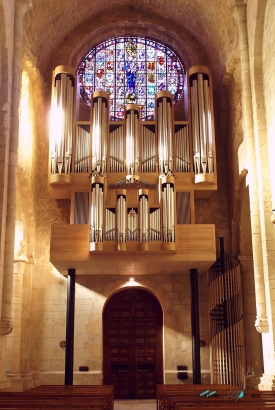
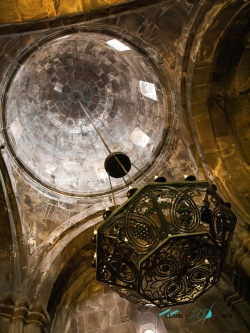
The "New" Church: Constructed between 1110 and 1255, the current church blends Norman-inspired Romanesque styles with later Gothic elements. Its central apse window and side naves showcase the delicate influence of the Piacenza school.
The Legend of the Bell'Alda
No visit to the Sacra is complete without hearing the tragic legend of the Torre della Bell'Alda (Tower of Beautiful Alda). During the 13th or 14th century, a young woman named Alda sought refuge on the tower to escape marauding soldiers. Faced with capture, she prayed and leaped into the abyss, only to be caught by angels and landed unharmed.
However, the story takes a dark turn. Seeking to prove her miracle to skeptical villagers and driven by vanity, Alda attempted the jump a second time. This time, the angels did not appear, and she perished upon the rocks.
From Benedictine Splendor to Rosminian Devotion
The abbey reached its zenith between the 12th and 15th centuries, serving as a premier center for Benedictine spirituality in Italy. It was a vital stop for travelers on the Via Francigena, a historic pilgrimage route connecting France to Rome and ultimately to the sanctuary of San Michele in Puglia.
By the 17th century, the site fell into a long decline, suffering damage during the Siege of Turin in 1706 and eventually being abandoned for nearly two centuries. A turning point came in 1836 when King Carlo Alberto of Savoy invited Antonio Rosmini and his newly founded Institute of Charity to manage the site.
The Rosminians restored the abbey’s spiritual life and became the guardians of 24 members of the House of Savoy, whose remains were transferred from the Turin Cathedral to heavy stone sarcophagi within the church. This royal connection is still visible today along the "Path of the Princes".
Pop Culture and Global Recognition: "The Name of the Rose"
The Sacra di San Michele’s most famous modern association is with Umberto Eco. The author used the abbey’s dramatic, vertiginous atmosphere as the primary inspiration for the setting of his 1980 historical mystery, The Name of the Rose.
Eco famously described the abbey's walls as appearing to "grow from the slopes of the mountain," a description that perfectly captures the seamless blend of natural rock and man-made masonry. While the 1985 film adaptation was not filmed on-site due to high production costs, the Sacra remains a place of pilgrimage for literature fans and history buffs alike