About Książ Castle
A castle above the Pełcznica valley
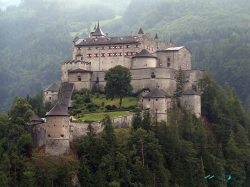
Książ Castle rises above the Pełcznica River valley near Wałbrzych in Lower Silesia, southwestern Poland. Its wooded setting is part of the experience: the approach moves from the city toward a rocky, green ridge, where the residence stands above the surrounding landscape. The castle is a layered monument rather than a single-period fortress, and its rooms, terraces and grounds tell different stories about power, family life and war.
The castle operator traces its first written mention to 1288–1292, when a defensive stronghold of Bolko I the Strict, a Piast prince of Świdnica and Jawor, was being built. Early records are incomplete and sometimes contradictory, a caution the official history itself acknowledges. Over the centuries Książ changed hands and political settings; visitors should think of the building as repeatedly adapted, not as a perfectly preserved medieval snapshot.
The Hochberg family became central to the castle’s later identity. The official chronology describes their long ownership and successive building campaigns, including major changes under Hans Heinrich XV in the early twentieth century. Between 1908 and 1923, new wings and terraces altered the residence’s silhouette. The nearby Palm House, begun in 1908, was created by Hans Heinrich XV for his wife, Daisy von Pless, linking the castle grounds to a broader domestic landscape.
Daisy von Pless and the residence at its height
Daisy, born Mary Theresa Olivia Cornwallis-West in England, married Hans Heinrich XV in 1891 and became one of Książ’s best-known residents. The castle’s own materials present her not only as an aristocratic figure but as a writer and participant in public and charitable life. Her memoirs, published in Polish as Lepiej przemilczeć, provide a personal account of the Hochberg household and the world in which she lived; they are a complement to, not a replacement for, archival history.
The early twentieth-century rebuilding introduced neo-Renaissance wings, reshaped terraces and raised the tower to the profile visitors see today. The work reflects the ambitions of a wealthy family residence, but the interior should not be mistaken for an untouched period setting. Collections were dispersed, rooms were altered and the castle’s function changed repeatedly. Reading a room as a historical space means noticing those later layers as well as the decoration.
The estate’s Palm House offers a related visit, though it is a separate attraction with its own opening arrangements and ticket rules. The castle operator says it was built as a gift from Hans Heinrich XV to Daisy and later supplied plants and produce for the family’s household. If you want to visit both, check the current timetable and ticket combinations rather than assuming one admission covers every site.
Within the castle, tours and visitor routes can include rooms, terraces and exhibitions, but the precise offer changes by season and ticket type. The official visitor page distinguishes individual and group visits and publishes seasonal hours; special events or restoration work may affect access. Choose the route that fits your interests—interiors, gardens, underground spaces or a themed guide—and read its inclusions before booking.
War, underground works and difficult evidence
During the Second World War, Książ was seized by the Nazi regime. The castle’s account says the paramilitary Organisation Todt undertook intensive construction work from 1943 to 1945. Parts of the historic residence were altered, furnishings were removed, and large tunnels were excavated beneath the castle as part of the wider Riese project in the Owl Mountains. The surviving evidence is substantial, but the exact intended use of every structure is not fully established.
The underground spaces are among the most compelling—and most easily sensationalised—parts of a visit. Official castle materials describe tunnels at two levels below the residence and connect them with the Riese construction programme. They do not prove every popular claim about a secret headquarters or the purpose of every chamber. A responsible tour distinguishes documented construction from hypotheses and avoids presenting unresolved wartime questions as settled fact.
War and the years immediately afterward brought loss and physical change to the castle. The official chronology records major damage, removal of furnishings and later restoration work. After 1991, Książ passed into the management of Wałbrzych municipality, and conservation has continued. This present-day stewardship is important: the visitor sees a place being maintained and interpreted, not a ruin left untouched since 1945.
Planning a visit from Wałbrzych
Start with the official daytime-visit page, which publishes seasonal opening hours for the castle and Palm House and separates ticket options. Its currently displayed table is for a defined season, so do not assume those times carry over to another month or year. Check the live booking system close to your visit, especially for guided routes, underground tours, special exhibitions or a combined castle-and-garden ticket.
Night visits are a separate, periodically scheduled service, usually offered on selected Fridays or Saturdays and conducted with a guide. The castle’s page states that the offer has its own price list and rules. These events can sell out and are not an everyday alternative to daytime entry. Confirm language, date, duration and the meeting point before purchasing; do not travel expecting a night tour simply because it appears on an old event notice.
Allow time for the grounds as well as the interiors. The castle’s setting above the valley, its terraces and the connection to the Palm House make the visit broader than a sequence of decorated rooms. Wear comfortable shoes for slopes and outdoor paths, and check whether a chosen route includes stairs or uneven historic surfaces. If travelling with children or visitors with mobility needs, consult the operator’s accessibility information before selecting a tour.
Książ is most rewarding when its different eras are kept in view: a Piast defensive stronghold, a Hochberg residence associated with Daisy, a wartime construction site and a conserved public monument. The official history leaves some early details uncertain and some wartime purposes unresolved; that uncertainty is part of the story, not a gap to fill with legend. Check the current route and schedule, then let the building and its landscape do the explaining.