About Besançon Citadel
A fortress shaped by the Doubs
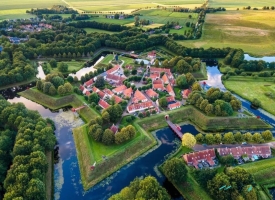
Besançon’s Citadel rises more than 100 metres above the old town, on a rocky spur embraced by a tight loop of the Doubs River. The view explains the site before any label does: the river and surrounding hills form a natural defensive frame, while the city’s roofs sit within the bend below. The fortress is part of a larger landscape of ramparts, towers and forts that made Besançon a strategic stronghold in eastern France.
The position had mattered long before the familiar Vauban walls. The city’s history reaches back to Roman Vesontio, and the natural loop made the hill a valuable point of surveillance and defence. After Louis XIV’s forces took Franche-Comté in the seventeenth century, the French crown sought to secure the newly acquired territory. Vauban’s design responded to the terrain instead of imposing a standard plan: the fortifications follow the steep spur and command the approaches to the city.
The Citadel was completed in 1684, according to its official site. Its 11-hectare enclosure includes ramparts, gates, courtyards and buildings that served successive military purposes. Barracks and training areas were followed by prison use, and the fortress continued to change as military needs shifted. Walking its perimeter makes this history tangible: bastions, slopes and sightlines are not decorative additions but parts of a coordinated defensive system.
Vauban, UNESCO and the city’s wider defences
Besançon’s Citadel belongs to the UNESCO World Heritage serial property “Fortifications of Vauban,” inscribed in 2008. The designation covers twelve groups of fortifications across France, not one isolated monument. It recognizes how Vauban adapted military architecture to geography and developed works that influenced later fortification. In Besançon, the Citadel is understood alongside the city’s urban enclosure and Fort Griffon, helping visitors see the defense of the Doubs loop as a system.
The site also tells a more complicated story than a single architect’s triumph. The fortress was a place of garrison life and military training, and later served as a state prison and military penitentiary. The official interpretation traces the city from Roman and medieval periods through Louis XIV and Vauban to more recent history. The Citadel’s role in the Second World War is addressed through the Museum of Resistance and Deportation, which presents archives and objects rather than reducing the period to a battlefield panorama.
Conservation is ongoing. The walls face weathering, visitor pressure and the challenge of preserving traditional building skills. The city and heritage teams describe continuing restoration as a way to maintain the monument’s fabric while keeping its historic form legible. On site, the distinction between restored masonry and an untouched relic matters: a living monument needs repair, documentation and interpretation if it is to remain accessible to future generations.
From the ramparts, look beyond the city roofs to the hills that helped shape Vauban’s calculations. The height is rewarding, but the view also reveals why the fortress was not simply placed on the highest point available: its angles and lines of sight were planned in relation to the river, roads and surrounding slopes. The landscape is part of the military architecture.
Museums, animals and a full day inside the walls
The Citadel is now a cultural and visitor complex with three museums carrying the French “Musée de France” designation: the Musée comtois, the Museum of Resistance and Deportation, and the Natural History Museum with its animal spaces. They make the visit broader than a walk through stone defenses. The Musée comtois explores regional social life and traditions; the resistance museum engages with the complex history of the Second World War; the natural-history areas connect the site to biodiversity and living collections.
A short multimedia presentation in Saint-Étienne Chapel offers an introduction to the city and the fortress, moving across historical periods in about fifteen minutes. The Vauban space provides further context, while the free MaCitadelle application adds sound, video and interactive routes. Families can use activities and games, but the site’s scale means it is worth choosing priorities in advance rather than trying to see every museum and animal area in a rushed visit.
The official suggested itinerary allows time for the multimedia presentation, Musée comtois, lunch, animal spaces, ramparts and the resistance museum. Two food outlets operate on site, and the ramparts are a natural pause for views across the Doubs and the old town. The museum of resistance and deportation is recommended for visitors over ten, according to the visitor guide; families should check the current exhibit information and decide whether the material is suitable for younger children.
Accessibility is partial, not universal. The official guide lists accessible areas including the historical multimedia presentation, selected museum spaces, the Naturalium and aquarium, and the resistance museum. A mobility vehicle is available to reach the level parts of the site, and the free application includes a reduced-mobility route. Slopes and uneven paving remain in some outdoor spaces, so visitors should consult the detailed access information and contact staff about their needs before arrival.
Hours, tickets and practical planning
The Citadel is at 99 rue des Fusillés de la Résistance, 25000 Besançon. The official 2026 calendar lists seasonal hours: from 1 September to 31 October, 9 a.m.–6 p.m.; from 1 July to 31 August, 9 a.m.–7 p.m.; and from 1 November to 31 December, 10 a.m.–5 p.m., with closure on Mondays in the low season. Museums close at least fifteen minutes before the site, and ticket sales stop thirty minutes before closing. These dated hours should be checked again before a 2027 visit.
For 2026, the individual adult ticket is listed at €13.50 in the high season and €9.50 in the low season. The ticket covers the heritage site, three museums, animal areas and temporary exhibitions; children under four enter free, while other child and reduced rates apply. Prices and inclusions can change. Buying through the official ticket portal and checking exceptional closures or wind-related restrictions before travelling can prevent a wasted trip.
Allow several hours, especially if you want to combine the museums, animal spaces and ramparts. The steep approach from the historic center can be tiring; local bus and tram services connect the city with the site, and the official visitor pages provide access details. Strong winds or severe weather may close the ramparts or parts of the site. Pets are not admitted, because the Citadel is both a public park and an animal facility; assistance dogs are treated separately under the published rules.
Besançon Citadel rewards visitors who connect the views with the history beneath their feet. Start with the landscape, then use the museums to understand the military, regional and human stories contained within the walls. Vauban’s engineering remains the headline, but the site’s real depth comes from its many later lives—as garrison, prison, heritage monument, museum and setting for encounters with nature.