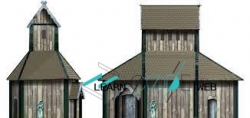
Fyrkat was built around 980 during the reign of Harald Bluetooth, when monumental circular fortresses asserted a new level of royal organisation in Denmark. Its earthwork formed a precise ring crossed by roads and gates, with 16 longhouses arranged symmetrically inside. The original timber buildings are gone, but marked plans and the reconstructed rampart make their disciplined geometry visible.
Fyrkat is one of five Danish Viking-Age ring fortresses inscribed together on UNESCO’s World Heritage List, alongside Aggersborg, Borgring, Nonnebakken and Trelleborg. Their shared design demonstrates standardised planning, engineering and the capacity to mobilise labour across the kingdom. UNESCO status applies to the authentic archaeological landscape, not every modern reconstruction.