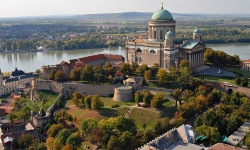
On a hill above the small Hungarian town of Pannonhalma, a monastery founded more than a thousand years ago remains a working religious community as well as a major cultural destination. The Archabbey’s silhouette is visible across the surrounding countryside, but its story is best understood inside: a Romanesque doorway, Gothic cloister, early Gothic basilica, classical library and newer monastic life occupy one connected landscape. UNESCO inscribed the abbey and its natural environment in 1996. The designation recognizes not a single impressive façade, but a Benedictine institution whose buildings and grounds record centuries of worship, education, rebuilding and adaptation.
The abbey’s own Hungarian account dates its foundation to 996, when Prince Géza settled monks arriving from Bohemia on the hill known as Pannonia’s Holy Mountain. Dedicated to Saint Martin of Tours, the monastery developed in the period when Hungary’s Christian institutions were taking shape. Its history was never uninterrupted comfort: the community faced invasion, political upheaval and periods of displacement. In the 16th century, the fortified monastery became part of a frontier zone during Ottoman expansion, and monks sometimes had to leave. Such changes help explain why the complex is not architecturally uniform; each generation inherited and modified a place that had to serve both spiritual and practical needs.