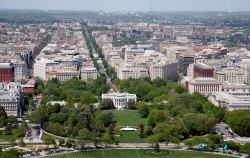
Washington’s National Gallery of Art offers two architectural ways of entering the history of art. John Russell Pope’s West Building gives the National Mall a monumental classical frontage; I. M. Pei’s East Building turns toward triangles, an expansive atrium and modern art. Between them, an underground concourse connects what might otherwise feel like separate museums. A neighboring sculpture garden extends the encounter into the city’s outdoor life.
The institution began with Andrew W. Mellon’s offer to give the nation his collection and finance a building. Congress established the National Gallery on 24 March 1937. Mellon and Pope both died that year, before their project opened. President Franklin D. Roosevelt dedicated the museum on 17 March 1941, and the public entered the next day. Its founding story joins private collecting with an enduring commitment to public access.