ABOUT Key Monastery
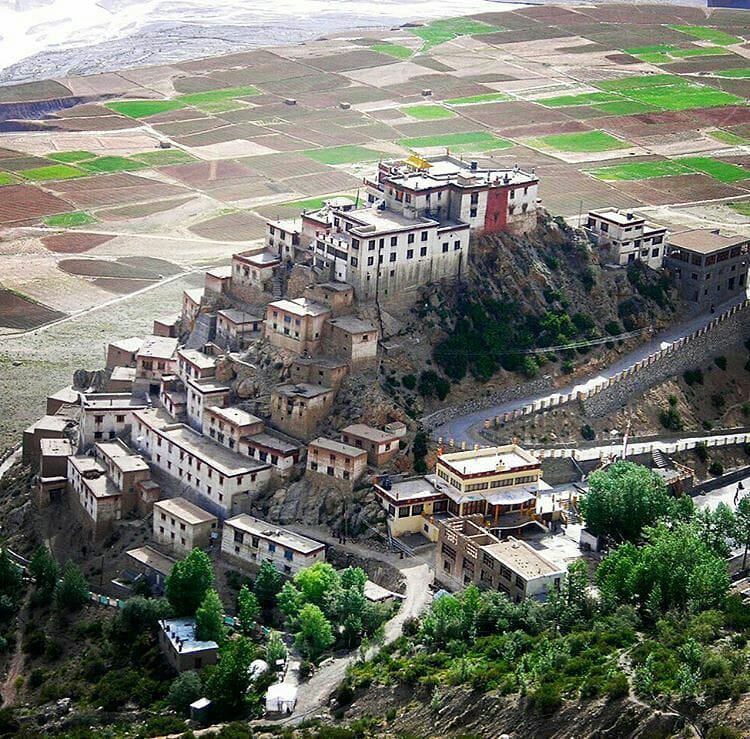
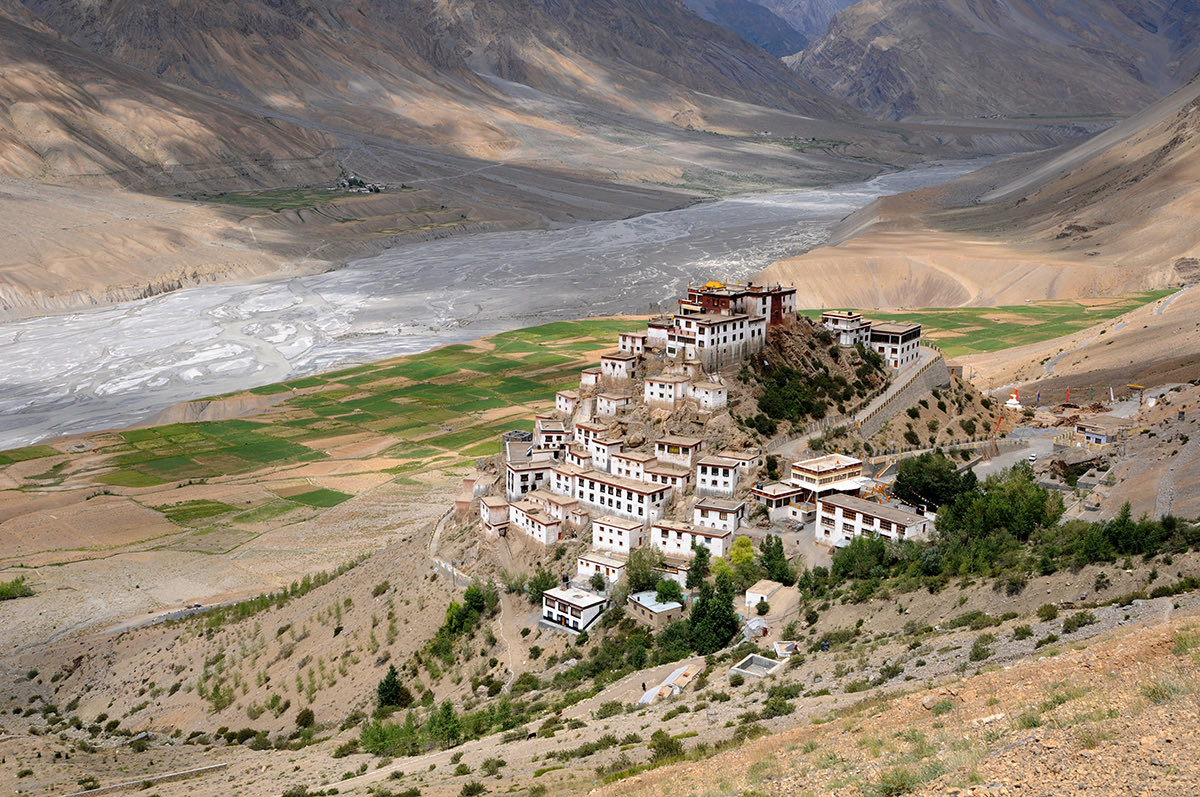
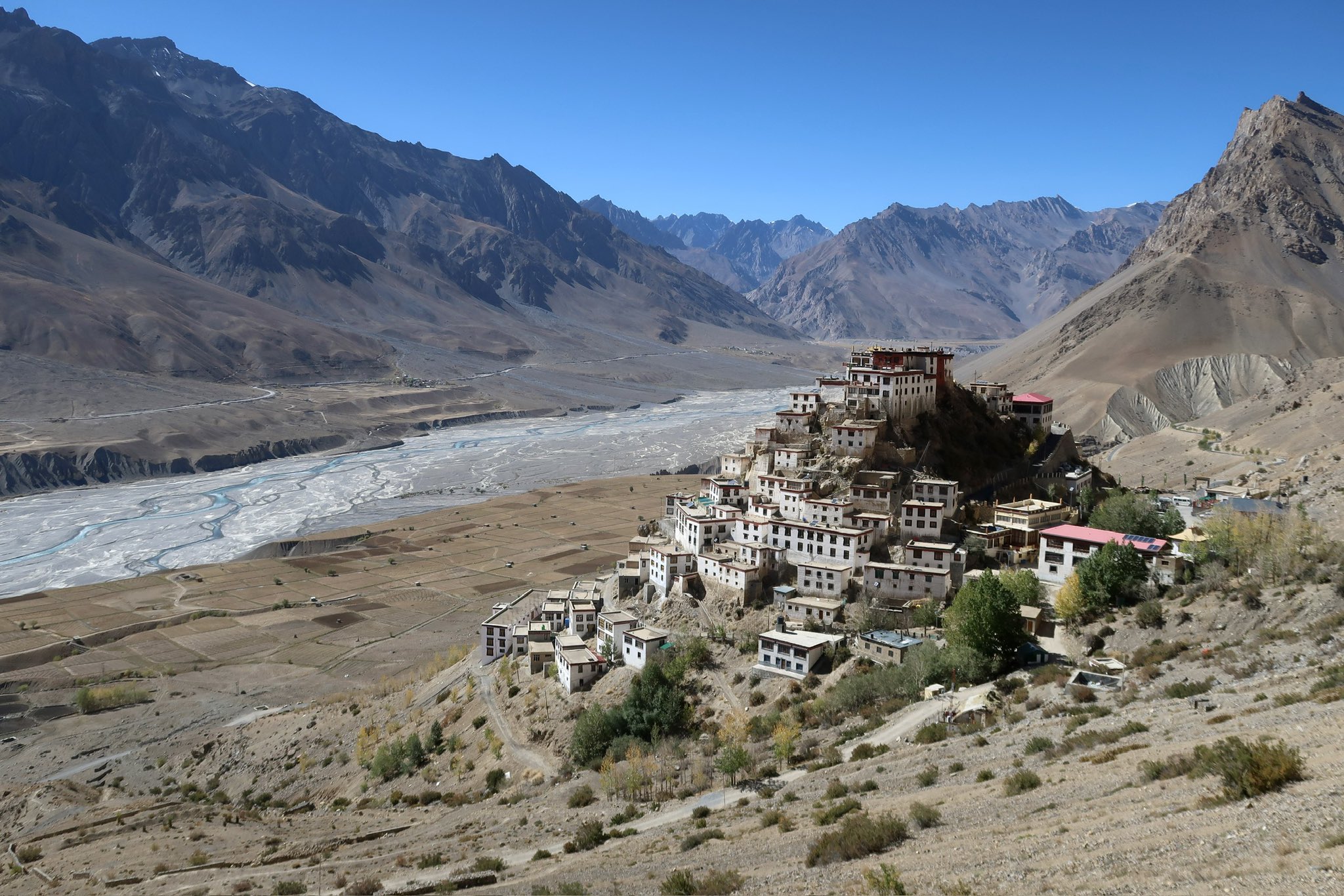
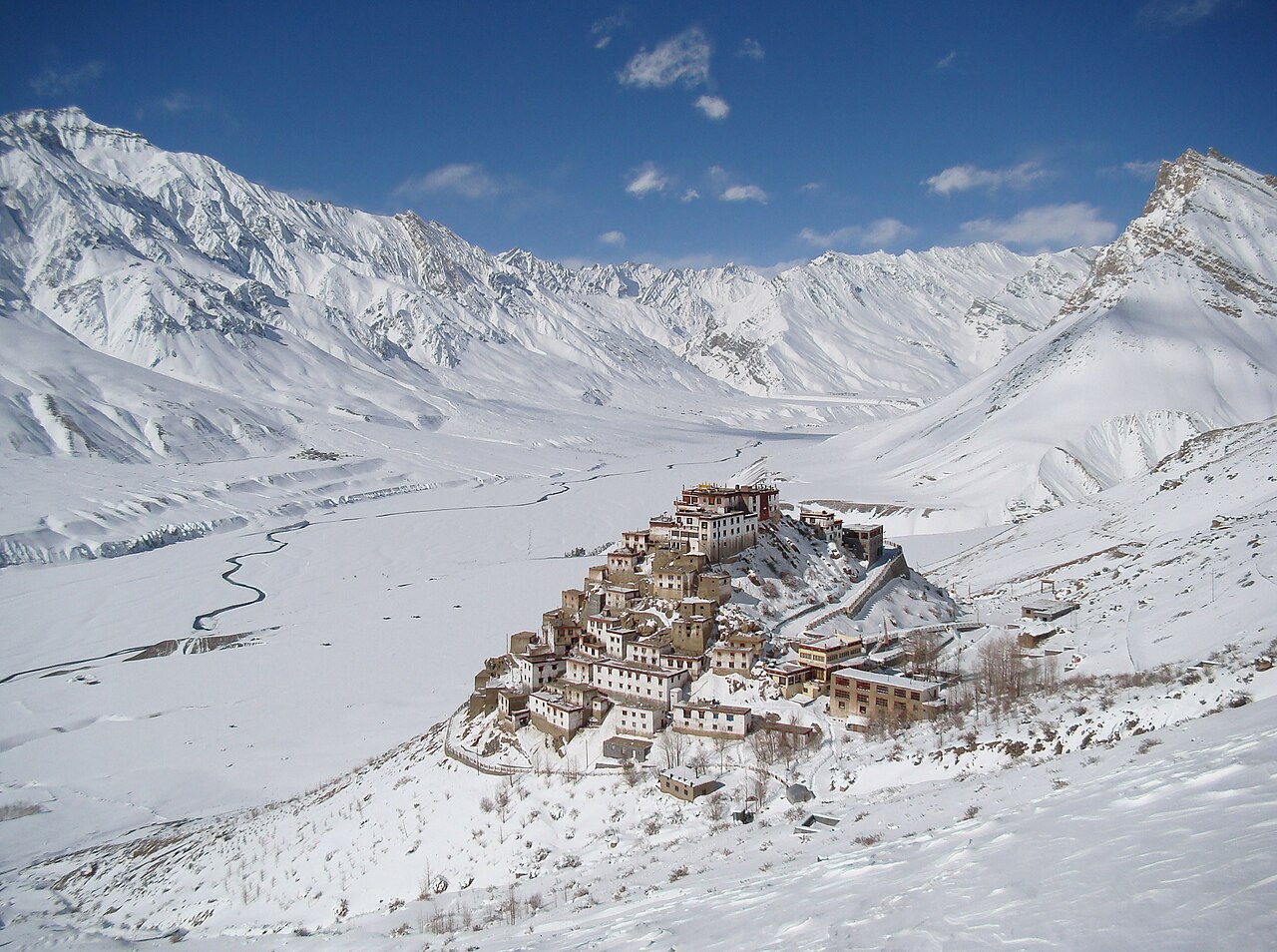
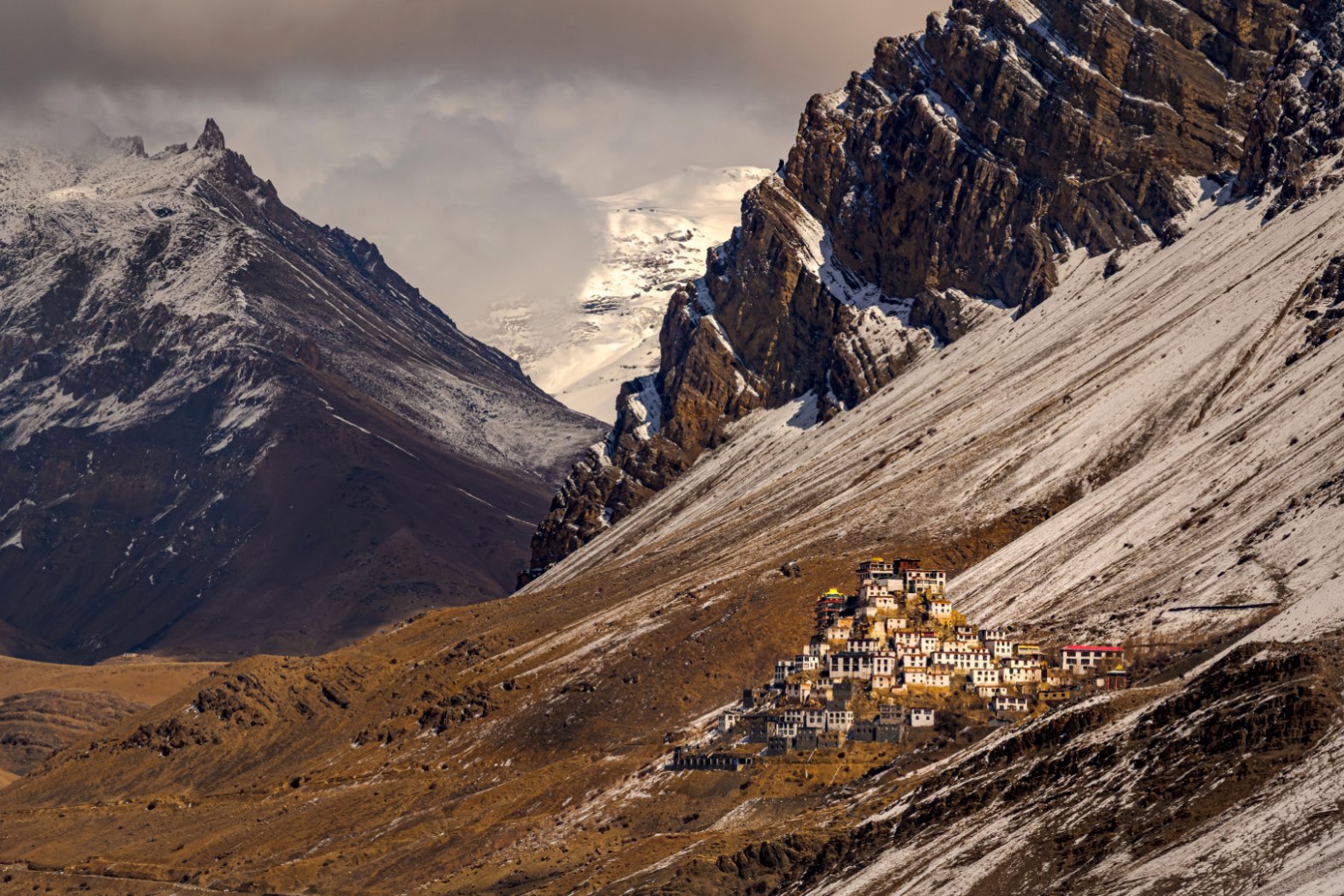
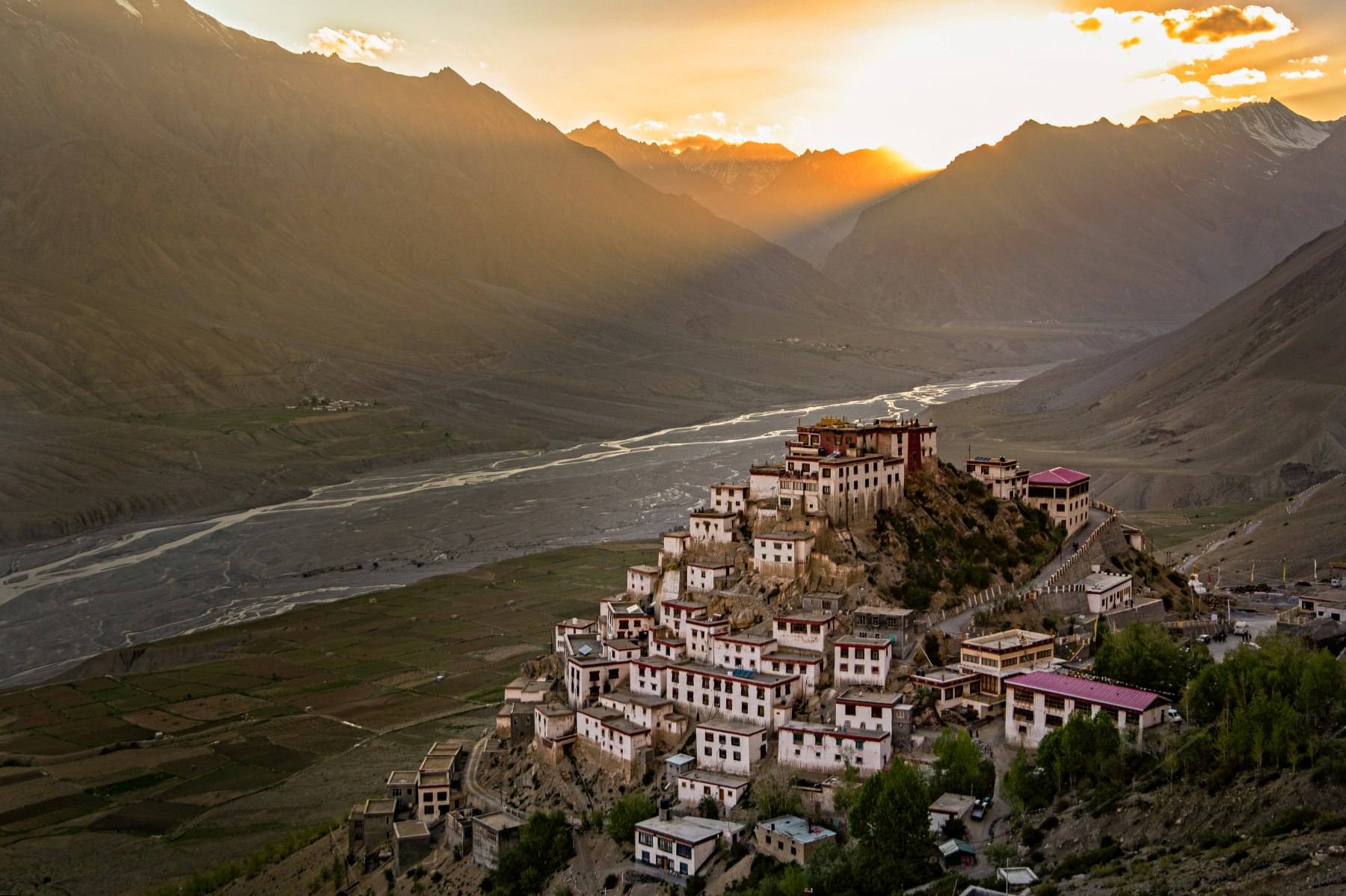
Key Monastery, also written Ki, Kye or Kee Gompa, rises out of a conical hill above the Spiti River in the Lahaul and Spiti district of Himachal Pradesh, India, roughly twelve kilometres north of the valley town of Kaza. At an altitude of about 4,166 metres, or 13,668 feet, it is the largest and one of the oldest monastic complexes in the Spiti Valley, and its silhouette of whitewashed chambers stacked in irregular tiers against a treeless brown mountainside has become the defining image of the region. The monastery belongs to the Gelugpa order of Tibetan Buddhism, the school founded by Je Tsongkhapa and headed today by the Dalai Lama, and it functions simultaneously as a working religious institution, a training college for young monks and one of the most visited cultural landmarks in the Indian Himalaya.
Its origins are disputed in a way that is itself revealing. One long-repeated tradition attributes the foundation to Dromtön, the eleventh-century disciple of the Bengali master Atisha, which would place the site among the earliest Buddhist establishments in the western Himalaya; several scholars believe this account actually refers to a Kadampa monastery at nearby Rangrik that was later destroyed. The monastery's own institutional history dates the present foundation to the early fifteenth century and credits Sherap Zangpo, a follower of Tsongkhapa, which fits its Gelugpa affiliation more comfortably. Both traditions agree on the deeper connection to the Kadampa lineage, and Key remains the seat of the Lochen Tulkus, the line of reincarnations of Lochen Rinchen Zangpo, the Great Translator who lived from 958 to 1055 and whose work carried Indian Buddhist texts into Tibetan. The community is currently guided by Lochen Tulku Rinpoche as spiritual director, with Khenpo Wangchuk Dorje serving as abbot since May 2022.
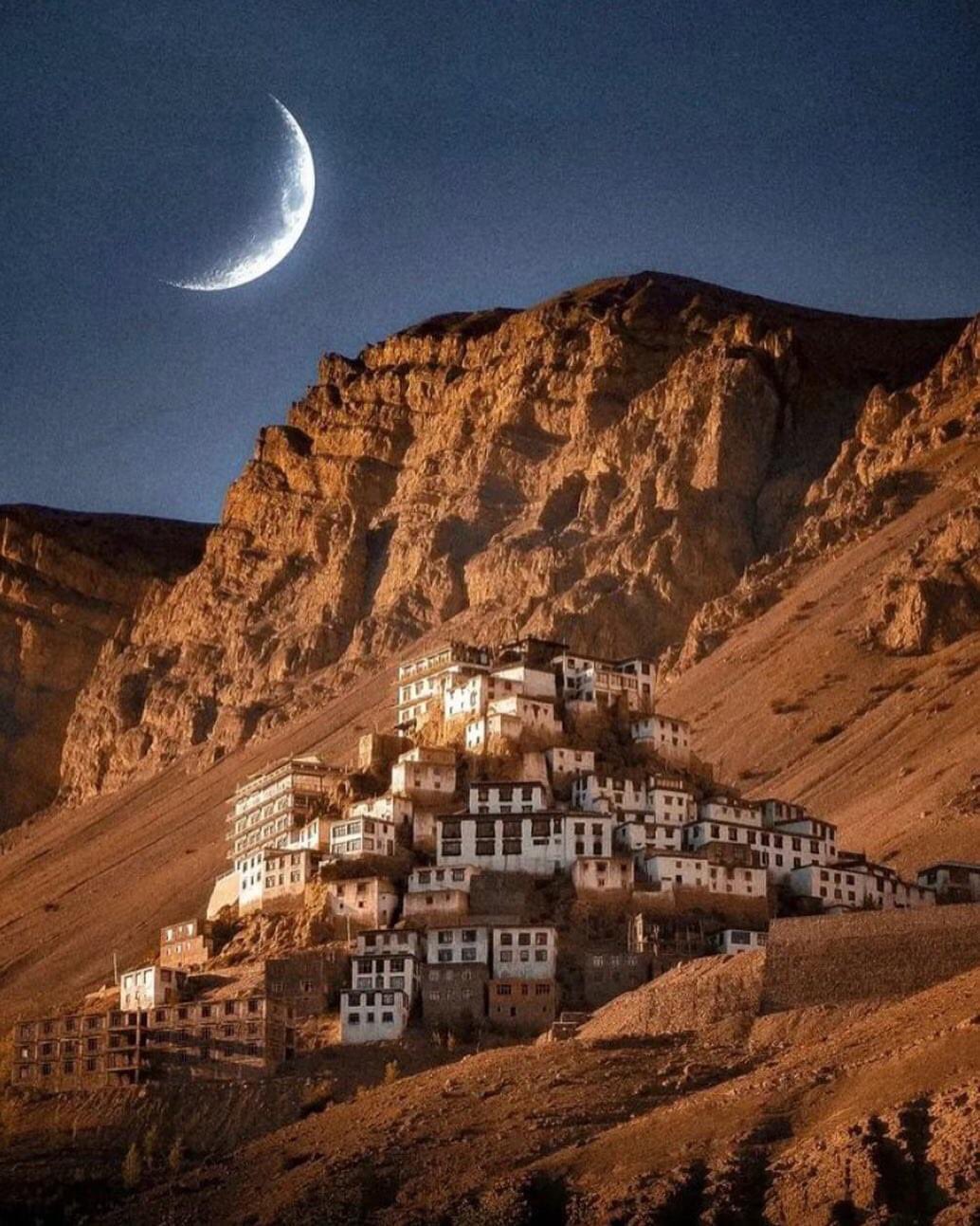
The building visitors see today is the product of repeated destruction and repair rather than any single architectural plan. Mongol forces plundered the monastery extensively in the mid-seventeenth century. It was sacked again around 1820 during the wars between Ladakh and Kullu, then severely damaged in 1841 by the Dogra army and attacked shortly afterwards by Sikh forces. A fire swept through the complex in the same decade, and a violent earthquake in 1975 caused further structural damage, after which the Archaeological Survey of India and the state Public Works Department carried out reconstruction. Each cycle of rebuilding added new chambers on top of and around the surviving ones, producing the accreted, fortress-like mass of low boxy rooms, narrow corridors and abrupt stairways that gives Key its distinctive appearance. Three principal floors sit above underground storage, and the whole arrangement is closer to a fortified settlement than to a conventional temple plan.
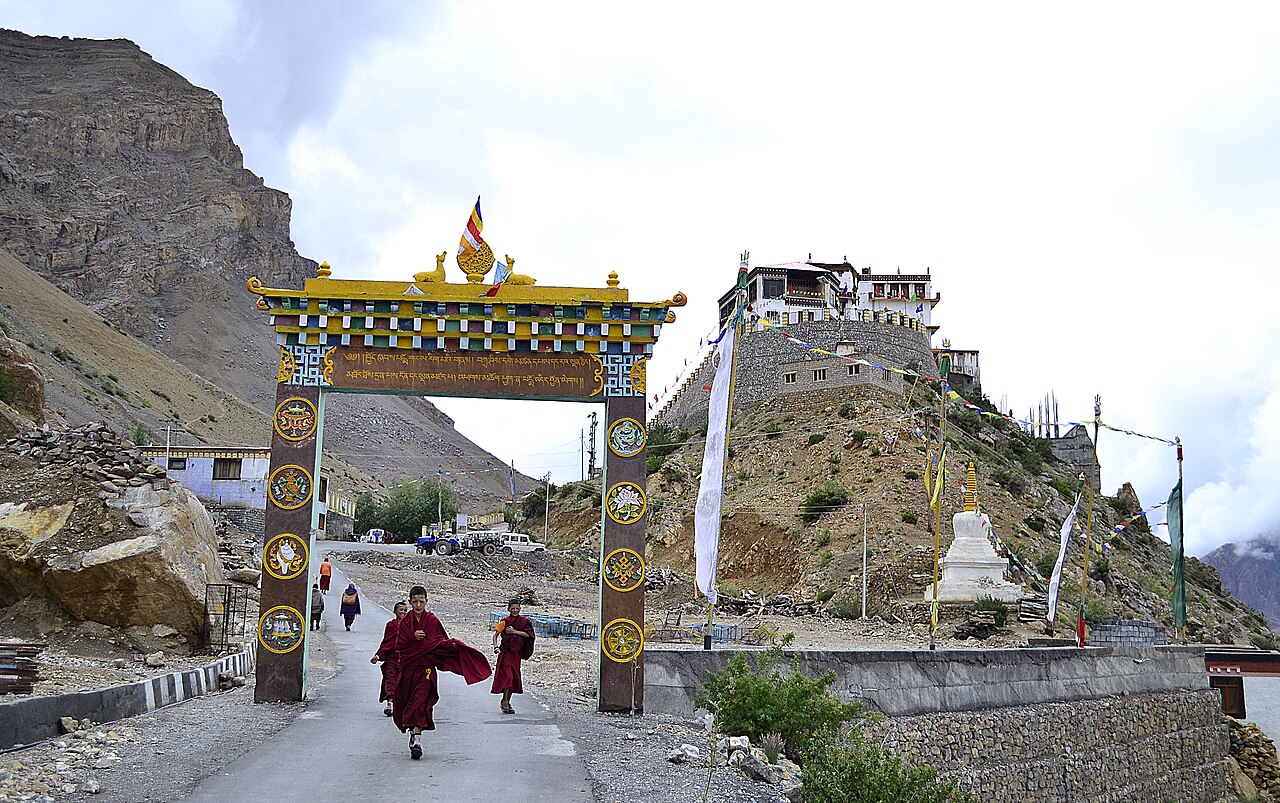
Inside, the monastery preserves murals and thangka paintings of considerable age, statues of the Buddha and other figures, collections of manuscripts, and the long ceremonial wind instruments used in monastic ritual. An unusual holding of old weapons survives from the centuries when the gompa served as a place of refuge during raids. In 2000 the Fourteenth Dalai Lama dedicated a new and much larger assembly hall containing historical wall hangings and images of Padmasambhava and Amitayus, an event that drew pilgrims from across the Himalayan world. Around two hundred monks are attached to the monastery, many of them boys and young men who receive secular schooling alongside religious instruction up to the tenth standard before continuing into advanced Buddhist studies. In 1855 the resident community was recorded at roughly one hundred.
The monastery is normally open to visitors through daylight hours and charges no fixed admission, though donations are customary and simple guest rooms with basic meals of dal, rice and butter tea are available to travellers who wish to stay overnight. Its most notable annual event is the Chaam festival, a sequence of masked ritual dances performed by the monks and scheduled by the Tibetan lunar calendar, generally falling in the summer months. Access follows the rhythm of the mountains: the northern approach from Manali crosses Kunzum Pass and is usually passable only between late May and early October, while the longer route through Shimla and Kinnaur stays open for a greater part of the year. Most visitors combine Key with Kaza, the Chicham bridge and the high villages of Kibber and Komic, but the monastery remains first and foremost a place of practice, and the sound of the morning prayers carrying across the valley is the reason many travellers remember it.
Its origins are disputed in a way that is itself revealing. One long-repeated tradition attributes the foundation to Dromtön, the eleventh-century disciple of the Bengali master Atisha, which would place the site among the earliest Buddhist establishments in the western Himalaya; several scholars believe this account actually refers to a Kadampa monastery at nearby Rangrik that was later destroyed. The monastery's own institutional history dates the present foundation to the early fifteenth century and credits Sherap Zangpo, a follower of Tsongkhapa, which fits its Gelugpa affiliation more comfortably. Both traditions agree on the deeper connection to the Kadampa lineage, and Key remains the seat of the Lochen Tulkus, the line of reincarnations of Lochen Rinchen Zangpo, the Great Translator who lived from 958 to 1055 and whose work carried Indian Buddhist texts into Tibetan. The community is currently guided by Lochen Tulku Rinpoche as spiritual director, with Khenpo Wangchuk Dorje serving as abbot since May 2022.
The building visitors see today is the product of repeated destruction and repair rather than any single architectural plan. Mongol forces plundered the monastery extensively in the mid-seventeenth century. It was sacked again around 1820 during the wars between Ladakh and Kullu, then severely damaged in 1841 by the Dogra army and attacked shortly afterwards by Sikh forces. A fire swept through the complex in the same decade, and a violent earthquake in 1975 caused further structural damage, after which the Archaeological Survey of India and the state Public Works Department carried out reconstruction. Each cycle of rebuilding added new chambers on top of and around the surviving ones, producing the accreted, fortress-like mass of low boxy rooms, narrow corridors and abrupt stairways that gives Key its distinctive appearance. Three principal floors sit above underground storage, and the whole arrangement is closer to a fortified settlement than to a conventional temple plan.
Inside, the monastery preserves murals and thangka paintings of considerable age, statues of the Buddha and other figures, collections of manuscripts, and the long ceremonial wind instruments used in monastic ritual. An unusual holding of old weapons survives from the centuries when the gompa served as a place of refuge during raids. In 2000 the Fourteenth Dalai Lama dedicated a new and much larger assembly hall containing historical wall hangings and images of Padmasambhava and Amitayus, an event that drew pilgrims from across the Himalayan world. Around two hundred monks are attached to the monastery, many of them boys and young men who receive secular schooling alongside religious instruction up to the tenth standard before continuing into advanced Buddhist studies. In 1855 the resident community was recorded at roughly one hundred.
The monastery is normally open to visitors through daylight hours and charges no fixed admission, though donations are customary and simple guest rooms with basic meals of dal, rice and butter tea are available to travellers who wish to stay overnight. Its most notable annual event is the Chaam festival, a sequence of masked ritual dances performed by the monks and scheduled by the Tibetan lunar calendar, generally falling in the summer months. Access follows the rhythm of the mountains: the northern approach from Manali crosses Kunzum Pass and is usually passable only between late May and early October, while the longer route through Shimla and Kinnaur stays open for a greater part of the year. Most visitors combine Key with Kaza, the Chicham bridge and the high villages of Kibber and Komic, but the monastery remains first and foremost a place of practice, and the sound of the morning prayers carrying across the valley is the reason many travellers remember it.
The Best Pictures of Key Monastery