ABOUT Inveraray Castle
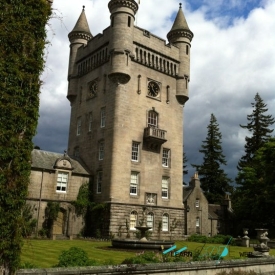
On the western shore of Loch Fyne, where the long sea loch cuts deep into the misty hills of Argyll, a striking grey-stone castle of perfect symmetry rises from manicured gardens like an architectural mirage. Inveraray Castle, the ancestral seat of the Dukes of Argyll and the chiefs of Clan Campbell, is one of Scotland's most celebrated stately homes and one of the earliest and finest examples of Gothic Revival architecture in the British Isles. With its conical-roofed corner towers, austere battlements, and improbably French silhouette set against a uniquely Scottish landscape, Inveraray feels less like a building and more like a fairy tale that arranged itself across centuries of clan ambition.
The castle stands a short distance north of the planned town of Inveraray, in the heart of Argyll and Bute, on a flat plain where the River Aray meets the loch. The whitewashed Georgian town, like the castle itself, is the product of a single sweeping eighteenth-century vision that swept away earlier medieval structures and replaced them with a coherent ensemble of country house, garden, and burgh.
Clan Campbell and the First Castle
The Campbells trace their roots in Argyll to the early thirteenth century, when Colin Mor Campbell, known by the patronymic Mac Cailein Mòr that the chief still uses today, established the family as a major regional power. After Colin Mor's death in 1296, his son Sir Niall Campbell became a close ally and brother-in-law of King Robert the Bruce, an alliance that secured the family's fortunes for the centuries that followed.
The first castle at Inveraray, however, was not raised until around 1450, when Sir Duncan Campbell, head of the clan in the mid-fifteenth century, decided to move the Campbell seat from the increasingly inconvenient stronghold of Innischonnell on Loch Awe to a more strategic position on Loch Fyne. The choice gave the Campbells direct access to the Firth of Clyde and the open sea, and it proved transformative. Within a generation, Duncan had been created Lord Campbell, and his grandson Colin became the 1st Earl of Argyll in 1457. By 1472, a small planned town had grown up around the medieval castle, eventually attaining royal burgh status in 1648.
The medieval Inveraray Castle was a typical Scottish tower house, four storeys high with conical-roofed bartizans at each corner. Royal visitors included James V in 1533, who stayed at the castle in some style and even had a new lute purchased and carried up from Glasgow for his amusement, and Mary, Queen of Scots, in 1563. Across the seventeenth century, the castle and its town suffered through the Wars of the Three Kingdoms: the Marquess of Montrose burned and pillaged Inveraray in 1644, and the 8th Earl was beheaded in 1661 after the Restoration of Charles II.
The Vision of the 2nd and 3rd Dukes
The Campbells emerged from the upheavals of the seventeenth century strengthened rather than diminished. In 1701, the 10th Earl was created the 1st Duke of Argyll, and the family rose to occupy some of the highest offices in the Scottish and, later, British state. It was the 2nd Duke, John Campbell, a celebrated soldier who commanded government forces against the Jacobites at the Battle of Sheriffmuir in 1715, who first envisioned a new castle worthy of his elevated rank. He commissioned the influential English architect, dramatist, and herald Sir John Vanbrugh, designer of Blenheim Palace, to produce sketches for an ambitious replacement.
Vanbrugh died in 1726 before the project could begin in earnest, but his sketches passed to John's brother, Archibald Campbell, the 3rd Duke of Argyll, who possessed both the means and the patience to bring the dream to fruition. Improvements on the estate began in 1743, and the foundation stone of the present castle was laid on October 5, 1746. The architects Roger Morris and the Scottish master William Adam translated Vanbrugh's idea into a working design that combined Palladian symmetry, French chateau-style turrets, and a strikingly early use of medievalising Gothic detail. After Morris and William Adam died, William's celebrated sons Robert and James Adam carried the project forward, and the castle was finally completed in 1789, more than four decades after its commencement.
The result was an architectural pioneer: a stately home that prefigured the entire Gothic Revival movement of the nineteenth century while remaining grounded in the formal proportions of its own time. The 3rd Duke also took the radical step of demolishing the old village that had grown up around the medieval castle and rebuilding it from scratch in its present location to the south, producing the elegant whitewashed town that visitors enjoy today.
Fires and Reinvention
Inveraray Castle has not enjoyed an easy afterlife. A serious fire in 1877 damaged much of the building and prompted a substantial Victorian remodelling under the 9th Duke, who added the third storey and the conical roofs to the corner towers that give the castle its current French-chateau silhouette. A second devastating fire in November 1975 caused even greater damage, leaving the 12th Duke and his family living in the basement while a worldwide fundraising campaign financed the restoration of the upper floors. Today, the castle stands fully restored, complete with its first central heating system, fuelled by woodchip from the family's own forestry estate.
The Castle Inside
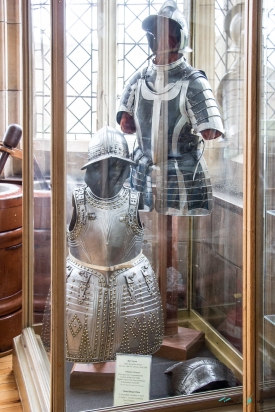
Visitors entering Inveraray Castle today encounter one of the most lavishly furnished interiors in Scotland. The Armoury Hall, rising the full height of the building, displays an arsenal of more than 1,300 weapons collected by successive Dukes, many of them gathered to arm the militia raised by the 3rd Duke during the Jacobite era. The State Dining Room and the State Drawing Room, decorated in the late eighteenth century by Robert Mylne and the painter Girard, contain some of the finest neoclassical interiors in Britain. The Tapestry Drawing Room is hung with Beauvais tapestries dating to the 1780s, and the Clan Room traces the genealogy of the Campbells from Colin Mor to the present day on a wall-length painted family tree.
The castle also displays a remarkable collection of Campbell ducal regalia, including the coronation robes worn by Princess Louise, daughter of Queen Victoria and wife of the 9th Duke. The Argyll Estates Archives, preserved within the castle, hold one of the most important private collections of historical documents in Scotland.
Inveraray on Screen and on Foot
In recent years, Inveraray Castle has reached audiences far beyond Argyll through its appearances on screen, most notably in the 2012 Christmas special of Downton Abbey, in which it served as the fictional Highland seat of the Marquess of Flintshire. The castle is also the centre of an extensive estate of approximately 60,000 acres of forest, farmland, and hill, where the present 13th Duke, Torquhil Ian Campbell, manages the family interests in commercial forestry, hydroelectric power, deer stalking, and tourism.
A visit to Inveraray combines well with a walk through the planned Georgian town, a tour of the Inveraray Jail, an excellent and atmospheric museum of nineteenth-century criminal justice, and a meal of Loch Fyne oysters, perhaps Scotland's finest, harvested only a short distance away. The castle is open daily from April through October, and on the days when the Duke is in residence, his personal banner of arms flies above the central tower; on other days, the banner of Clan Campbell takes its place, declaring to all of Argyll that the Mac Cailein Mòr is at home.
For travellers drawn to Highland scenery, aristocratic history, and the architecture of an age that loved to dress modern comfort in medieval dreams, Inveraray Castle remains one of the most rewarding destinations in western Scotland.
The castle stands a short distance north of the planned town of Inveraray, in the heart of Argyll and Bute, on a flat plain where the River Aray meets the loch. The whitewashed Georgian town, like the castle itself, is the product of a single sweeping eighteenth-century vision that swept away earlier medieval structures and replaced them with a coherent ensemble of country house, garden, and burgh.
Clan Campbell and the First Castle
The Campbells trace their roots in Argyll to the early thirteenth century, when Colin Mor Campbell, known by the patronymic Mac Cailein Mòr that the chief still uses today, established the family as a major regional power. After Colin Mor's death in 1296, his son Sir Niall Campbell became a close ally and brother-in-law of King Robert the Bruce, an alliance that secured the family's fortunes for the centuries that followed.
The first castle at Inveraray, however, was not raised until around 1450, when Sir Duncan Campbell, head of the clan in the mid-fifteenth century, decided to move the Campbell seat from the increasingly inconvenient stronghold of Innischonnell on Loch Awe to a more strategic position on Loch Fyne. The choice gave the Campbells direct access to the Firth of Clyde and the open sea, and it proved transformative. Within a generation, Duncan had been created Lord Campbell, and his grandson Colin became the 1st Earl of Argyll in 1457. By 1472, a small planned town had grown up around the medieval castle, eventually attaining royal burgh status in 1648.
The medieval Inveraray Castle was a typical Scottish tower house, four storeys high with conical-roofed bartizans at each corner. Royal visitors included James V in 1533, who stayed at the castle in some style and even had a new lute purchased and carried up from Glasgow for his amusement, and Mary, Queen of Scots, in 1563. Across the seventeenth century, the castle and its town suffered through the Wars of the Three Kingdoms: the Marquess of Montrose burned and pillaged Inveraray in 1644, and the 8th Earl was beheaded in 1661 after the Restoration of Charles II.
The Vision of the 2nd and 3rd Dukes
The Campbells emerged from the upheavals of the seventeenth century strengthened rather than diminished. In 1701, the 10th Earl was created the 1st Duke of Argyll, and the family rose to occupy some of the highest offices in the Scottish and, later, British state. It was the 2nd Duke, John Campbell, a celebrated soldier who commanded government forces against the Jacobites at the Battle of Sheriffmuir in 1715, who first envisioned a new castle worthy of his elevated rank. He commissioned the influential English architect, dramatist, and herald Sir John Vanbrugh, designer of Blenheim Palace, to produce sketches for an ambitious replacement.
Vanbrugh died in 1726 before the project could begin in earnest, but his sketches passed to John's brother, Archibald Campbell, the 3rd Duke of Argyll, who possessed both the means and the patience to bring the dream to fruition. Improvements on the estate began in 1743, and the foundation stone of the present castle was laid on October 5, 1746. The architects Roger Morris and the Scottish master William Adam translated Vanbrugh's idea into a working design that combined Palladian symmetry, French chateau-style turrets, and a strikingly early use of medievalising Gothic detail. After Morris and William Adam died, William's celebrated sons Robert and James Adam carried the project forward, and the castle was finally completed in 1789, more than four decades after its commencement.
The result was an architectural pioneer: a stately home that prefigured the entire Gothic Revival movement of the nineteenth century while remaining grounded in the formal proportions of its own time. The 3rd Duke also took the radical step of demolishing the old village that had grown up around the medieval castle and rebuilding it from scratch in its present location to the south, producing the elegant whitewashed town that visitors enjoy today.
Fires and Reinvention
Inveraray Castle has not enjoyed an easy afterlife. A serious fire in 1877 damaged much of the building and prompted a substantial Victorian remodelling under the 9th Duke, who added the third storey and the conical roofs to the corner towers that give the castle its current French-chateau silhouette. A second devastating fire in November 1975 caused even greater damage, leaving the 12th Duke and his family living in the basement while a worldwide fundraising campaign financed the restoration of the upper floors. Today, the castle stands fully restored, complete with its first central heating system, fuelled by woodchip from the family's own forestry estate.
The Castle Inside
Visitors entering Inveraray Castle today encounter one of the most lavishly furnished interiors in Scotland. The Armoury Hall, rising the full height of the building, displays an arsenal of more than 1,300 weapons collected by successive Dukes, many of them gathered to arm the militia raised by the 3rd Duke during the Jacobite era. The State Dining Room and the State Drawing Room, decorated in the late eighteenth century by Robert Mylne and the painter Girard, contain some of the finest neoclassical interiors in Britain. The Tapestry Drawing Room is hung with Beauvais tapestries dating to the 1780s, and the Clan Room traces the genealogy of the Campbells from Colin Mor to the present day on a wall-length painted family tree.
The castle also displays a remarkable collection of Campbell ducal regalia, including the coronation robes worn by Princess Louise, daughter of Queen Victoria and wife of the 9th Duke. The Argyll Estates Archives, preserved within the castle, hold one of the most important private collections of historical documents in Scotland.
Inveraray on Screen and on Foot
In recent years, Inveraray Castle has reached audiences far beyond Argyll through its appearances on screen, most notably in the 2012 Christmas special of Downton Abbey, in which it served as the fictional Highland seat of the Marquess of Flintshire. The castle is also the centre of an extensive estate of approximately 60,000 acres of forest, farmland, and hill, where the present 13th Duke, Torquhil Ian Campbell, manages the family interests in commercial forestry, hydroelectric power, deer stalking, and tourism.
A visit to Inveraray combines well with a walk through the planned Georgian town, a tour of the Inveraray Jail, an excellent and atmospheric museum of nineteenth-century criminal justice, and a meal of Loch Fyne oysters, perhaps Scotland's finest, harvested only a short distance away. The castle is open daily from April through October, and on the days when the Duke is in residence, his personal banner of arms flies above the central tower; on other days, the banner of Clan Campbell takes its place, declaring to all of Argyll that the Mac Cailein Mòr is at home.
For travellers drawn to Highland scenery, aristocratic history, and the architecture of an age that loved to dress modern comfort in medieval dreams, Inveraray Castle remains one of the most rewarding destinations in western Scotland.