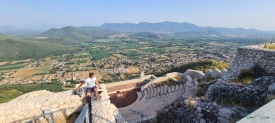
It has been attributed to the same architects of the Colosseum, of which it is a little later. Some texts report its construction under Vespasian and its inauguration probably by Titus. According to some scholars, the presence of masonry built with the opus reticulatum technique would suggest that it was built under Nero, which was then removed as a result of a process of damnatio memoriae.
However, the masonry technique also includes the use of bricks; furthermore, the discovery of an epigraphic inscription that reads "Colonia Flavia Augusta / Puteolana pecunia sua (that is," the Colonia Flavia Augusta built at its own expense ") and the fact that the typology of the Puteolan amphitheater is quite similar to that of the Colosseum would give reason to a chronological location of the monument in the Flavian age. The archaeological excavations began in 1839 and ended at the end of the same century but, only in 1947, following a new excavation campaign, the monument was definitively freed from debris that had accumulated over the years.