ABOUT Castle Rushen
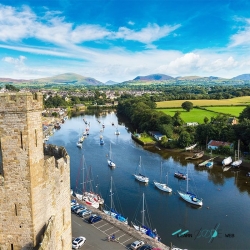
Castle Rushen, located in the historic capital of Castletown in the south of the Isle of Man, is considered one of the best preserved medieval castles in Europe. Its high limestone ramparts dominate the market and harbor, reflecting a presence that has marked the political and military life of the island for over a millennium. The fortress has origins dating back to the 10th century, when the kings of Mann and the Isles consolidated their hold on this strategic point in the Irish Sea. An oak beam found in the 19th century with the date 947 supports the antiquity of the original core of the castle, which consisted of a large square keep intended to control the entrance to the Silver Burn River and secure the area against potential invaders.
Throughout the 13th to 16th centuries, Castle Rushen was enlarged in successive stages, incorporating defensive towers, an advanced gate system and an outer wall over seven meters high. Its defenses included two portcullis that enclosed intruders in an intermediate chamber from which they could be attacked through the so-called "murder holes", a design that is still clearly visible in the architectural remains of the castle. The complex was completed with a moat and a glacis surrounding the fortress. At the top of the keep, the towers reach up to 24 meters in height, giving it a dominant position over all of Castletown.
The castle was the scene of constant territorial disputes. After the death of King Magnús Óláfsson in 1265, the Isle of Man passed to Scotland under the Treaty of Perth, while England claimed historic rights to the island. In 1313, Robert the Bruce landed at Ramsey and captured the island in just five days, meeting resistance only at Castle Rushen, defended by Dungal MacDouall. After a three-week siege, the castle fell, consolidating the Scottish presence. Eventually, English forces regained control and from 1405 the Stanley family ruled the island, first as Kings of Mann and later as Lords of Mann. During the English Civil War, James Stanley, known as The Great Stanley, established a Royalist stronghold at Castle Rushen before leaving for England, where he was eventually captured and executed in 1651. That same year, Countess Charlotte Stanley maintained the defense of the castle until an internal rebellion led by Illiam Dhône and the advance of Parliamentary forces forced its surrender.
Over time, the military function of the castle diminished, but it continued to play a central role in the administrative life of the island. It was the seat of a court, the treasury and, occasionally, the House of Keys, the forerunner of today's Manx parliament. However, as early as the 18th century a period of deterioration began and the fortress was adapted as a prison. From 1780 onwards the inmates previously held at Peel Castle were transferred to it, and conditions became progressively harsher. Despite renovations in 1813 and 1827, structural deterioration exposed prisoners to extreme conditions, leading to conflict and disorder towards the end of the 19th century. Among the most notorious inmates were Thomas Wilson, Bishop of Sodor and Man, and John Kewish, the last man executed on the island, hanged in 1872 within the castle grounds. Poor conditions led to the construction of the new Victoria Road Prison, opened in 1891, and Castle Rushen ceased to function as a prison soon after.
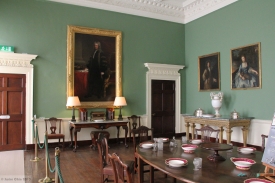
The castle was given a new lease of life in the 20th century. After its restoration and maintenance under the supervision of Lieutenant Governor George Somerset, it was transferred to the Isle of Man Government in 1929 and, in 1988, its management passed to Manx National Heritage, which transformed it into a museum open to the public since 1991. Today, Castle Rushen houses exhibits that recreate medieval life, including working kitchens and educational activities that explain the castle's role in the history of the Kings and Lords of Mann. Archaeological finds recovered from excavations in the 1980s are displayed in its rooms and serve as an educational resource for visitors and students. In addition, the castle continues to have an institutional function, as it is still used as the official court of the island.
Castle Rushen has also acquired contemporary cultural relevance. Its image appears on the back of the Isle of Man Government's £5 banknotes, and its setting has served as the backdrop for major events, such as the closing ceremony of the 2011 Commonwealth Youth Games. The castle also marks the start of the Millennium Way, a 45-kilometer long-distance footpath that runs across the island from Castletown to Ramsey. Like many historic fortifications, it is also surrounded by legends: the spirit of a lady is said to roam its drawbridge, adding a touch of mystery to the site.
With its mix of military, political, social and cultural history, Castle Rushen remains one of the most emblematic monuments of the Isle of Man. Its excellent state of preservation, coupled with its long and complex history, make it an unrivaled testimony to the region's medieval past and a must-see for those who wish to understand the evolution of the island and its institutions over the centuries.