ABOUT Castle Leod
In the gentle landscape of Easter Ross, on the quiet northern edge of Strathpeffer's Victorian spa village, an exceptionally well-preserved Scottish tower house rises from the green of an ancient parkland. Castle Leod has been the seat of Clan Mackenzie and the home of the Earls of Cromartie for more than five hundred years, and it is widely recognized as the real-life inspiration behind Castle Leoch, the fictional clan stronghold in Diana Gabaldon's Outlander novels. Yet long before Hollywood discovered the Highlands, Castle Leod was already one of the most romantic and atmospheric private homes in Scotland, a working family seat whose stones, trees, and family portraits trace an unbroken thread back to the world of Pictish forts and Renaissance kings.
The castle stands a short distance west of the town of Dingwall and just north of Strathpeffer, framed by mature woodland and the long dark ridge of Ben Wyvis. It is not a castle of guidebook fame: Castle Leod opens its doors to the public only on a small number of days each year, and these limited windows of access lend a sense of privilege to every visit.
Pictish Foundations and Clan Mackenzie Roots
The hill on which Castle Leod stands appears to have been fortified long before any recognizably medieval structure rose on the site. Archaeologists have identified the remains of an Iron Age vitrified fort and Pictish standing stones on the surrounding ridges, suggesting that the natural strategic value of the position was recognized at least a thousand years before the Mackenzies arrived.
The Mackenzie connection to Castle Leod begins in the early sixteenth century. In 1513, after the calamitous Scottish defeat at the Battle of Flodden, where King James IV and ten thousand Scots fell to the English under the Earl of Surrey, the surviving John of Killin, tenth chief of Clan Mackenzie, was rewarded for his loyalty with the lands of Leod. From that moment, the property became inseparable from the Mackenzie name, and the chiefs of the clan have held it for more than five centuries, an unusual continuity in the often-broken story of Scottish landholding.
In 1605, an event of even greater consequence sealed the family's wider fortunes. Sir Roderick Mackenzie of Coigach, known as Rorie and remembered to history as the Tutor of Kintail for his guardianship of his nephew Colin, the first earl, married Margaret MacLeod, heiress of Torquil MacLeod of Lewis. Margaret brought with her a vast inheritance that resolved a long and bitter feud between the Mackenzies and the MacLeods over the Barony of Coigach and made the Mackenzie chief one of the wealthiest figures in the northern Highlands. The marriage stone above the front door of Castle Leod, dated 1605, still commemorates that decisive union.
The Tower House of Sir Roderick
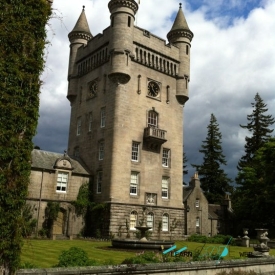
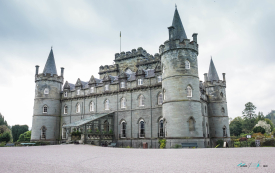
Castle Leod in its present form was largely the work of Sir Roderick himself, who rebuilt the family seat between 1605 and around 1616 as an L-plan tower house of red sandstone. The original castle's walls, between six and eight feet thick in places, blend defensive intent with the more comfortable late-Renaissance ideal of a country residence. Iron grilles still secure some of the lower windows, and gun loops and arrow-slits punctuate the masonry as reminders of the dangerous frontier conditions in which Sir Roderick was building. A second wing, added later and giving the castle its current squared appearance, accommodates a grander stone staircase and additional bedrooms. The year 1616 is carved on one of the windows, marking either the completion of the original phase or the first major extension.
Jacobite Disaster and Family Restoration
The Mackenzies' loyalty to the Stuart cause brought Castle Leod close to ruin in the eighteenth century. George Mackenzie, third Earl of Cromartie, joined Bonnie Prince Charlie's Jacobite rising in 1745 and led the Mackenzie forces to victory at the Battle of Falkirk in January 1746. Captured shortly afterwards at Dunrobin Castle, the earl was condemned to death and only spared by his wife Isabella, known affectionately as Bonnie Bell, who, though heavily pregnant, travelled to London to plead for his life before the king. Her appeal saved him from the block, but the family's estates were forfeit and the earldom suspended.
The lands of Castle Leod, but not the title, were restored to the third earl's son in 1784. By 1814, however, the castle itself was described as "quite a ruin, deserted except by crows," a desolation that probably referred chiefly to the upper floors. A complete renovation in the mid-nineteenth century, undertaken by Anne Hay-Mackenzie, restored both the building and the family's fortunes. Anne married George Sutherland-Leveson-Gower, third Duke of Sutherland, and in 1861 was created first Countess of Cromartie in her own right with a special remainder. She served as Mistress of the Robes to Queen Victoria, championed the spa town of Strathpeffer for its healing mineral waters, and laid the foundations of the present castle's lavish interior.
Outlander and the Modern Castle
Castle Leod entered popular culture in the twenty-first century through the novels of Diana Gabaldon. The author conceived Castle Leoch, the seat of the fictional Clan MacKenzie, before she knew of the real Castle Leod, but the parallel between the two homes is so close that fans of the series instantly recognize it. When the Starz television adaptation of Outlander began scouting Scottish locations, Gabaldon herself recommended Castle Leod, but the producers chose nearby Doune Castle for logistical reasons. Castle Leod nonetheless remains a pilgrimage destination for the global Outlander community.
The current chief of Clan Mackenzie, John Mackenzie, fifth Earl of Cromartie, known as Cabarfeidh in the Gaelic, lives at the castle with his family. On open days, the earl himself sometimes greets visitors at the door, leading them through the great hall, with its original fireplace and decorative stone frieze, into rooms lined with five centuries of Mackenzie portraits, antique maps, and family furnishings, including the sword rack and the wall-length painted family tree that traces the Mackenzie lineage back to its earliest chiefs.
The Gardens and the Ancient Trees
Castle Leod's grounds rival its interior in their interest. The estate parkland holds Scotland's oldest recorded Spanish chestnut, said to have been planted in 1556 by John of Killin to commemorate the confirmation of his lands by Mary, Queen of Scots, and a giant sequoia widely regarded as the largest tree of any species in the United Kingdom. The guided tree walk through these specimens is one of the most rewarding features of any visit, a quiet alternative to the more familiar Scottish itinerary of distilleries and lochs.
Planning Your Visit
Castle Leod is open to the public for at least twenty-five days each year, with dates published in advance on the official castle website. Visits include access to the interior, the parkland, and the renowned tree walk, and are often led by knowledgeable volunteers from the Clan Mackenzie Charitable Trust. Several holiday cottages on the estate offer longer stays for those wishing to immerse themselves in Highland life. Strathpeffer itself, with its handsome Victorian pump house and pavilion, the spectacular waterfalls of Rogie Falls, and the dramatic mass of Ben Wyvis behind, provides ample reason to spend more than a single day in the area.
For travellers drawn to the living continuity of Scottish clan heritage, the romance of well-preserved tower-house architecture, and the singular pleasure of being welcomed into one of the most beautifully maintained private castles in the Highlands, Castle Leod offers an experience available nowhere else.
The castle stands a short distance west of the town of Dingwall and just north of Strathpeffer, framed by mature woodland and the long dark ridge of Ben Wyvis. It is not a castle of guidebook fame: Castle Leod opens its doors to the public only on a small number of days each year, and these limited windows of access lend a sense of privilege to every visit.
Pictish Foundations and Clan Mackenzie Roots
The hill on which Castle Leod stands appears to have been fortified long before any recognizably medieval structure rose on the site. Archaeologists have identified the remains of an Iron Age vitrified fort and Pictish standing stones on the surrounding ridges, suggesting that the natural strategic value of the position was recognized at least a thousand years before the Mackenzies arrived.
The Mackenzie connection to Castle Leod begins in the early sixteenth century. In 1513, after the calamitous Scottish defeat at the Battle of Flodden, where King James IV and ten thousand Scots fell to the English under the Earl of Surrey, the surviving John of Killin, tenth chief of Clan Mackenzie, was rewarded for his loyalty with the lands of Leod. From that moment, the property became inseparable from the Mackenzie name, and the chiefs of the clan have held it for more than five centuries, an unusual continuity in the often-broken story of Scottish landholding.
In 1605, an event of even greater consequence sealed the family's wider fortunes. Sir Roderick Mackenzie of Coigach, known as Rorie and remembered to history as the Tutor of Kintail for his guardianship of his nephew Colin, the first earl, married Margaret MacLeod, heiress of Torquil MacLeod of Lewis. Margaret brought with her a vast inheritance that resolved a long and bitter feud between the Mackenzies and the MacLeods over the Barony of Coigach and made the Mackenzie chief one of the wealthiest figures in the northern Highlands. The marriage stone above the front door of Castle Leod, dated 1605, still commemorates that decisive union.
The Tower House of Sir Roderick
Castle Leod in its present form was largely the work of Sir Roderick himself, who rebuilt the family seat between 1605 and around 1616 as an L-plan tower house of red sandstone. The original castle's walls, between six and eight feet thick in places, blend defensive intent with the more comfortable late-Renaissance ideal of a country residence. Iron grilles still secure some of the lower windows, and gun loops and arrow-slits punctuate the masonry as reminders of the dangerous frontier conditions in which Sir Roderick was building. A second wing, added later and giving the castle its current squared appearance, accommodates a grander stone staircase and additional bedrooms. The year 1616 is carved on one of the windows, marking either the completion of the original phase or the first major extension.
Jacobite Disaster and Family Restoration
The Mackenzies' loyalty to the Stuart cause brought Castle Leod close to ruin in the eighteenth century. George Mackenzie, third Earl of Cromartie, joined Bonnie Prince Charlie's Jacobite rising in 1745 and led the Mackenzie forces to victory at the Battle of Falkirk in January 1746. Captured shortly afterwards at Dunrobin Castle, the earl was condemned to death and only spared by his wife Isabella, known affectionately as Bonnie Bell, who, though heavily pregnant, travelled to London to plead for his life before the king. Her appeal saved him from the block, but the family's estates were forfeit and the earldom suspended.
The lands of Castle Leod, but not the title, were restored to the third earl's son in 1784. By 1814, however, the castle itself was described as "quite a ruin, deserted except by crows," a desolation that probably referred chiefly to the upper floors. A complete renovation in the mid-nineteenth century, undertaken by Anne Hay-Mackenzie, restored both the building and the family's fortunes. Anne married George Sutherland-Leveson-Gower, third Duke of Sutherland, and in 1861 was created first Countess of Cromartie in her own right with a special remainder. She served as Mistress of the Robes to Queen Victoria, championed the spa town of Strathpeffer for its healing mineral waters, and laid the foundations of the present castle's lavish interior.
Outlander and the Modern Castle
Castle Leod entered popular culture in the twenty-first century through the novels of Diana Gabaldon. The author conceived Castle Leoch, the seat of the fictional Clan MacKenzie, before she knew of the real Castle Leod, but the parallel between the two homes is so close that fans of the series instantly recognize it. When the Starz television adaptation of Outlander began scouting Scottish locations, Gabaldon herself recommended Castle Leod, but the producers chose nearby Doune Castle for logistical reasons. Castle Leod nonetheless remains a pilgrimage destination for the global Outlander community.
The current chief of Clan Mackenzie, John Mackenzie, fifth Earl of Cromartie, known as Cabarfeidh in the Gaelic, lives at the castle with his family. On open days, the earl himself sometimes greets visitors at the door, leading them through the great hall, with its original fireplace and decorative stone frieze, into rooms lined with five centuries of Mackenzie portraits, antique maps, and family furnishings, including the sword rack and the wall-length painted family tree that traces the Mackenzie lineage back to its earliest chiefs.
The Gardens and the Ancient Trees
Castle Leod's grounds rival its interior in their interest. The estate parkland holds Scotland's oldest recorded Spanish chestnut, said to have been planted in 1556 by John of Killin to commemorate the confirmation of his lands by Mary, Queen of Scots, and a giant sequoia widely regarded as the largest tree of any species in the United Kingdom. The guided tree walk through these specimens is one of the most rewarding features of any visit, a quiet alternative to the more familiar Scottish itinerary of distilleries and lochs.
Planning Your Visit
Castle Leod is open to the public for at least twenty-five days each year, with dates published in advance on the official castle website. Visits include access to the interior, the parkland, and the renowned tree walk, and are often led by knowledgeable volunteers from the Clan Mackenzie Charitable Trust. Several holiday cottages on the estate offer longer stays for those wishing to immerse themselves in Highland life. Strathpeffer itself, with its handsome Victorian pump house and pavilion, the spectacular waterfalls of Rogie Falls, and the dramatic mass of Ben Wyvis behind, provides ample reason to spend more than a single day in the area.
For travellers drawn to the living continuity of Scottish clan heritage, the romance of well-preserved tower-house architecture, and the singular pleasure of being welcomed into one of the most beautifully maintained private castles in the Highlands, Castle Leod offers an experience available nowhere else.