Tarczyński Arena Wrocław: Euro 2012 legacy and visitor guide
A stadium on the western edge of Wrocław
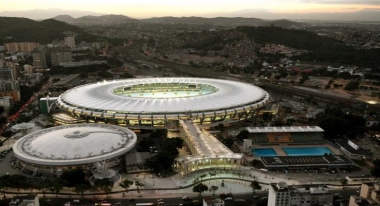
From the tram and railway interchange, Tarczyński Arena Wrocław appears as a broad, luminous form rather than a conventional wall of concrete. The city has compared its outer shape to a Chinese lantern. It stands at aleja Śląska 1, away from the old town's crowded squares, where the approach itself explains something about contemporary Wrocław: this stadium was designed to receive large movements of people as well as major events. For a visitor, the first practical question is not where to sit but what kind of visit is possible on the chosen day.
The arena is the home ground of Śląsk Wrocław and a venue for concerts, exhibitions and other gatherings. It was built for a city that co-hosted the 2012 European football championship. The municipal account gives its capacity as 43,863 seats. These figures help establish its scale, but its identity comes from the calendar: a league match, a guided tour and a concert produce different versions of the same building. The operator publishes current events and visitor information, which should be checked before a journey across town.
There is a particularly important update for autumn 2026. The stadium operator says its viewing terrace has been closed since 25 September 2026 for modernization, until further notice. Older pages still describe terrace visits, but they do not override the current notice. A visitor should therefore not arrive expecting an independent walk to the upper stands. Guided tours are advertised separately by the arena; ask the operator whether a tour is running and what areas it includes before reserving time for it.
The years that brought Europe to Pilczyce
Wrocław's preparations for UEFA Euro 2012 reshaped this part of the city. The stadium officially opened on 8 September 2011, according to the city's historical account. Two days later it hosted a world heavyweight boxing bout between Tomasz Adamek and Vitali Klitschko. Śląsk's first league match there followed on 28 October 2011 against Lechia Gdańsk. This chronology matters because it shows that the building was tested as a multipurpose arena before the football tournament for which it was created.
At Euro 2012, Wrocław hosted three group-stage matches, including Poland's meeting with the Czech Republic. The tournament made the new stadium an international stage, but it also left the city with a permanent transport and event district. The arena remains associated with Śląsk Wrocław, while its use has widened to concerts and civic occasions. The city's own pages describe it as a place for sport and non-sport events. A travel account should not confuse it with the stadium of Legia Warsaw: those are different clubs in different cities, and some older descriptions of this site make precisely that error.
The architecture conveys the ambition of that period without requiring a ticket to a match. Seen from outside, the rounded form and translucent envelope set the arena apart from the compact brick and stone buildings of Wrocław's centre. On event days, spectators fill the approaches and the transport interchange; on quieter days, the structure reads more like a large civic landmark. Neither perspective tells the whole story. Its purpose is to gather people, and its design has to make that gathering possible safely and repeatedly.
What visitors can do now
To see the interior, start with the arena's guided-tour information. The operator describes visits that can include views of the pitch and spaces normally closed to spectators, but the exact route depends on operations. Tours require current availability; they should not be assumed simply because the venue is open for another activity. The stadium's visitor page also lists other facilities and experiences, while its calendar gives the better guide to matches and performances. Tickets for an event and places on a tour are separate arrangements.
The viewing terrace needs special care in planning. The Polish-language operator page, current in October 2026, explicitly says it has been shut since 25 September because of modernization and gives no reopening date. An old English-language description still advertises regular opening hours. The closure notice is the relevant information for a planned visit. It would be misleading to recommend the terrace's panoramic view as something a reader can enjoy today. The arena can still be appreciated from outside, and a confirmed guided tour may offer other perspectives.
For an event, look up its own entrance and security arrangements rather than assuming that the route used for a tour will apply. A football match and a concert may occupy different parts of the venue. Check the operator's rules on bags and entry, the event ticket's gate, and the start time. When large crowds arrive together, public transport can be simpler than searching for a parking space. The stadium's access page places the building beside a tram stop and the Wrocław Stadion railway station, with connections toward the centre and elsewhere.
Planning the journey beyond the stands
Tarczyński Arena lies in the southwest of Wrocław at aleja Śląska 1. The operator provides directions by tram, bus, rail and car. It also notes the nearby motorway ring-road interchange. Transport routes can change, so use the current timetable rather than treating a printed list of line numbers as permanent. The rail and tram interchange is especially useful for a visitor who wants to combine an event with time in the city. On an event day, allow for crowds leaving at the same moment.
The old town and the arena tell different chapters of Wrocław. The market square and historic streets explain the city's older layers; the stadium speaks to the infrastructure and international attention that arrived with Euro 2012. A day that includes both gives a fuller picture than a hurried photograph outside the gates. The arena is a working building, however, so its interior is available only through a ticketed event or a confirmed visitor arrangement. Treat the facade as freely viewable from public approaches, and check every promised interior experience with the operator.
In 2026, the most honest recommendation is a conditional one: choose a match, concert or confirmed tour, verify the current terrace closure, and travel by a route suited to the event. The stadium is not a relic of one summer's tournament. It is a place where Wrocław continues to stage its public life, from league football to performances. That continuing use, rather than a list of record claims, is what makes the broad lantern on the city's edge worth understanding.