Allianz Arena Munich: stadium architecture, FC Bayern Museum and visit
A football ground designed to be seen
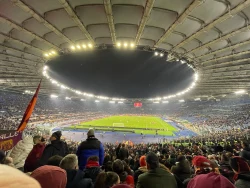
North of central Munich, the Allianz Arena rises from the Fröttmaning district as one of the city’s most recognizable modern buildings. It opened in 2005 as a stadium designed specifically for football, rather than a multipurpose venue adapted from another sport. Its distinctive exterior is made from inflated ETFE panels that can be illuminated in different colors, so the approach to the ground can feel very different on a match night than in daylight.
The project followed a public referendum in Munich in which 65.8 percent of voters supported the stadium proposal. Construction began after the foundation stone was laid on 21 October 2002; the completed arena was handed over on 30 April 2005. The official project history describes a build that took under three years. These dates help place the ground in a period when Munich was preparing for a new generation of football events and a new home for its leading clubs.
The arena’s outer skin consists of 2,760 diamond-shaped air cushions. The lighting system can create a broad range of colors; the stadium operator says 1,506 panels light up when the system is active, across an illuminated surface of about 26,000 square metres. The shell is not just decoration: it gives the stadium its changing identity from a distance, while the bowl inside is organized around sightlines to the pitch.
Capacity depends on the competition and configuration. The stadium’s published figures list 75,024 places for domestic matches and 70,000 for international matches, with standing areas used in the domestic configuration. Event rules and seating arrangements can affect the number available for an individual game, so the venue’s headline capacity should not be treated as a promise about every fixture.
FC Bayern’s home and a museum of club history
FC Bayern Munich has played at the Allianz Arena since the 2005–06 season. TSV 1860 Munich was also involved in the stadium in its early years, but its tenancy ended in 2017; FC Bayern is now the arena’s sole owner through its wholly owned stadium company. The building therefore serves as a club ground and event venue, while its displays also tell a wider story of football culture in Munich.
The FC Bayern Museum occupies part of the arena and traces the club’s history through trophies, objects, archive material and exhibition spaces. The club describes it as Germany’s largest club museum. A museum-only ticket is separate from match admission: adult entry is listed at €12, children aged 6–13 at €6, and children aged 0–5 enter free. Reduced-price tickets are listed at €10, subject to the museum’s eligibility rules.
Visitors can also combine the museum with a guided Arena Tour. The official ticket page lists the combined adult ticket at €25 and a children’s ticket for ages 6–13 at €11; packages and prices can change. Tours are usually offered in German and English, and the combined visit takes about two and a half hours according to the current listings. A separate Arena View option provides a self-guided look inside the stadium alongside the museum.
There is a temporary detail to factor into a visit in autumn 2026. The museum reopened on 25 May after a closure from 13 April to 24 May for refurbishment, but the operator says additional modernization is continuing during normal operations and is expected to finish by the end of October. As of this article’s review date, the audio guide and children’s multimedia guide are listed as unavailable during the work. Check the ticket page for the latest exhibition and access notices before buying.
On ordinary non-matchdays, the museum lists opening hours of 10 a.m. to 6 p.m., with last admission at 5:15 p.m. Matchdays and special events use different schedules; some tours do not run on FC Bayern home matchdays, while specially designed matchday tours may be offered. Tickets are in high demand, and the operator recommends booking guided tours in advance. A stadium tour is not the same as entry to a football match, which requires its own ticket.
Getting there and making the most of the visit
The stadium is at Franz-Beckenbauer-Platz 5, 80939 Munich, in Fröttmaning. From central Munich, take the U6 toward Garching-Forschungszentrum to Fröttmaning; the club estimates about 16 minutes from Marienplatz. Follow the signs toward the south entrance and museum or tour area. The walk from the station across the Esplanade takes roughly 15–20 minutes, so allow for it when choosing a timed ticket.
On non-matchdays, visitors can use the north coach park according to the museum’s visitor information; matchday parking is managed differently and roads can become congested. Public transport is often the simplest option for a standard museum or tour visit. If you are travelling for a match, follow the club’s current traffic instructions and venue notices rather than relying on non-matchday parking directions.
Think about what you want from the trip before choosing a ticket. The museum focuses on FC Bayern’s heritage; the Arena Tour takes visitors through selected parts of the stadium and explains how a professional football venue operates; Arena View is a different, less guided experience. The exact route can be affected by events, security requirements and the ongoing renovation, so the official ticket description is the best guide to what a particular booking includes.
The Allianz Arena works well for football supporters, architecture enthusiasts and travelers interested in how a modern stadium functions beyond match time. Its location is outside the historic center, and the long walk from Fröttmaning station is part of the visit. Confirm opening times, matchday restrictions, renovation notices, prices and tour language shortly before travel: these operational details change more often than the stadium’s core history and design.