Signal Iduna Park in Dortmund: the Yellow Wall and visitor guide
Dortmund’s football ground, then and now
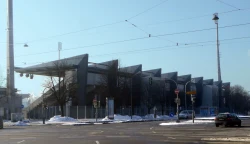
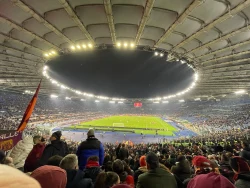
Signal Iduna Park, still widely called the Westfalenstadion, is Borussia Dortmund’s home ground in the Ruhr city of Dortmund, North Rhine-Westphalia. Opened on April 2, 1974, it was built to give the city a venue for the FIFA World Cup that year. The club’s official anniversary history says the original stadium held 54,000 spectators; repeated expansions have brought the current capacity to 81,365. That scale makes it Germany’s largest football stadium and helps explain why the ground is a landmark not only for supporters but also for the city and region.
The naming history reflects both local memory and commercial sponsorship. Westfalenstadion refers to Westphalia, the historic region in which Dortmund sits. The current sponsored name, Signal Iduna Park, is used for club and league events; in some international competitions, regulatory naming rules may require a different event designation. Borussia Dortmund has played here since opening, and the venue has grown around the club’s identity rather than replacing it. A first-time visitor should expect a working sports ground with event-controlled access, not a permanent museum open to wanderers.
The Yellow Wall and a stadium built for atmosphere
The most recognizable section is the Südtribüne, the immense standing terrace behind one goal known as the Yellow Wall. Bundesliga’s stadium profile gives it a capacity of 24,454, making it Europe’s largest standing terrace in football. On match days, the packed yellow-and-black stand is central to the stadium’s reputation for intensity. Its scale is impressive even when empty, but its role is best understood as a supporter space shaped by club culture, singing and match rituals—not as a conventional sightseeing platform.
The stadium has also hosted major international sport. It was used for the 1974 and 2006 FIFA World Cups and staged matches at UEFA Euro 2024. Those tournaments required changes to seating and event operations, illustrating how the ground adapts to different competition rules. For a visitor, the detail matters because the route, open areas and naming on signs can differ between a Borussia Dortmund home match, a European fixture and a guided visit. Always check the event listing rather than assuming that the ordinary club setup applies.
Stadium walk or guided tour
Borussia Dortmund offers more than one way to see inside. The independent “Stadium Walk” is a marked self-guided route, not a guided tour. Depending on availability, it can include the south stand, players’ dressing room, mixed zone and dugout beside the pitch. The club’s current page says visitors may begin on selected days between 10 a.m. and 5:30 p.m. and must leave by 6 p.m. It lists a full price of €12, reduced €8, and a combination ticket with the BORUSSEUM club museum for €18, reduced €12.
Public guided tours are a separate product, with dates and languages depending on the online calendar. The published English price list shows an 18-euro full fare and 12-euro reduced fare for a standard 90-minute guided tour; other formats, including themed or accessible options, have their own terms. The independent walk is not wheelchair-accessible according to the club, while a specific barrier-free guided tour is offered on selected dates. Parts of any route may close because of matches, event preparation, youth-team games, renovation or refurbishment. Check the precise product, language, route and access details before purchasing rather than treating all stadium visits as interchangeable.
Planning your visit in Dortmund
The meeting point for the stadium walk is at FanWelt on the north side of the ground, at Strobelallee 54. Borussia Dortmund lists parking along Strobelallee and at the Luftbad car park, reached by an underpass; the club describes that parking as free. This is not a guarantee that a space will be available on busy dates. SIGNAL IDUNA PARK is close to central Dortmund, and public transport is generally practical, particularly on match days when the club and transport operator provide event-specific information. Verify current travel instructions and road restrictions on the day.
Stadium visits are not possible on Borussia Dortmund home-match days, and the club’s walk page also excludes the preceding day; other events or maintenance can alter opening hours. The walk is therefore best booked around a confirmed date, with time to explore the FanWelt and, if selected, the BORUSSEUM. Ticket prices, reduced-rate eligibility and the live calendar can change. Arriving at the meeting point does not replace a ticket, and a match ticket does not automatically include a tour. With those distinctions clear, the visit offers two different perspectives: a route through the physical spaces of a modern football ground, and—on match day—the collective spectacle that made the Yellow Wall famous.