Stamford Bridge in London: Chelsea history, stadium tours and visitor guide
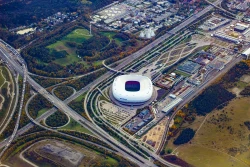
Stamford Bridge is both a working football stadium and a place where Chelsea’s history can be followed beyond the ninety minutes of a match. In Fulham, southwest London, the ground has been home to Chelsea Football Club since 1905. Its current stands form a compact bowl close to the pitch, while the club museum and guided tours turn selected non-matchdays into a behind-the-scenes visit. The distinction is important: the stadium is not an open park, and access to the stands, rooms or pitch depends on a ticketed event or a booked tour.
Before Chelsea: an athletics arena
The ground opened on 28 April 1877 as a sporting arena. For its first 27 years it was used almost exclusively by the London Athletic Club, long before the area became synonymous with football. In 1904, brothers Henry Augustus “Gus” Mears and J. T. Mears acquired the property and nearby land with the intention of creating a football venue. They commissioned Scottish stadium architect Archibald Leitch to design a large ground on a 12.5-acre site. The original plan imagined a capacity of 100,000, although the first east-side stand held about 5,000 and the rest of the ground was an open bowl with standing terraces.
The Mears brothers first offered the ground to nearby Fulham FC. When Fulham declined, a new club was formed to occupy it: Chelsea Football Club was founded in March 1905 and moved to Stamford Bridge for the start of the following season. That unusual sequence—stadium first, club second—helps explain why the ground and the team’s identity are so closely linked. Chelsea’s official history records a crowd of about 60,000 in the club’s first year and the club’s rapid rise into the top division. The Bridge was not just a home chosen by an established team; it was the reason a new one came into being.
A stadium rebuilt around its neighbourhood
Stamford Bridge has changed repeatedly as football, safety standards and the surrounding city changed. Its vast oval terraces gradually gave way to stands brought close to the field, and the club says the modern all-seater ground was completed for the 2001–02 season. Today Chelsea describes capacity as around 40,000. That figure is deliberately approximate: attendance and the available configuration can vary with safety arrangements, seating plans and event operations. The club once explored a much larger expansion, but old proposals should not be mistaken for the stadium visitors see now.
The ground has also hosted more than Chelsea league fixtures. The club’s history lists England international matches, FA Cup finals and semi-finals, Charity Shield matches and a range of other sports, including cricket, rugby, speedway, greyhound racing, baseball and American football. In the early twentieth century it was a broad sporting venue, not only a football address. Three FA Cup finals were staged here between 1920 and 1922. The record helps visitors understand why Stamford Bridge is woven into London sport even though the modern experience is centred on Chelsea.
What a tour and museum visit includes
On a scheduled tour, a guide leads visitors through areas normally closed to the public. Chelsea’s official booking page describes a roughly 60-minute route that can include the dressing rooms, press room, players’ tunnel and pitchside. The ticket also includes entry to the Chelsea FC Museum, where the club presents its history and silverware. The exact route can change; matchday tours may omit some rooms, and stadium operations can restrict access. Booking ahead is strongly recommended, especially for school holidays and high-demand dates.
The museum and stadium tour do not follow one fixed calendar. Chelsea lists museum opening on non-matchdays from 9:30 a.m. to 5 p.m., with last entry at 4 p.m. Premier League matchdays close the museum to the public; on some evening cup matches, limited tour or museum access may be available under special conditions. The venue closes on UEFA competition matchdays. The club advises visitors to check its current schedule and contact the tours team rather than assume that a match date or a public holiday follows ordinary hours. If the tour is the reason for your visit, confirm the departure time before travelling across London.
Matchday atmosphere and neighbourhood
When Chelsea play at home, Stamford Bridge becomes part of a much larger crowd movement through Fulham. The club’s matchday guidance stresses public transport because parking near the stadium is very limited and local restrictions apply. A match ticket is not a general-access pass to every part of the site: security checks, designated entrances and event rules determine where spectators may go. Arriving with time to spare gives visitors a chance to find the correct turnstile and absorb the pre-match atmosphere without rushing through residential streets.
The stadium’s position amid hotels, restaurants, offices and homes makes it different from a remote arena surrounded by empty parking lots. Chelsea’s history describes a 12.5-acre site that gradually incorporated hotel and conference facilities, restaurants, a health club and other uses. For a visitor, that means the wider complex is a destination, but it does not make every business or entrance open to every ticket holder. Check the specific venue’s hours and matchday access rules. Keep pathways clear and follow stewards’ directions, particularly as crowds leave after a match.
Getting there and planning ahead
The club gives the postal address as Stamford Bridge, Fulham Road, London SW6 1HS. Fulham Broadway on the District line is the nearest Underground station; West Brompton and Imperial Wharf stations are also within walking distance. Chelsea recommends planning with Transport for London’s journey planner and using public transport, especially on matchdays. Service changes, strike action and event crowds can affect journey times, so check the route on the day rather than relying on an old map or driving directions.
For a first visit, decide whether you are coming for football, architecture or club history. A match requires an event ticket and careful timing; a museum-and-stadium visit needs a separate tour booking and a check of the calendar. The most rewarding way to see Stamford Bridge is to understand both layers: the 1877 athletics ground that predated Chelsea and the constantly adapted home of a football club founded specifically to play there. The stands are modern, but the relationship between club, neighbourhood and ground reaches back more than a century.