Stade de France: the national stadium at the heart of Saint-Denis
A national project rooted in Saint-Denis
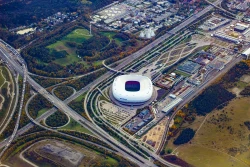
The Stade de France is more than a large arena on the northern edge of Paris. Built in Saint-Denis for the 1998 FIFA World Cup, it was conceived as a national venue where football and rugby could share a home while France also gained a stage for major athletics and cultural events. The official stadium history describes a project shaped by public ambition and local partnership: the venue was meant to serve international sport and help transform the surrounding territory.
Construction began on a former industrial gasworks site and took 31 months, according to the stadium’s own account. Designers had to reconcile several uses in one building, including the field sports that anchor its identity and an athletics configuration. That versatility remains central to the visitor experience. The stadium changes its arrangement for different events, so a football match, a track competition and a concert do not present the same sightlines or atmosphere.
The venue’s public story became inseparable from the 1998 World Cup. France beat Brazil in the final here, giving the new stadium an immediate place in national memory. Its calendar has since included international football and rugby, major club finals, athletics championships, concerts and, most recently, the Paris 2024 Olympic and Paralympic Games. Those Games are now part of the site’s past, not a future event; the stadium continues to be a working venue whose next program changes over time.
Sport, spectacle and the changing scale of a crowd
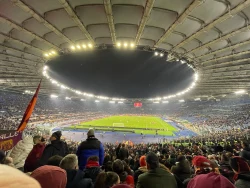
On an event day, the approach to the stadium is part of the occasion. The broad forecourt gathers people arriving from different parts of the Paris region, while the bowl concentrates attention on a field, track or stage. The sound of a crowd can feel different from the view on television: chants echo beneath the roof, and the distance between the stands and the central action changes with the event’s layout.
That adaptability is a practical architectural achievement, not just a marketing phrase. The stadium was planned to host football and rugby while also accommodating athletics and large productions. Its technical teams reconfigure the interior and services for each use. A concert may bring a stage and temporary seating plan; a sports fixture uses a field and event-specific access controls. Visitors should therefore follow the instructions for the event on their ticket rather than assume that a previous visit provides a universal guide.
The building also records shifts in French public life. The 1998 final carried the symbolism of a national team lifting a trophy at home. Later international competitions and concerts brought audiences from beyond the country, while Paris 2024 added an Olympic chapter to a venue already designed for multiple sports. Looking at the stadium through these successive uses explains why it is not simply a monument to one match: its identity is continually renewed by the people who gather there.
Visit the backstage when the calendar allows
For travelers without an event ticket, the official guided tour offers a different way to understand the place. The stadium advertises a route of about 90 minutes through selected backstage spaces, including areas associated with players, the tunnel and the pitch, alongside exhibition material about its history. The exact route can vary with the event schedule, and tours may be unavailable when the venue is preparing for or hosting an event.
Advance booking is required through the official tour reservation channel. Published departure times, language options and prices are seasonal and may change; consult the Stade de France tour page for the date you want instead of relying on an old listing. The stadium says the visit is accessible to visitors with reduced mobility, but anyone with specific access needs should confirm arrangements directly before booking. Entry for the tour is through the designated gate, not the same process as arriving for a match.
The event calendar is also a useful planning tool. The stadium hosts sport and entertainment, but a listing can change and tickets are managed under each event’s rules. An event ticket does not necessarily include a tour, and a tour booking is not access to a live event. Check the organizer’s instructions for opening times, prohibited items, bag rules and any changes to public transport or entrances.
Getting there and making the day easier
The address is in Saint-Denis, Seine-Saint-Denis, north of central Paris. The stadium recommends public transport on event days because road access can be restricted and parking is limited. Its access page lists the RER B station La Plaine–Stade de France and the RER D station Stade de France–Saint-Denis, as well as nearby metro and tram connections. The most convenient stop depends on the entrance printed on a ticket and on live service conditions.
Leave extra time for the approach and the security checks. A large crowd moves more slowly than a normal station commute, and event-day circulation arrangements can change. If driving, the stadium says parking should be reserved in advance; spaces are not simply guaranteed by arriving at the venue. Check current road restrictions, parking instructions and public-transport notices on the day, especially after a late concert or match.
Stade de France is best understood as a place that joins sport, popular culture and the contemporary life of Saint-Denis. Its story begins with a national decision to build for the 1998 World Cup, but its meaning comes from recurring gatherings, from the final won by France to Olympic competitions and concerts. A guided visit can reveal the building’s backstage logic; an event brings its scale to life. Whichever experience you choose, confirm the current calendar, tour availability and route before setting out.