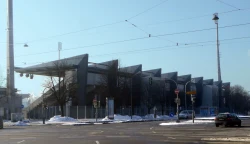
Mestalla Stadium, Valencia: a century of football and a visit before the move
Mestalla is more than the home ground of Valencia CF: it is a working football stadium woven into the city’s sporting memory. Opened in 1923, the ground has hosted generations of supporters, major international matches and a record number of Spanish top-flight fixtures. For a traveler, the appeal is twofold: experiencing the steep stands and intimate scale on a match day, or taking a guided tour when the stadium calendar allows. That access is temporary in a broader sense, too. Valencia CF is preparing a transition to Nou Mestalla, making a visit to the old ground part of a changing chapter.
A ground named after a watercourse
The club’s history records Mestalla’s opening on May 20, 1923, with a friendly between Valencia FC and Levante FC. The new stadium initially held 17,000 spectators. It took its name from the irrigation canal that ran alongside the site, a reminder that football’s urban landmarks often grow from older local geography. The opening marked a move from Algirós, the club’s first home, and gave Valencia a larger stage as its following expanded.
Mestalla’s form changed with the club and the city. A first renovation in 1927 raised capacity to 25,000. The ground suffered severe damage during the Spanish Civil War; the club says it was used as a concentration camp and junkyard, and only part of its structure remained. Rebuilding and expansion followed. The major 1950s project created the Gran Mestalla, with capacity reaching 45,500, while a devastating flood in October 1957 damaged the stadium again. These episodes are not a side note: they explain why the present ground carries layers of reconstruction as well as sporting history.
Its national and international profile grew over the decades. Spain’s national team played its first match in Valencia at Mestalla in 1925. The stadium later hosted matches during the 1982 FIFA World Cup and served as a football venue for the Barcelona 1992 Olympic Games. In May 2026, Valencia CF marked the stadium’s 103rd anniversary and reported that it had hosted 1,505 Spanish First Division matches, the highest total for a ground in that competition. The club also marked its 1,500th La Liga match at Mestalla during the 2025–26 season.
What visitors can see on the tour
The Mestalla Forever Tour offers a guided way to see areas that a regular city walk cannot reach. The regional tourism service describes an approximately one-hour visit that may include the trophy room, players’ tunnel, bench, dressing rooms, press room and VIP box. A guide connects these spaces with the club’s history and stories from the stadium. The precise route is subject to operational and sporting requirements: the club warns that visits can be suspended or modified, and some areas may be unavailable on particular dates.
As listed by Valencia CF for October 2026, weekday tours are scheduled at 10:45 a.m., noon and 1:15 p.m., then at 3:45 and 5 p.m. Saturday has morning departures at 10:45, 11:30, 12:15 and 1 p.m., with afternoon tours at 3:30, 4:15 and 5 p.m. Sunday departures are listed in the morning only. The club also publishes date-specific exceptions: the stadium tour is closed on October 17 for a match, and access to the VIP box and trophies is restricted on selected October dates. These are a snapshot for the month, not a permanent calendar.
Ticket information needs particular care. The official tour page lists adult and reduced prices, but the same page says its displayed rates were valid only through September 2025. That makes the price table unsuitable as confirmation of the amount due in October 2026. Check the live booking page or contact the tour team before purchase. The club’s support page gives a tour email and telephone contact for questions about schedules and prices. It is safer to reserve only after checking the date, route availability and current fare together.
Getting there and choosing a day
Mestalla stands on Avenida de Suecia in Valencia, in an urban setting served by the city’s public transport network. Check the current metro, tram or bus journey from your accommodation, since the best route depends on where you are staying and on match-day arrangements. On a home match day, expect a different crowd pattern and allow extra time around the stadium. A non-match day may be calmer, but it does not guarantee that every tour area will be open.
Before setting out, confirm the selected tour’s departure time, meeting point, language and accessibility details with the club. The regional tourism listing recommends checking official information in advance, and the club expressly reserves the right to adjust tours. Arrive early enough to pass any entry checks without rushing. If visiting with children or anyone who needs step-free access, ask the operator about the specific route rather than assuming the entire historic stadium is fully accessible.
A stadium in transition
Mestalla remains Valencia CF’s current home, but the club is organizing the transition to Nou Mestalla. Its published transfer plan assigns supporter group creation to October 14–30, 2026, seat selection from November 17, 2026 through May 2027, and season-ticket confirmation and payment in June and July 2027. The club describes the 2027–28 season as the planned move to its new home. This is the club’s published timetable, not a guarantee against construction or operational changes.
That context gives a present-day visit additional meaning. Mestalla is still a living venue, not a museum frozen in its early decades, and a tour operates around the demands of a professional club. Its terraces, tunnel and rooms give visitors a sense of football as architecture and routine as well as spectacle. The old stadium’s story includes its canal-side name, expansion, damage, recovery and record-setting match history. A thoughtful visit checks the current tour details first, then takes time to notice how more than a century of football has left its mark on Valencia.