Luzhniki Stadium, Moscow: Olympic history, tours and visitor guide
More than one stadium
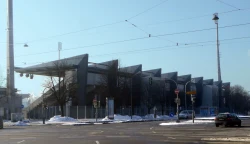
Luzhniki is often used as shorthand for Moscow’s landmark football ground, but the name also refers to a much larger Olympic sports complex. The official complex covers more than 150 hectares and contains over 80 sports facilities and other venues. Its main arena sits within a broad riverside district in Khamovniki, beside a bend of the Moskva River. That scale matters to visitors: a ticket for a stadium tour is not the same as access to every building, field or event across the complex. Before setting out, identify the specific venue or experience you have booked and check the current entry instructions.
The complex opened on July 31, 1956, as the Central Lenin Stadium. The official history says the Soviet government had approved a large Moscow sports complex in December 1954; design began the following January, and the construction campaign lasted 450 days. The opening combined an athletic celebration with a football match between the RSFSR and China, which the Russian side won 1–0. The history page records about 100,000 people at the opening. The venue grew from a postwar ambition to create a major home for sport into a place used for national celebrations, international competitions and public culture.
From the 1980 Olympics to the modern arena
Luzhniki became the principal Moscow venue for the 1980 Summer Olympics, hosting the opening and closing ceremonies and competitions including the football final. The closing ceremony remains one of the stadium’s best-known images: the Olympic mascot, Misha the bear, rose above the arena beneath a sky of balloons. This memory is not the whole story of the site, but it helps explain why Luzhniki carries meaning beyond football. The complex has also hosted world championships, student and youth festivals, domestic finals and concerts, with each event adding another layer to its public identity.
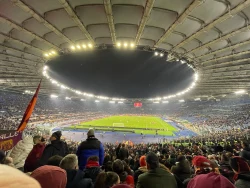
The Big Sports Arena has undergone major reconstruction ahead of several turning points: the 1980 Olympics, Moscow’s 850th anniversary in 1997, the 2008 UEFA Champions League final and the 2018 FIFA World Cup. For the 2018 tournament, the stadium hosted seven matches, including the opening game and final. These phases changed the arena’s function and visitor infrastructure; they also mean that a historical photograph may show a very different interior from the one seen today. The official history is the best guide to the chronology, while the current event calendar—not a legacy travel article—determines which areas are open on a particular date.
How to see the stadium
The official survey tour offers a way to enter parts of the stadium that ordinary match spectators do not usually see. The venue describes visits to team changing rooms, the touchline, the players’ bench, press centre and skyboxes. The route can also include the sports park’s Walk of Fame and the Olympic flame cup. Luzhniki currently advertises the tour every day by request, rather than as a walk-in service with fixed public departures. The excursion centre asks visitors to arrange a booking by phone or email; confirm availability, language, group size and the route directly before travelling.
A separate roof walk adds a view across Moscow from the Big Sports Arena. The venue’s 2026 announcement says the route reopened on June 9 and runs at a height of 56 metres, with views toward Moscow State University, Moscow City and the Moskva River bend. The official tour page says access to the football field is included on days when no event is taking place at the stadium. Places are limited by safety rules, and the venue recommends buying tickets in advance. This is a booked, supervised experience, not permission to climb onto the roof independently; check age, health and equipment requirements when selecting a date.
Planning the visit in a live venue
Luzhniki remains an active sports and events district, so access can vary with matches, concerts, maintenance and other programs. The official calendar lists changing events across the grounds, and the roof excursion itself may have a different route on event days. Check the date-specific ticket page and any venue notices shortly before arrival. The general stadium tour is arranged by request; its public page gives the excursion centre’s contact number, +7 (495) 788-10-77, and tours@luzhniki.ru. Use those official contacts to verify start times and meeting points instead of relying on a copied schedule or assuming the stadium is open as a museum.
The complex identifies three nearby rail stations on its English visitor pages: Sportivnaya and Vorobyovy Gory metro stations, and Luzhniki on the Moscow Central Circle. The most convenient stop depends on the booked entrance and the day’s event arrangements. During large gatherings, crowd-control plans, station access and transport patterns may change. Check Moscow Metro and the venue’s current arrival instructions on the day of travel, then allow time to walk through the large grounds. The address published for the complex is 24 Luzhniki, Moscow; individual tour meeting points can be more specific than the main address.
For a rewarding visit, decide whether you want the Olympic story, a behind-the-scenes look at the arena, a roof-level panorama or a particular match or concert. These are distinct experiences and may require separate tickets. Read the route description carefully, arrive at the stated entrance and be prepared for security checks or temporary restrictions. If no tour is available, the complex still functions as an active sports district, but visitors should not assume every interior is open for independent sightseeing. Its scale and event schedule make a little advance planning more useful than trying to improvise on arrival.
Luzhniki’s appeal comes from the way architecture and public memory meet. It opened in 1956 as a huge Soviet sports project, became the stage for the 1980 Olympics and later welcomed some of football’s most watched finals. Today, an official guided route can connect spectators with the backstage spaces, while a separately booked roof walk offers a different perspective on Moscow. Verify the calendar and access conditions before you go, and the stadium becomes more than a famous name: it is a working complex whose history is still being written through sport, events and everyday use.