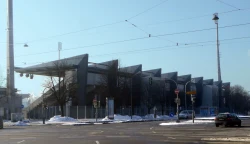
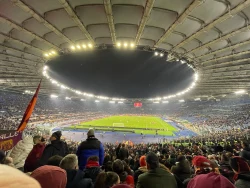
Loftus Versfeld Stadium in Pretoria: rugby heritage and visitor guide
Loftus Versfeld Stadium sits in Arcadia, near the centre of Pretoria, and remains one of South Africa’s most recognizable rugby grounds. Its story reaches back to the early twentieth century, but it is not simply a relic: the venue hosts current rugby and football fixtures, offers bookable behind-the-scenes tours and continues to receive technical upgrades. The City of Tshwane lists a present capacity of 42,858, a figure more useful than older online totals that describe earlier configurations. For visitors, the attraction is the mix of long sporting memory and active match-day life; access, however, depends on a ticket or a separately confirmed tour.
A sports ground older than its concrete stands
Official records give slightly different dates for the beginnings of organised sport at the site. The City of Tshwane says major sporting events have been held there since 1903, while the Vodacom Bulls’ own stadium timeline identifies 1906 as the year the ground was first used for sport. Both sources agree that a concrete stand was built in 1923, with room for about 2,000 spectators. The early field was associated with Pretoria’s Eastern Sports Ground; it was renamed Loftus Versfeld after Robert Owen Loftus Versfeld, a central figure in organized sport in the city, died in 1932.
The original ground and today’s arena should not be confused. The venue expanded through successive rebuilding, particularly from 1977 onward, when its major stands were replaced. The current structure is the product of those changes, not an untouched stadium from the first rugby era. Naming rights have also shifted in the past, but “Loftus” remains the familiar local name. The city’s heritage entry traces the venue through rugby, football and major continental tournaments, while the Bulls’ timeline shows how a municipal sports field developed into a home for organized rugby.
That continuity is visible in the setting. Arcadia is an established part of Pretoria, and the stadium lies among city streets rather than in a remote sports park. The official club address is 416 Kirkness Street. A visitor may notice the large bull statue and the sculpture of an “unknown rugby player” near the main entrance, symbols connected to the Blue Bulls and the generations of players who used the ground. These details make the exterior worth seeing, but they do not themselves authorize entry to the pitch or stands.
World Cup moments and a changing stadium
Loftus has hosted major rugby and football milestones. The City of Tshwane notes that it staged matches in the 1995 Rugby World Cup and the 1996 Africa Cup of Nations, then served as a first- and second-round venue during the 2010 FIFA World Cup. The city also records South Africa’s 1–0 victory over Sweden there in 1999 as the national football team’s first win over a European side. These events show why the stadium’s identity crosses codes: rugby is central, but the field has also welcomed international football and large public occasions.
Its modern life continues to change. The Bulls reported in July 2026 that all 272 legacy floodlights had been replaced with locally made LED equipment, including colour-capable lighting on the east and west canopies. That upgrade was presented as a new match-day feature ahead of a Springbok test. It is a recent example of how the venue balances heritage with contemporary production: the same stands that hold memories of earlier tournaments can support newer lighting, broadcast and entertainment needs.
The arena is used by the Vodacom Bulls and Blue Bulls, and official city and club information also identifies football use by Mamelodi Sundowns and SuperSport United. Fixtures vary by season, so a team’s historical association does not prove it will play at Loftus on a particular date. Check the relevant club, league or stadium notice for the actual venue, kickoff, gate opening and ticket channel. On a major match day, the sound and colour of the crowd become part of the architecture; on a quiet day, the building’s long timeline is easier to imagine from the stands during an authorized tour.
Book a tour or plan around a match
Loftus Versfeld is not advertised as a daily walk-in attraction. The official Bulls facilities page says stadium tours are arranged by booking only. Its tour page describes a route that may include the President’s Suite, press and commentary boxes, dressing rooms, the player tunnel and access onto the field. The page lists rates of R150 for local adults and R70 for local scholars, and R400 for international adults and R250 for international scholars. Those are published prices, not a guarantee they will remain unchanged; confirm the rate, availability and meeting instructions with the tour contact before paying.
A tour offers a different view from match attendance. Visitors can see the working areas that spectators usually pass without entering and hear the stadium’s history alongside that of the Bulls. The operator states that tours can be arranged for supporters, sports clubs, schools and corporate groups. Because the experience is by prior booking, do not turn up expecting an unscheduled tour, and expect some spaces to be unavailable when a team or event is using them.
For a match, use the official ticketing route named by the club or organizer. Confirm the opponent, date, venue and seat section; older references to Minolta Loftus or Securicor Loftus concern past sponsorship names and should not be mistaken for a different current ground. Check bag rules, arrival time and transport arrangements, especially for international tests or high-demand fixtures. If mobility access matters, ask the ticket seller about step-free routes, accessible toilets and companion seating for the specific event rather than relying on general stadium capacity.
Loftus works particularly well for visitors who want to understand how South African rugby is woven into a city. The concrete stand of 1923, the changing stands of later decades, the international tournament record and the 2026 lighting project form a layered story rather than a single origin date. Book a tour if you want behind-the-scenes access; choose a match if you want to feel the crowd; and verify the current schedule before building a day around the venue. That preparation lets a visit connect Pretoria’s urban setting with more than a century of sporting life.