Historic Centre of Puebla, Mexico: colonial streets and visitor guide
A city centre with a layered history
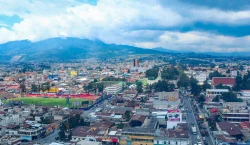
Puebla’s historic centre is not a single monument behind a gate; it is the urban core of a living state capital. The National Institute of Anthropology and History (INAH) says the city’s foundation is traditionally attributed to 16 April 1531, although its formal establishment took place on 29 September that year. The colonial plan grew into a network of streets, churches, civic buildings, homes and public squares. Walking through the centre means moving among places still used for work, worship, shopping and public life, not simply crossing a preserved set built for visitors.
The Historic Monuments Zone was decreed on 18 November 1977, and the historic centre was added to UNESCO’s World Heritage List on 11 December 1987. INAH describes the zone as one of the largest of its kind in Latin America. The international recognition reflects a combination of urban planning, religious and civic architecture, and local artistic traditions. It also gives the visitor a useful way to understand why Puebla is more than a collection of photogenic façades: the city’s importance lies in the relationships among its buildings, streets and historical episodes.
Reading the streets and façades
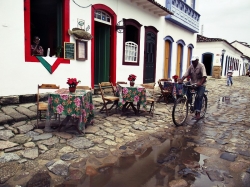
Puebla was founded in the sixteenth century and developed as a planned Spanish colonial city in a highland setting east of Mexico City. Its centre retains large religious buildings, palaces and rows of houses that give the streets a distinct rhythm. The state’s World Heritage description highlights the cathedral, the former archbishop’s palace and homes faced with decorative tiles. Churches and civic buildings occupy prominent places in the urban landscape, while smaller doorways, balconies and courtyards reveal how the historic fabric continues at a human scale.
Talavera tiles are among the details that make Puebla’s architecture immediately recognizable. UNESCO’s interpretation describes how local clay and mineral pigments supported a ceramic tradition influenced by techniques brought from Talavera de la Reina in Spain. Tiles appear on façades and in interiors, but their presence is not merely decorative: they connect local materials, craft knowledge and transatlantic histories. A slow walk rewards attention to color and pattern, especially where tiled surfaces meet stone portals or painted walls. The centre is best read as an ensemble, rather than as a checklist of individual buildings.
Public spaces and national memory
The municipal visitor directory identifies the Zócalo and its portales as public spaces open around the clock. The square offers a natural point to pause and orient yourself before continuing toward churches, cultural sites and streets lined with historic buildings. The route also includes places with their own schedules, such as the Teatro Principal and the Biblioteca Palafoxiana. These different rhythms are part of the experience: an open plaza can be enjoyed at any hour, while museums and interiors require planning around posted opening times.
Puebla’s history extends beyond architecture. INAH records the city’s role in several episodes of Mexico’s political history, including the Battle of 5 May 1862 at the hills of Loreto and Guadalupe. It also recounts the 1910 uprising associated with the Serdán family, an event that helped mark the beginning of the Mexican Revolution. These histories do not turn every street into a battlefield or museum, but they add context to a walk through a city whose public spaces have witnessed political change as well as everyday commerce and religious observance.
Inside the Biblioteca Palafoxiana
One of the centre’s most distinctive cultural institutions is the Biblioteca Palafoxiana. The Mexican cultural registry traces its foundation to 1646, when Bishop Juan de Palafox y Mendoza donated 5,000 volumes to the Tridentine seminaries of Puebla. The library preserves the historic concept and arrangement of a New Spanish library, making the room itself part of what visitors encounter. Its holdings include manuscripts, loose printed works and engravings, alongside books that show the range of scholarship and publishing represented in the collection.
The registry lists notable works including a 1493 Nuremberg Chronicle and Andreas Vesalius’s 1543 De humani corporis fabrica, as well as the library’s oldest book, dated 1745 in the same listing. The current municipal tourism directory gives visiting hours of Tuesday through Thursday from 10 a.m. to 5 p.m. and Friday through Sunday from 10 a.m. to 6 p.m. The state registry lists general admission at 45 pesos, reduced admission at 23 pesos for eligible visitors, and free entry on Sundays. Because schedules and prices can change, confirm them with the library before making it the fixed point of your day.
Plan a visit around real opening times
The historic centre itself can be explored as a public urban area, but individual attractions have different hours and conditions. The municipal directory lists the Palafoxiana schedule and notes that the visitor-attention module at Avenida Juan de Palafox y Mendoza 14 is open daily from 9 a.m. to 8 p.m. That service point can help with current visitor questions. The city’s heritage office publishes an inventory of cultural property and resources for understanding the built environment; these tools are useful for choosing a route beyond the most frequently photographed landmarks.
Allow time for distances between sites, queues and the difference between viewing a building from the street and entering it. Some churches and public buildings have separate worship, event or administrative schedules, and an online directory may be updated after a visitor has planned a trip. Confirm the opening status of each interior close to your visit, especially on Mondays, holidays or dates with civic events. The historic centre is easy to explore in sections: begin around the main square, select one or two institutions with verified access, and leave time to notice the streets between them.
Discovering Puebla beyond a postcard view
For a richer visit, look for how architectural styles and materials meet: tiled domestic façades, stone portals, church towers and later layers of urban use. INAH’s heritage material situates Puebla within a history of adaptation and cultural exchange rather than presenting the city as a frozen Spanish colonial replica. The municipal heritage office also provides planning resources and a cultural-property inventory, reflecting the continuing work involved in managing a protected centre. Respect barriers and posted instructions around buildings under maintenance, and remember that many historic properties remain part of private or institutional life.
Puebla’s centre rewards curiosity because the most memorable experience often lies between headline attractions. A turn from the Zócalo may reveal a tiled frontage, a quiet courtyard entrance or a street that connects architecture with the city’s civic past. Pair the open public spaces with a carefully timed visit to the Palafoxiana Library, check official municipal and cultural listings before travelling, and leave room for an unhurried walk. The result is a more complete sense of Puebla: a World Heritage urban landscape whose history is visible in its buildings and still present in the daily life around them.