FNB Stadium in Johannesburg: Soccer City’s history and tour guide
Soccer City, FNB Stadium and the changing name
South of central Johannesburg, in the Nasrec precinct near Soweto, FNB Stadium is one of South Africa’s defining football venues. It is also known as Soccer City and, for its bowl-like profile, the Calabash or African Pot. The current stadium manager lists 87,436 seats, making it the largest venue in the country. Capacity figures published over the years vary because redevelopment and event configurations change how seats are counted; for a current visit, the manager’s figure is the clearest reference rather than an older tournament-era number.
The site’s football history predates its global profile. South African government records say a stadium was built here in 1987. It was extensively reconstructed before the 2010 FIFA World Cup, when Soccer City became the tournament name because FIFA competition rules did not permit the commercial sponsor name. After the event, the venue returned to FNB Stadium. The naming history is not a footnote: the same place has carried the commercial identity of its long-term sponsor and the neutral title used during a global tournament.
Stadium Management South Africa describes the reconstruction as a R3.3-billion project completed in time for the first FIFA World Cup hosted on African soil. Its current profile presents the site as a major sports and music venue, not merely a football ground. The stadium’s scale, bowl form and position in Nasrec make it part of Johannesburg’s wider event landscape, where large matches, concerts and public gatherings bring city-wide transport and crowd arrangements into play.
A calabash silhouette and an event-scale interior
The nickname Calabash comes from the stadium’s resemblance to a traditional African pot or gourd, a form emphasized in South Africa’s 2010 World Cup preparations. The outer bowl makes the building recognizable even before visitors reach the gates. That shape also conveys the scale of the venue: from its upper approaches, the stadium reads as a continuous enclosure around a football field, rather than a collection of separate stands. Its form became part of the tournament’s visual language and remains a familiar image of South African sport.
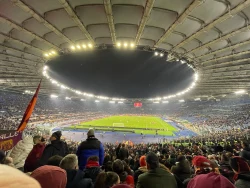
The present venue supports football, rugby, concerts and other large events. Stadium Management South Africa names domestic and international football among its regular uses and lists a range of sports and music events in its venue information. That flexibility affects the visitor experience: the playing surface, seating areas and public entrances are organized differently according to the event. A match-day ticket gives access under that event’s rules; a stadium tour is a separate booking with a different route and timetable.
For architecture-minded visitors, the tour offers a chance to see how a major stadium works beyond the outside profile. The manager’s tour description mentions the pitch level, players’ tunnel, changing rooms, warm-up and mixed zones, VIP areas, upper concourses, seating levels and ramps leading toward the stadium museum. It also includes scale models of the Nasrec precinct and material on the stadium’s 2010 construction. These are not guaranteed open spaces on every date, so the booked tour’s route should be confirmed rather than assumed from a general description.
Why the stadium matters beyond football
FNB Stadium became a major stage in the 2010 FIFA World Cup. Soccer City hosted the tournament’s opening match and final, as well as other fixtures. In the final on July 11, Spain defeated the Netherlands 1–0 after extra time. South Africa’s government archive records the final at the Johannesburg venue, while the stadium’s own profile identifies the opening and closing ceremonies and final among its landmark events. The competition made the building an international symbol, but it also marked a significant moment in South Africa’s hosting of a global sports event.
The stadium’s political history is also part of its public meaning. Its manager says Nelson Mandela addressed a mass gathering there in 1990, a few days after his release from prison. That account places the venue in the immediate period of transition away from apartheid, when public speeches and rallies could turn a sports ground into a civic platform. The stadium has since been used for memorial and national events as well as sport. A visitor should treat these memories with care: the venue is not only a backdrop for celebrated matches but also a place associated with South Africa’s political life.
Its later calendar has continued to connect local communities with international audiences. The stadium manager cites the 2013 Africa Cup of Nations final among events held there and describes the venue as a home for major football fixtures, concerts and other gatherings. Dates, performers and competitions change, so older lists should not be read as a current schedule. The official venue calendar and the event promoter’s ticket page are the reliable places to check what will be happening during a planned trip.
Booking a tour and planning the journey
Stadium Management South Africa currently advertises a guided tour lasting about 60 minutes. Its description includes restricted behind-the-scenes areas, the stadium’s architecture and construction, and the Nasrec precinct model. The source page does not present a stable public daily schedule or a general walk-in price, so contact the tour team or use its booking information to confirm a date, time, availability and cost. The operator advises visitors to arrive 15 minutes before the tour begins. A tour is not the same as a match ticket, and access to the pitch or changing rooms depends on the route authorized for that visit.
The stadium’s official contact page gives the address as Soccer City Avenue, Nasrec, Johannesburg, 2147. Nasrec lies south of the city centre and close to Soweto, but travel times depend on traffic and whether a major event is under way. Use the event organizer’s current transport plan, check road closures and confirm the designated entrance before setting out. Parking and public transport arrangements may be different for a league match, a national-team fixture and a concert; do not rely on a route posted for a previous event.
For a match, buy tickets only through the event’s authorized seller and read its security and bag rules. For a tour, confirm the route and arrival gate directly with Stadium Management South Africa, especially if accessibility assistance is needed. The stadium’s visitor information and event calendar can change as operations are updated. With those checks made, the visit becomes more than a photograph of a famous arena: the Calabash’s architecture, the 2010 World Cup and the political history of the site come together in one of Johannesburg’s most consequential public venues.