About Estadio Olímpico Atahualpa
A stadium woven into northern Quito
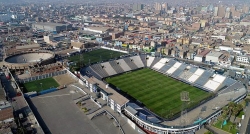
Estadio Olímpico Atahualpa stands in Quito’s Iñaquito district, among commercial streets, residential blocks and the city’s northern business area. It is a working venue, not a monument with routine sightseeing hours: access depends on a football match, concert or other scheduled activity. For a visitor, that distinction matters. The stadium’s story can be understood from the city around it, but entry to the stands and interior is controlled by the event organizer and venue arrangements, so a ticket or specific public opening is needed.
The setting is unusually connected to urban transport. Quito’s Metro identifies Iñaquito station as only a few metres from the stadium area; city buses and the Ecovía corridor also serve the wider district. That makes the venue easier to reach without a car on event days, although crowd controls and street closures may change the final approach. Check the Metro and municipal announcements for the particular date rather than assuming that an ordinary operating schedule will apply after a major match or show.
From a postwar project to a city landmark
A municipal council record gives the stadium a clear starting point: construction began in May 1948, and the venue was inaugurated on 25 November 1951. The same document describes its intended range of uses, including football, athletics and artistic performances. Those dates place the Atahualpa in the postwar growth of Quito, when the capital was expanding north and large civic facilities helped give the developing districts new public anchors.
Its importance has never depended only on architecture. The stadium became a recognizable meeting point for Ecuadorian football and for national-team matches, while its track and grounds have also accommodated other sporting disciplines and large concerts. In 2025, Quito’s council approved the reversal of the earlier donation and the city announced that the stadium had returned to municipal ownership. The municipality proposed a structural study, improvements to public space and a new management model. Those were announced actions, not proof that a full renovation has been completed; check recent city notices for the current state of works.
What visitors can experience there
The most direct way to see the Atahualpa from inside is to attend an event. Football fixtures, athletics competitions and concerts appear on separate organizer calendars, and their schedules can change. A useful reminder that transport is event-specific came during Shakira’s November 2025 concerts: the Metro published extended operating hours and a special arrangement at Iñaquito station. Those were past, date-specific measures, not a timetable visitors should rely on now. Always check the operator’s current notice for the event you plan to attend.
There is no general visitor timetable or regular stadium tour in the cited municipal information. Do not arrive expecting the gates to be open for independent sightseeing. Before travelling, confirm the event date, ticket outlet, entrance gate, bag rules, accessibility provisions and whether tickets are digital or printed with the event’s official organizer. If a match is your reason for coming, check the participating clubs and competition directly; the stadium’s presence on a map does not mean a game is taking place that day.
Practical planning around match or concert day
For an event, the Metro can be a convenient option because Iñaquito station is close to the stadium. However, operating hours, entry controls and the station used for post-event boarding may differ. During the November 2025 Shakira concerts, the Metro announced extensions on selected dates until 1 a.m. and specific rules for Iñaquito; this is a historical example, not a current schedule. Check the operator’s notice for your own event and leave extra time for walking, security screening and queues.
Road closures may begin hours before a large gathering, and nearby streets can be reserved for event logistics or pedestrian safety. The exact streets, boundaries and timing depend on the event, so consult the municipality and organizer shortly before travelling. Use public transport when possible, follow police and event-staff directions, and agree on a meeting point outside the busiest gates. If you need step-free access, contact the organizer before buying tickets rather than assuming every entrance or seating section has the same facilities.
Reading the Atahualpa in Quito’s present
The stadium is best understood as part of a living city rather than a standalone tourist attraction. Its 1951 opening, football identity, concerts and evolving civic management all converge in Iñaquito, an area where visitors can also find shops, restaurants and connections to other parts of Quito. The municipality’s 2025 recovery plan reflects public debate about maintenance and the future of the facility; later event notices demonstrate that the venue continued to host large gatherings, but do not settle the longer-term renovation timetable.
For a rewarding visit, pair the stadium with a planned fixture or show, then explore the surrounding district on foot before crowds arrive. Use city sources for access restrictions, the Metro operator for service information and the organizer for tickets and entry rules. The Atahualpa’s appeal lies not in a guaranteed tour or a fixed daily schedule, but in the way a mid-century civic project remains a stage for sport, music and Quito’s shared urban life. A little verification before departure makes that experience far smoother.